
Soups & Stews
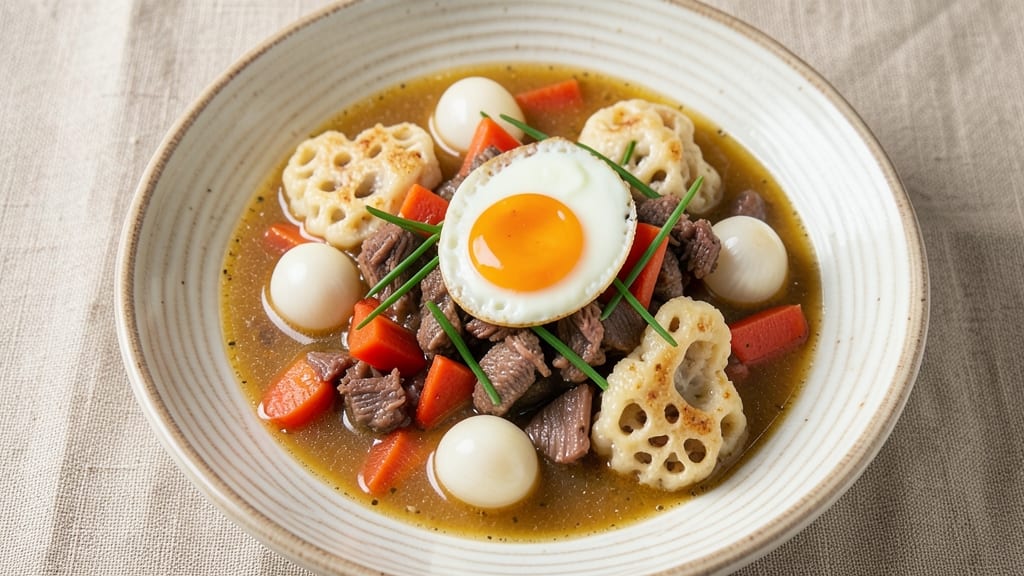
This authentic knoephla soup recipe brings the heart of Bavarian cuisine to your kitchen with tender dumplings swimming in a rich, herb-infused broth. 💛 The secret lies in the dumplings—soft yet sturdy, made from a simple dough of flour, eggs, and milk, shaped into classic German knots.
Unlike many dumpling recipes, these hold their shape beautifully while absorbing the savory broth.
What sets this soup apart is the slow-simmered broth, traditionally made with beef or chicken, infused with carrots, celery, and aromatic herbs like thyme and bay leaf. The dumplings cook directly in the broth, soaking up all the flavors without falling apart.
This method ensures every spoonful delivers that perfect balance of hearty meat, tender vegetables, and pillowy dumplings.
The result is a comforting, restaurant-quality soup that feels like a warm hug on a chilly day. The dumplings stay light and fluffy, while the broth remains rich and flavorful—no heavy cream or artificial thickeners needed. Garnish with fresh parsley or crispy bacon bits for that final touch of authenticity.
Perfect for family dinners or cozy gatherings, this recipe delivers authentic Bavarian flavors without requiring specialized equipment. The process is straightforward, but the reward—a bowl of soul-warming soup—is unforgettable. Let's get cooking!
Ingredients for authentic knoephla soup
Authentic Bavarian flavors start with these quality ingredients for hearty, comforting knoephla soup.
| Ingredient | Amount | Notes |
|---|---|---|
| Beef Chuck Roast 🥩 | 1 ½ lb | Cut into 1-inch cubes, marbled for tenderness |
| All-Purpose Flour 🌾 | 2 cups | Bread flour preferred for chewier dumplings |
| Large Eggs 🥚 | 4 whole | Room temperature for even mixing |
| Whole Milk 🥛 | 1 ½ cups | Full-fat for rich dumpling texture |
| Yellow Onion 🧅 | 1 whole | Medium size, diced for broth |
| Carrots 🥕 | 3 medium | Peeled, cut into 1-inch chunks for broth |
| Celery Stalks 🧄 | 3 whole | Fresh, cut into 1-inch pieces |
| Fresh Thyme 🌿 | 2 tbsp | Leaves only, finely chopped |
| Bay Leaves 🍃 | 2 whole | Dried works if unavailable |
| Salt 🧂 | 1 ½ tsp | Diamond Crystal preferred for accuracy |
| Black Peppercorns 🌶️ | ½ tsp | Freshly cracked for aroma |
| Vegetable Oil 🫒 | 2 tbsp | For sautéing vegetables |
| Fresh Parsley 🌿 | ¼ cup | Chopped, for garnish |
| Crispy Bacon Bits 🥓 | ¼ cup | Optional garnish for authenticity |
The beef chuck roast is non-negotiable for authentic flavor—look for well-marbled cuts at Whole Foods or your local butcher shop. The dumplings rely on bread flour for that signature chewiness, but all-purpose works in a pinch. Fresh thyme and bay leaves elevate the broth, so don't substitute with dried unless necessary. For the vegetables, organic carrots and celery from the grocery store's produce section work perfectly—just ensure they're firm and free of blemishes. The milk should be full-fat for rich dumplings, and room-temperature eggs mix more smoothly into the dough.
No beef chuck? Chicken thighs work well for a lighter version, though the flavor will differ. Short on fresh thyme? Dried thyme at one-third the amount suffices, but the aroma won't be as vibrant. The bacon bits can be swapped for crispy fried onions if preferred. For the dumpling dough, if you're short on eggs, 1 tbsp ground flaxseed mixed with 3 tbsp water replaces one egg. The broth vegetables can be pre-chopped to save time, but fresh is always better. If using pre-diced onions, sauté them longer to remove excess moisture.
Store the cooked soup in airtight containers for up to 4 days in the fridge, though it reheats best when fresh. The dumpling dough can be made ahead and refrigerated for 24 hours before shaping. For longer storage, freeze portions of the broth separately—it reheats beautifully for up to 3 months. Garnish with fresh parsley just before serving to preserve its vibrant color. The bacon bits can be made ahead and stored in the fridge for 1 week.
Why You'll Love This Recipe
- One-Pot Magic: I swear by this—just brown the beef chuck, toss in onions, then dump everything into the same pot. No extra pans, no stress. The slow simmer turns tough cuts into melt-in-your-mouth shreds while the dumplings puff up right in the broth.
- Dumpling Bliss: That first bite of the knoephla—crispy outside, pillowy inside—is what makes this soup ridiculously good. The flour, eggs, and milk create the perfect texture, and honestly? It’s the star of the dish.
- Weeknight Workhorse: Between us, this is my go-to when I’m exhausted but need something hearty. Serve it with crusty bread for a cozy dinner, or double the batch for meal prep—it reheats like a dream and tastes even better the next day.
- Budget-Friendly Feast: A beef chuck roast stretches far in this soup, and the dumplings cost pennies to make. I’ll be real: it’s the kind of dish where you end up with leftovers, but nobody complains because it’s that good. Win-win.
Step-by-step instructions for Bavarian knoephla soup
Master this traditional Bavarian technique—rich beef broth meets tender, hand-formed dumplings.
🍳 Step 1: Brown the Beef and Sauté Vegetables
Heat a large Dutch oven over medium-high heat and add the 2 tablespoons vegetable oil. Working in batches, sear the 1.5 lb beef chuck roast cut into 1-inch cubes until deeply browned on all sides—about 5-6 minutes per batch. This caramelization builds the soup's deep, meaty flavor foundation.
Remove the beef and set aside. In the same pot, add the 1 whole yellow onion, 3 medium carrots, and 3 whole celery stalks, all cut into 1-inch pieces. Cook for 8-10 minutes until softened and golden, stirring occasionally. The vegetables should release their natural juices and develop a light crust on the bottom.
🥘 Step 2: Build the Herb-Infused Broth
Pour in 8 cups cold water (enough to cover the vegetables) and bring to a boil. Add the browned beef back to the pot along with the 2 whole bay leaves, 2 tablespoons fresh thyme, 1.5 teaspoons salt, and 0.5 teaspoon black peppercorns. Reduce heat to low and simmer uncovered for 1.5 hours until the beef is fork-tender.
Here's the thing—traditional Bavarian soups rely on long, slow cooking to develop their depth. Skim any foam that rises to the surface during the first 30 minutes of simmering, then let the broth work its magic. The beef should practically fall apart when pierced with a fork, signaling it's ready for the dumplings.
👨🍳 Step 3: Prepare the Knoephla Dough
While the broth simmers, make the dumpling dough in a large bowl. Combine the 2 cups all-purpose flour (bread flour preferred) with 1.5 teaspoons salt. Make a well in the center and add the 4 whole large eggs at room temperature. Gradually whisk in the 1.5 cups whole milk until a shaggy dough forms.
Turn the dough onto a lightly floured surface and knead gently for 2-3 minutes until smooth but not sticky. The dough should be firm enough to hold its shape when pinched but still pliable. Cover with a damp towel and let rest for 15 minutes—this relaxation period prevents tough dumplings. I always test the dough by pressing a finger into it; if it springs back slowly, it's ready.
🥘 Step 4: Shape and Poach the Knoephla
Divide the rested dough into 8 equal portions (about 2 ounces each) and roll each into a 1-inch thick ball. Here's where Bavarian tradition matters: press your thumb into the center of each ball to create a slight dimple. This prevents cracking during poaching.
Gently lower the formed dumplings into the simmering broth using a slotted spoon. They should float just below the surface. Simmer uncovered for 15-20 minutes until the dumplings are cooked through and the broth has thickened slightly. You'll know they're done when they've doubled in size and develop a soft, pillowy texture that resists gentle pressure from a spoon.
🍽️ Step 5: Finish and Serve Authentically
Remove the dumplings with a slotted spoon and arrange them in a serving bowl. Ladle the flavorful broth over the top, ensuring each dumpling is generously coated. Stir in the 0.25 cup fresh parsley and sprinkle with 0.25 cup crispy bacon bits for that authentic Bavarian touch.
Serve immediately with crusty bread on the side. The dumplings should be tender with a slight resistance at the center, and the broth should be rich with visible beef chunks and vegetables. For true authenticity, serve with a dollop of sour cream on the side—it balances the hearty flavors beautifully. Leftovers keep well in the refrigerator for 3 days, though I've never had any last that long!>
Pro Tips For Making Authentic Knoephla Soup
- Sear the Chuck Hard: That beef chuck needs to develop a deep, caramelized crust before you even think about adding liquid. I learned this the hard way—skipping the sear means flavorless broth. Get the pan screaming hot, pat the meat dry, and let it brown for 5-7 minutes per side until it’s got that dark, sticky crust. This isn’t just for looks; it’s where the real flavor lives.
- Grate Onions Like a Pro: Finely grated yellow onion is the backbone of knoephla, but most people ruin it by using pre-shredded junk. Invest in a box grater and go slow—you want it almost paste-like, not chunky. Pulse it in a food processor if you’re impatient, but don’t overdo it or you’ll end up with onion dust. This texture melts into the dumplings and broth, making them silky.
- Don’t Overwork the Dough: The knoephla dough is delicate—handle it like you’re folding a soufflé, not kneading bread. Once you mix the flour, milk, eggs, and a pinch of salt, stir just until combined. Overmixing makes the dumplings tough. Drop them straight into the simmering broth without shaping them into balls; they’ll puff up naturally. Less fuss, better texture.
- Simmer Gently After Dropping: The moment you add the knoephla to the broth, the heat drops—this isn’t the time to rush. Let them poach at a bare simmer for 10-12 minutes, covered. Lifting the lid to check every 2 minutes turns them into glue. If they’re floating and translucent, they’re done. Overcooking dries them out; undercooking leaves them raw inside. Trust the time, not your impatience.
Troubleshooting this recipe
Broth Too Thin?
If your broth isn't thickening enough during the 1.5-hour simmer, try this pro trick: After removing the beef, blend ½ cup of the broth with 1 tbsp cornstarch in a small bowl, then whisk it back into the pot.
Simmer for an additional 5 minutes—this creates a velvety texture without altering the dumplings' integrity. Alternatively, reduce the broth uncovered on medium-high heat for 10-15 minutes, stirring occasionally, until it reaches your desired consistency. 💡
Dumplings Falling Apart
Over-kneading or under-rested dough causes this common issue. The dough should be kneaded for only 2-3 minutes—no more!—and rested for the full 15 minutes before shaping.
If your dumplings still crack, try rolling them slightly thinner (¾ inch instead of 1 inch) and pressing the thumb dimple more firmly. For extra stability, add 1 tbsp melted butter to the dough when mixing. 🥣
Meat Too Tough
Beef chuck roast needs patience—don't rush the 1.5-hour simmer! If your beef is still tough after cooking, try this: After the initial simmer, remove the beef, shred it with two forks, then return it to the pot for another 30 minutes to reabsorb the flavors.
For future batches, consider using a meat thermometer to ensure the beef reaches 203°F internal temperature before adding dumplings. 🌡️
Dough Too Sticky
If your dough feels too wet to handle, gradually add 1-2 tbsp more flour while kneading. For a more authentic texture, avoid over-flouring—the Bavarian version relies on a slightly tacky dough that still holds its shape.
If the dough cracks during shaping, wet your hands slightly before handling to prevent tearing. For extra insurance, chill the dough for 10 minutes in the fridge before rolling. ❄️
Broth Too Salty
Prevent this by tasting the broth during the 1.5-hour simmer—add salt gradually! If it's already too salty, balance it with ½ cup heavy cream or 1 tbsp lemon juice, which dilutes the saltiness while adding richness.
For future batches, use kosher salt (like Diamond Crystal) and measure carefully—it's less concentrated than table salt. 🧂
Dumplings Floating Too High
If your dumplings float too close to the surface, they'll overcook and turn dense. Use a slotted spoon to gently press them down just below the broth's surface. For extra stability, add 1 tbsp cornstarch to the dough when mixing—this helps them sink slightly.
The ideal position is about 1 inch below the surface, where they'll cook evenly without absorbing too much liquid. 🍲
Nutrition facts
Frequently asked questions
What makes knoephla dumplings different from other German dumplings?
Knoephla dumplings are uniquely Bavarian—they're shaped into small, round balls with a thumb-pressed dimple in the center, which prevents cracking when cooked in broth. Unlike spaetzle (shredded) or klöße (potato-based), these are made from a simple flour, egg, and milk dough that stays light and pillowy. The key is the 15-minute rest before shaping, which gives them their signature tender texture.
Can I make knoephla soup vegetarian?
Swap the beef for chicken thighs or mushrooms (like cremini or shiitake) for umami depth. Use vegetable broth instead of water and add 1 tbsp soy sauce or 1 tsp miso paste to enhance flavor. The dumplings will still absorb the broth beautifully, though the texture will be slightly lighter. Garnish with fresh herbs like chives or parsley for brightness.
How do I know when the dumplings are fully cooked?
They're done when they've doubled in size and develop a soft, pillowy texture that resists gentle pressure from a spoon. The centers should feel slightly firm but yield easily—like a well-made cloud bread. If they float too high, they may overcook and turn dense. For perfect results, cook them uncovered for 15-20 minutes and test one by cutting it open.
Can I prepare the dumpling dough ahead of time?
Yes! The dough can be made up to 24 hours ahead and refrigerated in an airtight container. Let it sit at room temperature for 30 minutes before shaping to relax the gluten. For longer storage, freeze the shaped dumplings (uncooked) on a tray, then transfer to a bag for up to 1 month. Thaw overnight in the fridge before poaching. This makes meal prep a breeze!
What's the best way to reheat knoephla soup?
Reheat gently on the stovetop over low heat for 5-7 minutes, stirring occasionally, until warmed through. Avoid microwaving—it can make the dumplings gummy. For extra richness, add a splash of milk or cream while reheating. If the broth seems too thick, stir in 1-2 tbsp water to restore its original consistency. Leftovers keep well for 3 days in the fridge.