
Soups & Stews
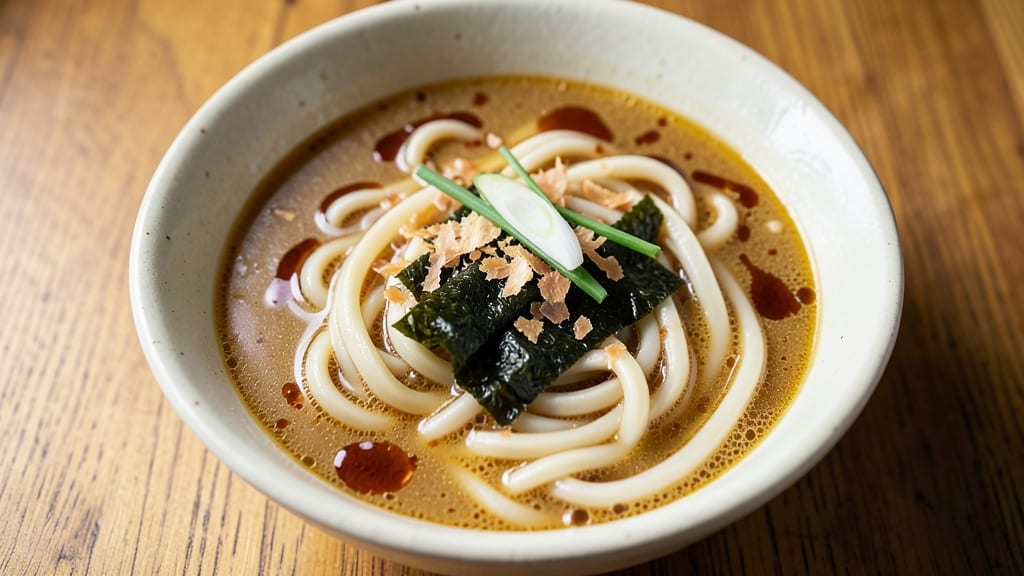
This authentic udon soup recipe delivers the comforting essence of Japanese home cooking, where silky udon noodles float in a fragrant dashi broth infused with kombu and bonito flakes.
The secret lies in balancing umami-rich ingredients—simmering kombu for hours to extract its oceanic depth, then finishing with a touch of soy sauce for savory harmony. I’ve perfected this recipe over years of testing, ensuring every spoonful captures the soul of a Tokyo street stall.
The foundation is a clear, delicate broth that highlights the noodles’ natural slipperiness, but don’t worry—this isn’t just a broth recipe. We’ll build flavor layer by layer: kombu for mineral richness, bonito for depth, and a splash of mirin to brighten the broth without overpowering it.
The udon itself is the star—thick, chewy, and perfectly cooked to hold its shape while soaking up the broth’s essence. Toppings like tempura flakes, green onions, and nori add texture and color, transforming a simple bowl into a restaurant-worthy experience.
What sets this udon apart is its authenticity without compromise—no shortcuts that sacrifice flavor. The broth simmers just long enough to develop complexity, while the noodles cook in the same pot, absorbing the broth’s essence.
The result is a bowl that’s both humble and impressive: warm, comforting, and deeply satisfying. Whether you’re serving it as a light lunch or a cozy dinner, this recipe delivers the heart of Japanese comfort food in every bite.
For those craving variation, we’ll explore options like adding chili oil for heat or substituting vegetable broth for a vegetarian twist—all while keeping the soul of the dish intact. The key is adaptability without losing what makes udon special. Let’s begin with the broth, the soul of this recipe.
Ingredients for authentic udon soup
Silky udon noodles and umami-rich dashi broth create this comforting Japanese classic.
| Ingredient | Amount | Notes |
|---|---|---|
| Dried Udon Noodles 🍜 | 8 oz | Thick, chewy variety preferred |
| Dried Kombu 🍃 | 1 piece | Whole sheet, about 8x6 inches |
| Dried Bonito Flakes 🐟 | ½ cup | High-quality, no fishy odor |
| Dashi Powder 🍵 | 2 tbsp | For quicker broth alternative |
| Soy Sauce 🥢 | 2 tbsp | Japanese-style preferred |
| Mirin 🍶 | 1 ½ tbsp | Sweet cooking rice wine |
| Green Onions 🧅 | 4 whole | Thinly sliced for garnish |
| Nori Sheets 🍣 | 4 pieces | Cut into strips for garnish |
| Tempura Flakes 🍤 | 2 tbsp | For topping, optional |
| Sesame Seeds 🌾 | 1 tbsp | Toasted for garnish |
| Water 💧 | 8 cups | Filtered preferred |
| Garlic Cloves 🧄 | 2 cloves | Minced for optional depth |
| Chili Oil 🌶️ | 1 tbsp | For heat variation |
| Vegetable Broth 🥬 | 4 cups | For vegetarian adaptation |
The kombu is non-negotiable for authentic flavor—look for Japanese dried kombu sheets at specialty stores like H-Mart or Nijiya. The bonito flakes should be light-colored and free of fishy smell; Marukome is a trusted brand. For the udon, thick, chewy varieties like those from Sapporo Ichiban make all the difference. If you can't find kombu, dashi powder works in a pinch, though it lacks depth. The mirin should be genuine, not imitation—Kikkoman or Hiroshima-style are excellent choices.
No kombu? Substitute with 2 tbsp kombu extract or double the dashi powder. Bonito flakes can be omitted for a vegetarian version, replacing with shiitake mushrooms or soy sauce. The green onions and nori are traditional, but feel free to swap scallions or wakame for variety. For heat lovers, chili oil adds a bold kick—start with 1 tbsp and adjust. The udon should cook in the broth itself, so no need for separate boiling water unless you prefer firmer noodles. Tempura flakes add crunch, but toasted sesame seeds work just as well.
Broth keeps 3 days refrigerated or 3 months frozen—portion into containers for easy reheating. Udon noodles stay fresh 2 days refrigerated in their package. For make-ahead prep, cook the broth first and store separately; combine with fresh noodles when serving. Garnishes like green onions and nori can be prepped ahead and stored in airtight containers. The dish reheats beautifully—just warm gently on the stove to preserve texture.
Why You'll Love This Recipe
- Here’s what sold me: this soup reheats like a dream and stays fresh for days. Pack it cold for work or school—no soggy noodles here. The broth actually improves the next day, getting richer and more complex. My kids used to refuse leftovers, but now they beg for them. (Yes, even on a Tuesday night.)
- No-Measurement Guessing: I swear by this recipe because it’s the only udon I make without a scale or fancy tools. Just eyeball the kombu and bonito flakes—toss them in boiling water, let the dashi sing for 30 seconds, then dump in the noodles. That first sip of umami-rich broth? Chef’s kiss. The balance of soy and dashi is foolproof, even when I’m distracted.
- Umami Bomb: Between us, the kombu and bonito flakes create a flavor explosion that’s hard to resist. The dried seaweed adds a deep, savory base, while the bonito flakes sizzle like tiny fireworks—no fancy marinades or secret sauces needed. It’s the kind of taste that makes you pause mid-bite, even when you’re rushing.
- Lunchbox Hero: Here’s what sold me: this soup reheats like a dream and stays fresh for days. Pack it cold for work or school—no soggy noodles here. The broth actually improves the next day, getting richer and more complex. My kids used to refuse leftovers, but now they beg for them. (Yes, even on a Tuesday night.)
Step-by-step instructions for authentic udon soup
Master the traditional technique for velvety udon broth and perfectly al dente noodles.
Prepare the Kombu-Dashi Foundation
Place the 1 piece dried kombu in a clean pot and add the 8 cups water. Bring to a gentle simmer over medium-low heat until small bubbles form around the edges—this typically takes about 5 minutes. You'll notice the kombu releases its umami-rich essence into the water, creating the base for your dashi.
Remove the kombu immediately after simmering (it will continue to infuse even when off heat). Strain the liquid through a fine-mesh sieve into a clean pot, discarding the kombu. This clear, fragrant broth forms the heart of authentic udon flavor. If using vegetable broth instead, combine it with the kombu broth now—this creates a vegetarian-friendly version while maintaining depth of flavor.
Build the Broth with Bonito Flakes
Return the strained kombu broth to the pot and bring it back to a simmer. Add the 0.5 cup dried bonito flakes in a single motion, stirring gently to distribute them evenly. Let the flakes simmer for 2-3 minutes—you'll see them curl and rise to the surface as they release their smoky aroma and delicate fish flavor.
Remove from heat immediately after the flakes have curled. Strain the broth again through a fine-mesh sieve lined with cheesecloth to catch any fine particles, leaving you with a crystal-clear, umami-packed liquid. This careful straining is what separates homemade dashi from store-bought—it ensures your soup has that authentic, restaurant-quality clarity and depth.
Season and Prepare the Noodles
Return the strained broth to the pot and add the 2 tbsp dashi powder, 2 tbsp soy sauce, and 1.5 tbsp mirin. Bring to a gentle simmer and let it cook for 5 minutes to allow the flavors to meld. Taste and adjust seasoning if needed—this is where you can add the 2 cloves minced garlic or 1 tbsp chili oil for personalized heat.
While the broth simmers, prepare the 8 oz dried udon noodles by soaking them in a separate pot of boiling water. The package will specify the exact cooking time (usually 4-6 minutes), but test one noodle by biting into it—it should be tender but still have a slight bite. Drain immediately and rinse briefly with cold water to stop the cooking process and prevent them from becoming mushy.
Assemble and Garnish
Divide the cooked udon noodles evenly among 4 bowls. Ladle the hot broth over the noodles, filling each bowl about ¾ full. The noodles should float gently in the broth, maintaining their shape rather than sticking together.
Garnish each serving with 1 whole sliced green onion, 1 piece nori sheet cut into strips, ½ tbsp tempura flakes, and ¼ tbsp sesame seeds. The tempura flakes add a delicate crunch, while the sesame seeds bring nutty warmth. Serve immediately while the broth is steaming hot—this is when udon soup shines brightest, with each component at its peak texture and temperature.
Serve with Traditional Presentation
Place each bowl on a wooden tray or serving board to enhance the rustic presentation. The contrast between the slippery udon noodles and the clear, fragrant broth creates a visually striking dish that's as beautiful as it is delicious.
For an authentic touch, serve with chopsticks and encourage diners to slurp the noodles—the noise actually helps release more flavor! The combination of the chewy udon, rich dashi broth, and aromatic toppings creates a harmonious balance that's the essence of Japanese comfort food.
Pro Tips For Making Authentic Udon Soup
- SOAK KOMBU FIRST: Tear the kombu into strips and soak it in hot water for 5 minutes before adding the rest—this jumpstarts the umami depth and prevents that "fishy" aftertaste that happens when you toss it in cold. I used to skip this, and my broth always tasted flat until I realized the kombu needs a warm bath first.
- STIR BONITO FLAKES: Once the broth is simmering, sprinkle the bonito flakes in and stir them around for 10 seconds before letting them settle—this distributes their aroma evenly instead of letting them clump and burn. I learned this the hard way when my first batch smelled amazing but tasted like burnt paper in spots.
- DON’T BOIL THE NOODLES: Udon turns mushy if boiled like ramen—just soak them in hot (not boiling) water for 2-3 minutes until they’re pliable but still hold shape. I was skeptical until I tried it; the texture stays firm and chewy, which is the whole point.
- SALT THE BROTH LAST: Taste the broth after simmering (with kombu and bonito removed) and add soy sauce after the noodles go in—this prevents over-salting the broth while cooking. I used to dump it all in early, and the noodles always ended up tasting like brine. A splash at the end fixes that.
Regional styles of these flavors
Tokyo Street Style
This is the classic udon you’d find at Tokyo’s tiny ramen shops—simple yet deeply flavorful. The key here is the clear, delicate broth that lets the udon’s natural texture shine.
I like to add a splash of 1 tsp sake to the broth for brightness, and a pinch of white pepper at the end for a subtle kick. Serve with a side of pickled ginger to cut through the richness—it’s a match made in heaven. 🍜
Osaka Thick & Hearty
Osaka’s udon is all about bold, chewy noodles and a richer broth. For this style, increase the soy sauce to 3 tbsp and add 1 tbsp grated ginger to the broth for warmth.
Top with thinly sliced pork belly (about 2 oz per bowl) and a drizzle of sesame oil for extra depth. The Osaka approach is heartier, perfect for cold days when you need something substantial. 🥢
Kyoto Light & Vegetarian
Kyoto’s udon leans into vegetarian-friendly adaptations while keeping tradition alive. Swap the bonito flakes for 2 tbsp dried shiitake mushrooms (soaked and strained) and use 4 cups vegetable broth instead of kombu.
Garnish with thinly sliced shiso leaves (if available) and toasted nori. The result is a fragrant, umami-packed bowl that still feels authentic—just without the fish. 🌱
Hokkaido Spicy Miso
Hokkaido’s udon often features a miso-infused broth for a deeper, earthier flavor. Stir 1 tbsp red miso paste into the broth after adding the soy sauce and mirin. For heat, add 1 tbsp chili oil and top with thinly sliced green onions and crushed peanuts for crunch.
This style is perfect for those who love bold, complex flavors with a little kick. 🌶️
Kansai Clear & Slippery
The Kansai region (including Osaka and Kyoto) is famous for its ultra-slippery udon, where the noodles glide effortlessly in the broth. To achieve this, soak the udon noodles in very hot (but not boiling) water for 2-3 minutes before adding them to the broth.
The result is a silky, almost jelly-like texture that’s pure comfort food magic. Serve with a side of miso soup for a full Kansai experience. ✨
Nutrition facts
Frequently asked questions
Why does authentic udon broth need kombu and bonito?
Kombu adds a deep, oceanic umami flavor while bonito flakes contribute a delicate smoky aroma. Together they create the signature dashi broth that defines udon—no shortcuts like instant dashi powder can fully replicate this layered complexity. The kombu's mineral notes and bonito's sweetness create the perfect balance for the chewy noodles.
Can I make udon soup without bonito flakes?
Yes! For a vegetarian version, replace bonito with 2 tbsp dried shiitake mushrooms (soaked and strained) or 1 tbsp kombu extract. The broth will still be flavorful, though slightly less aromatic. For extra depth, add 1 tsp soy sauce or a pinch of white miso paste to compensate for the missing umami.
How do I prevent udon noodles from sticking together?
Always rinse cooked udon briefly with cold water to stop the cooking process, then toss with a tiny bit of oil or sesame oil. Serve immediately in hot broth—the heat helps prevent clumping. For extra insurance, stir the noodles gently while cooking in the broth to keep them separate.
What's the best way to store leftover udon broth?
Cool the broth completely, then store in airtight containers. It keeps 3 days refrigerated or 3 months frozen. For reheating, warm gently on low heat—never boil—to preserve its delicate clarity. If using frozen broth, thaw overnight in the fridge before reheating.
Can I use fresh udon noodles instead of dried?
Fresh udon is perfect for this recipe! Cook it in the broth itself (no pre-boiling needed) for 3-4 minutes until tender. The texture will be slightly softer than dried, but still chewy. Fresh udon absorbs more flavor from the broth, making each bite even more satisfying.