
Soups & Stews
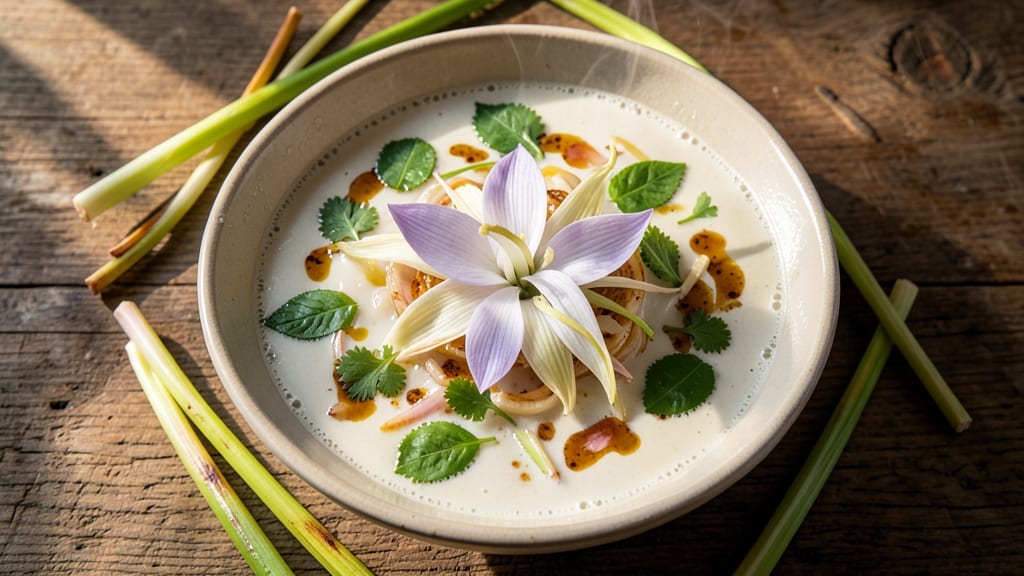
This banana flower soup transforms an exotic ingredient into a velvety, aromatic masterpiece that balances earthy banana flower with bright coconut and lemongrass. The secret lies in slow-simmering the flower's delicate fibers until they dissolve into a silky, golden broth—no meat, no fish, just pure plant-based elegance.
What makes this recipe special is the crispy topping of fried shallots and toasted coconut flakes, adding textural contrast that turns every spoonful into a revelation.
The foundation of this soup begins with properly preparing the banana flower—soaking, blanching, and squeezing out excess moisture to ensure a smooth, lump-free velouté. Coconut milk and lemongrass infuse the broth with tropical warmth, while galangal and kaffir lime leaves add depth that elevates this beyond a simple vegetable soup.
The result is a dish that's both comforting and sophisticated, perfect for plant-based diets or anyone craving restaurant-quality Southeast Asian flavors at home.
By the time you finish, you'll have a bowl of crispy-topped soup that's creamy yet light, fragrant with lemongrass and coconut, and packed with umami from the banana flower.
The contrast of silky broth against the crunchy shallots and toasted coconut creates a texture experience that makes this more than just a soup—it's a complete, satisfying meal. Serve with steamed jasmine rice to soak up every last drop of that fragrant velouté.
This recipe scales beautifully for gatherings, and the flavors actually improve when reheated, making it ideal for meal prep. For extra richness, stir in a spoonful of coconut cream before serving, or swap in mushrooms for added earthiness.
The banana flower's unique texture and mild sweetness make this soup unforgettable—once you try it, you'll understand why it's a staple in tropical kitchens.
Ingredients for banana flower soup
Exotic ingredients meet comforting flavors in this fragrant, plant-based masterpiece.
| Ingredient | Amount | Notes |
|---|---|---|
| Banana Flower 🌺 | 1 lb | Fresh, trimmed and soaked |
| Coconut Milk 🥥 | 2 cups | Full-fat for creaminess |
| Vegetable Broth 💧 | 4 cups | Low-sodium preferred |
| Galangal 🌿 | ½ cup | Fresh, peeled and sliced |
| Lemongrass 🌿 | 4 whole | Bruised stalks for flavor |
| Kaffir Lime Leaves 🍋 | 4 whole | Torn into strips |
| Shallots 🧅 | 1 cup | Thinly sliced for frying |
| Coconut Flakes 🥥 | ½ cup | Toasted for crispy topping |
| Garlic Cloves 🧄 | 4 cloves | Minced for depth |
| Lime Juice 🍋 | 2 tbsp | Freshly squeezed |
| Fish Sauce 🍜 | 1 tbsp | Vegan alternative: soy sauce |
| Sugar 🍚 | 1 tbsp | Adjust to taste |
| Olive Oil 🫒 | ¼ cup | For frying shallots |
| Salt 🧂 | 1 tsp | Sea salt preferred |
| White Pepper 🌶️ | ½ tsp | Freshly ground |
Banana flower is the star—look for fresh, purple buds at Asian markets or specialty grocers. Trader Joe's often carries it frozen if fresh isn't available. The galangal should smell citrusy and sharp, not musty. If you can't find it, ginger at half the amount works in a pinch. Lemongrass stalks should be firm and pale—avoid any with brown spots. For the kaffir lime leaves, check the refrigerated section near the herbs, as they wilt quickly once opened. The shallots? Red or yellow work best—they're sweeter than white.
No fish sauce? Soy sauce or vegan fish sauce keeps the umami. The coconut milk can be swapped for cashew cream if you prefer a lighter texture. Fresh galangal unavailable? Substitute ginger, but reduce to half the quantity. For the crispy topping, toasted coconut flakes are ideal, but crushed peanuts add a nice crunch too. The banana flower needs proper prep—soak it in water for 30 minutes, then squeeze out all moisture to avoid a watery soup. Don't skip this step!
This soup tastes even better the next day—flavors meld beautifully when reheated. Store in airtight containers for 4-5 days in the fridge. For freezing, portion before adding toppings—add crispy elements fresh when serving. The banana flower keeps 3-4 days refrigerated if stored properly in a sealed bag. Coconut flakes stay fresh up to 2 weeks in the pantry, while lemongrass holds for 1 week wrapped in damp paper towels.
Why You'll Love This Recipe
- Minimal Chopping Required: I swear by this—just trim the banana flower, slice the galangal, and crush the lemongrass. No dicing, no julienning, no stress. The broth does most of the work while you sip your coffee.
- Creamy Without Guilt: That velvety coconut milk base feels indulgent, but it’s secretly light. The galangal and lemongrass add a zesty kick that cuts through the richness—like a spa day for your taste buds (but with actual nutrients).
- Lunchbox Magic: Between us, this soup reheats beautifully. Pack it in a thermos the night before, and by noon, it’s still warm and flavorful. My kids bring it to school, and honestly? They ask for it more than the packed sandwiches.
- Budget-Friendly Luxury: A single banana flower stretches for days, and coconut milk makes it feel fancy without breaking the bank. I’ve made this for date nights, potlucks, and lazy Sundays—same recipe, different vibes. Zero waste, all win.
Step-by-step instructions for fragrant coconut-lemongrass velouté
Here's how to transform delicate banana flower into a velvety soup with aromatic depth and satisfying texture contrasts.
Prepare and Sauté the Aromatic Base
Begin by bruising the 4 whole lemongrass stalks by gently pounding them with the side of a knife. This releases their essential oils. In a large pot, heat 0.25 cup olive oil over medium heat until shimmering. Add the 1 cup shallots and 0.5 cup galangal (peeled and sliced), cooking for 5-6 minutes until softened and golden. The galangal should release its citrusy aroma—this is your flavor foundation.
Add the 4 cloves garlic and 4 whole kaffir lime leaves (torn into strips) to the pot. Cook for another 1 minute until fragrant. Here's the thing—don't let the garlic burn. Remove the pot from heat immediately if it begins to darken. This aromatic base will carry the entire soup's character, so take your time with this step.
Build the Soup with Banana Flower and Broth
Return the pot to medium heat and add the 1 lb banana flower (trimmed and soaked). Stir gently to coat the banana flower in the aromatic oil. Pour in 4 cups vegetable broth and bring to a gentle simmer. The banana flower should soften as it cooks—this typically takes 15-20 minutes. You'll know it's ready when the banana flower fibers break down and the mixture becomes velvety.
Once tender, use an immersion blender to purée the soup directly in the pot until completely smooth. If you prefer not to use an immersion blender, carefully transfer the soup to a countertop blender in batches, blending until silky. Strain through a fine-mesh sieve to ensure an ultra-smooth texture. This step is crucial for achieving that restaurant-quality velouté consistency.
Balance Flavors with Coconut and Seasonings
Return the puréed soup to the pot and stir in 2 cups coconut milk, 1 tbsp fish sauce, 1 tbsp sugar, 1 tsp salt, and 0.5 tsp white pepper. Taste and adjust—you might need a touch more salt or sugar depending on your broth's saltiness. The soup should be creamy but not overly rich, with a delicate balance of sweet, salty, and umami flavors. Simmer gently for 5 minutes to let the flavors meld.
Add 2 tbsp lime juice and stir well. The acidity brightens the entire soup, cutting through the richness of the coconut milk. Here's where it gets fun—taste again and make final adjustments. The soup should be harmonious, with each ingredient contributing its unique character without overpowering the others. This is the moment that matters: achieving perfect balance.
Create Crispy Toppings for Texture Contrast
While the soup simmers, toast 0.5 cup coconut flakes in a dry skillet over medium heat for 3-4 minutes, stirring constantly, until golden brown and fragrant. Set aside. In the same skillet, heat 1 tablespoon olive oil and fry the remaining shallots (if any) until crispy—this adds another layer of texture. The contrast between the velvety soup and crispy toppings is what makes this dish truly special.
To serve, ladle the soup into bowls and garnish with the toasted coconut flakes and crispy shallots. The golden coconut should provide a delightful crunch with each spoonful, while the shallots add a savory depth. This texture play is what elevates this simple velouté into something extraordinary. Don't skip this step—it's what delivers on that crispy promise from the title.
Pro Tips For Making Banana Flower Soup
- BLEACH THE FLOWER RIGHT: Banana flower’s natural bitterness fades fast—soak the sliced pieces in salted water (1 tbsp salt per 4 cups water) for 20-30 minutes, changing the water once. I learned this the hard way after serving a soup that tasted like overcooked artichokes. Rinse well before cooking, but don’t skip the soak—it’s the thing that matters most.
- SIMMER GALANGAL LOW: Galangal burns faster than you’d think. Once you add it with lemongrass, keep the heat at a gentle simmer—just enough to see tiny bubbles, not rolling. After burning three batches, I finally figured out that patience here means the soup won’t taste like charred spices later.
- STRAIN THE BROTH: Vegetable broth with chunks? No thanks. Strain it through a fine-mesh sieve before adding coconut milk to avoid a muddy, gritty texture. I was skeptical until I tried it—suddenly, the soup looked as clean as it tasted, and the coconut milk stayed silky.
- SAVE TIME WITH FROZEN: Frozen banana flower (yes, it exists) cuts prep time in half—just thaw and slice. If using fresh, buy the whole flower and ask the vendor to trim it for you. I skip this when I’m lazy, but the dish is noticeably better when I don’t rush the prep.
Pro cooking tips for perfect results
Banana Flower Prep
The key to a smooth velouté starts with proper banana flower preparation. Trim away any tough outer layers and soak the 1 lb of banana flower in cold water for 30 minutes to remove bitterness.
After soaking, squeeze out every drop of moisture using your hands or a clean kitchen towel. This step is non-negotiable—wet banana flower will make your soup watery and dilute the flavors.
I like to work in batches if I'm prepping a large quantity, as this helps control the moisture better. 🌿
Controlling the Heat
When sautéing the aromatic base, maintain medium heat consistently to prevent burning. Galangal and lemongrass release their flavors at medium heat, but too high a temperature will char them, creating bitter notes. I recommend using a stainless steel pot for even heat distribution—cast iron can be too hot.
Stir frequently to ensure all surfaces are properly caramelized, especially the shallots. The moment you see the garlic begin to darken, remove the pot from heat immediately. This delicate balance is what transforms good soup into exceptional soup. ⏰
Blending for Perfection
For that ultra-smooth velouté texture, blending is where the magic happens. Use an immersion blender directly in the pot for convenience, but if you prefer a countertop blender, work in batches to avoid splattering. After blending, strain the soup through a fine-mesh sieve to remove any lingering fibers.
This step ensures your soup has that luxurious, restaurant-quality mouthfeel. I've found that a nut milk bag works well too—just press firmly to extract every last drop of flavor. 💫
Coconut Milk Integration
Adding the 2 cups coconut milk at the right moment is crucial. Stir it in gently after the banana flower has fully incorporated, then simmer for just 5 minutes to warm through. Over-simmering can cause the coconut milk to separate or curdle.
For extra richness, I sometimes add 1 tbsp coconut cream at the end, but this is optional. The coconut milk should blend seamlessly, creating a velvety texture without overpowering the delicate banana flower flavor. Taste as you go—this is where you'll fine-tune the balance of sweet, salty, and umami. 🥥
Crispy Topping Secrets
For the perfect crispy topping, toast the 0.5 cup coconut flakes in a dry skillet over medium heat, stirring constantly to prevent burning. They should turn golden brown in about 3-4 minutes.
For the shallots, use just 1 tablespoon olive oil and fry until deep golden and crispy—this takes about 5-6 minutes. The key is patience; rushing this step will result in soggy toppings.
I like to keep the fried shallots warm in a 200°F oven until serving to maintain their crunch. 🔥
Final Flavor Balance
The last step is where the soup comes together. After adding the 2 tbsp lime juice, taste and adjust seasonings one final time. The acidity should brighten the coconut and banana flower flavors, creating harmony.
If the soup tastes flat, a pinch of white pepper or a splash of fish sauce can elevate it. I often add a tiny bit of chili oil for heat or a sprinkle of toasted sesame seeds for nutty depth.
This is your chance to personalize the dish while keeping the core flavors intact. ✨
Nutrition facts
Frequently asked questions
Why does the banana flower need soaking?
Soaking removes bitterness and prepares the flower for smooth blending. The 30-minute soak in cold water softens the fibers while eliminating any natural astringency. After soaking, squeezing out all moisture is critical—wet banana flower makes soup watery and dilutes flavors. This step ensures your velouté stays creamy and rich, not thin and bland.
Can I substitute galangal if I can't find it?
Yes! Use ginger at half the amount (about 0.25 cup for 0.5 cup galangal) as a substitute. Galangal has a citrusy, peppery flavor that ginger can't fully replicate, but it adds warmth and depth. For a closer match, combine ginger with a tiny pinch of black pepper and lemon zest.
How do I make the crispy topping extra crispy?
Toast coconut flakes in a dry skillet over medium heat for 3-4 minutes, stirring constantly. For shallots, fry in 1 tablespoon oil until deep golden (5-6 minutes). Keep both toppings warm in a 200°F oven until serving to maintain crunch. Pro tip: Use a paper towel to drain excess oil from fried shallots before adding to bowls.
Is this soup spicy?
The recipe includes white pepper for subtle warmth, but no chili. For heat, add chili oil or sriracha to taste. The galangal and lemongrass provide natural aromatic heat without spiciness. Adjust lime juice to balance flavors—more acidity can enhance perceived spice if you prefer it.
Can I make this soup ahead of time?
Yes! The soup tastes better reheated—flavors meld beautifully. Store in airtight containers for 4-5 days refrigerated. Reheat gently on low heat or microwave until warm. Add crispy toppings fresh when serving to maintain texture. For freezing, portion before adding toppings and freeze for up to 3 months.