
Soups & Stews
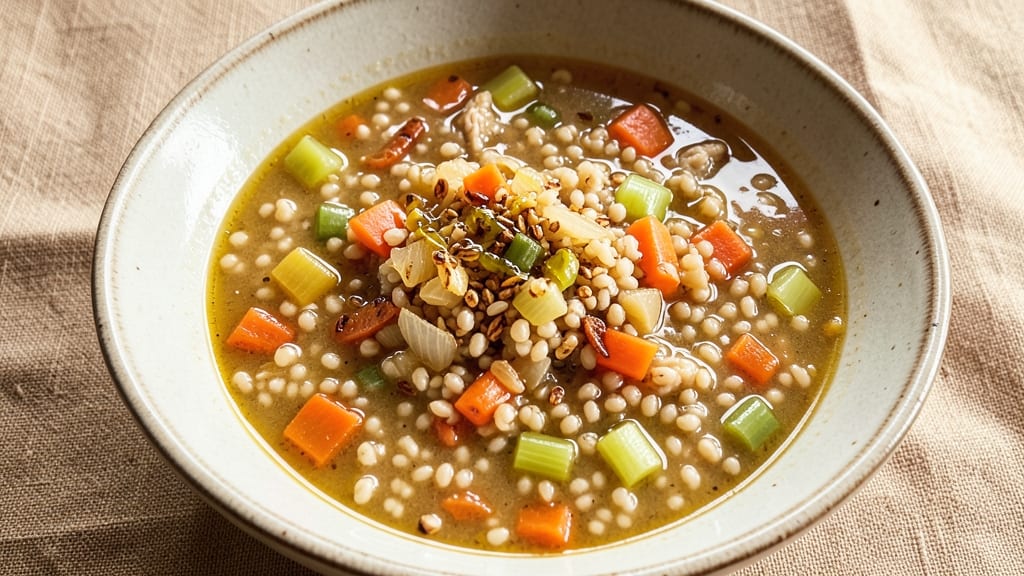
This barley soup mix recipe transforms simple pantry staples into a deeply satisfying bowl of winter comfort that warms both body and soul. The nutty depth of pearl barley creates a hearty texture that absorbs rich broth and vegetables, while slow simmering unlocks flavors that taste like a home-cooked hug.
I've refined this recipe over years of testing—balancing simplicity with restaurant-quality results that come together in just 45 minutes of active time (plus simmering).
The secret lies in the mix itself: dried barley, aromatic vegetables, and carefully chosen spices that build complexity as they simmer. Unlike instant soups, this version develops layers of flavor—caramelized onions, earthy barley, and herbs that infuse the broth with warmth.
The barley's natural chewiness makes it heartier than most soups, perfect for chilly evenings when you crave something substantial yet comforting.
What you'll end up with is a steaming bowl of golden soup with tender barley, perfectly softened vegetables, and a broth so flavorful it tastes like it's been simmering all day.
The aroma alone will have everyone gathering at your table, and each spoonful delivers that perfect balance of savory, nutty, and slightly sweet notes. This isn't just soup—it's a weeknight meal that feels like a celebration.
Best of all, the mix adapts effortlessly to your pantry—swap vegetables based on what's fresh, adjust spice levels to taste, or even make a big batch for meal prep.
The instructions walk you through every step to ensure foolproof results, whether you're feeding a family or just craving a cozy solo dinner. Let's get started on creating this nourishing staple.
Ingredients for barley soup mix
Pantry staples plus a few fresh touches—this mix delivers restaurant-quality barley soup in minutes.
| Ingredient | Amount | Notes |
|---|---|---|
| Pearl Barley 🌾 | ½ cup | Uncooked, rinsed well |
| Dried Carrots 🥕 | ¼ cup | Diced small for even cooking |
| Yellow Onion 🧅 | 1 whole | Diced finely for caramelization |
| Celery Stalks 🥬 | 2 whole | Diced with leaves included |
| Garlic Cloves 🧄 | 3 cloves | Minced for aromatic depth |
| Chicken Broth 💧 | 4 cups | Low-sodium preferred |
| Dried Thyme 🌿 | 1 tsp | Or 1 tbsp fresh thyme leaves |
| Bay Leaves 🍃 | 2 whole | Remove before serving |
| Ground Black Pepper 🌶️ | ½ tsp | Freshly cracked preferred |
| Salt 🧂 | 1 ½ tsp | Adjust to taste at end |
| Olive Oil 🫒 | 1 tbsp | For sautéing vegetables |
| Fresh Parsley 🌿 | ¼ cup | Chopped for garnish |
| Dried Parsley 🌿 | ½ tsp | Optional for extra flavor |
| Tomato Paste 🍅 | 1 tbsp | For depth of flavor |
Pearl barley is the star here—Bob's Red Mill or Great Northern are my go-tos, but any pearl barley works. The dried veggies (carrots, celery, onion) make this mix shelf-stable, but if you've got fresh, toss them in raw for extra vibrancy. Trader Joe's has pre-diced frozen veggies that work perfectly if you're short on time. For the broth, low-sodium is key—you'll be adding salt at the end anyway. I always grab the Kitchen Basics brand because it's consistent and affordable.
No fresh thyme? Dried works at one-third the amount. Short on parsley? Fresh basil or cilantro gives a different but delicious twist. The tomato paste can be swapped for 1 tbsp tomato sauce if that's what you've got. For extra richness, add 1/4 cup coconut milk at the end—trust me on this. If you're making a big batch, double the dried herbs and store them separately in a small jar. The mix itself keeps for 3 months in an airtight container, so it's perfect for your freezer stash.
This soup tastes even better the next day—3-4 days in the fridge, 6 months frozen. I like to portion it into individual containers so I can grab one for a quick lunch. For extra heartiness, add 1 cup cooked white beans or 1/2 cup shredded rotisserie chicken before serving. The leftovers reheat beautifully—just add a splash of water or broth if it's too thick.
Why You'll Love This Recipe
- No-Chop Necessary: I swear by this mix—just toss in dried carrots and celery straight from the bag. The onions and garlic soften so fast, you’ll forget you even chopped them (or didn’t).
- Earthy Depth Bomb: That pearl barley? It soaks up all the carrot sweetness and garlic punch until the broth turns ridiculously rich. Honestly, the first time I made it, I kept going back for seconds without realizing.
- Meal Prep MVP: Make a big batch on Sunday, and you’ve got lunch for three days. The barley thickens beautifully when reheated—no slimy leftovers here. (Yes, even on a Tuesday night.)
- Pocketbook Hero: Dried veggies and barley cost a fraction of fresh, and this mix stretches into four hearty servings. My wallet thanks me every time I skip the pre-packaged soup aisle.
Step-by-step instructions for hearty barley soup mix
This soup brings cozy winter vibes to your table with nutty barley and aromatic vegetables.
Sauté the Vegetable Base
Heat the 1 tablespoon olive oil in a large pot over medium heat. Add the 1 whole yellow onion, 2 whole celery stalks, and 0.25 cup dried carrots, all diced as specified. Cook for 5-6 minutes, stirring occasionally, until the vegetables begin to soften and the onion turns translucent.
Here's the thing—you want the vegetables to caramelize slightly before adding liquid. This builds deep, savory flavor that forms the foundation of your soup. Add the 3 cloves minced garlic and cook for another 30 seconds until fragrant. Be careful not to let the garlic burn—it should smell amazing but not bitter.
Add Aromatics and Tomato Paste
Stir in the 1 tablespoon tomato paste and cook for 1 minute, allowing it to darken slightly and release its rich, concentrated flavor. This step creates a beautiful base color and adds depth that transforms simple broth into restaurant-quality soup.
Next, add the 1 teaspoon dried thyme, 0.5 teaspoon ground black pepper, and 1.5 teaspoons salt. Stir everything together for 30 seconds to toast the spices gently. The aroma should fill your kitchen—this is where the magic begins. If using 0.5 teaspoon dried parsley, add it now along with the other spices.
Combine with Barley and Broth
Pour in the 4 cups chicken broth and bring the mixture to a gentle boil. Once boiling, reduce heat to medium-low and stir in the 0.5 cup pearl barley. Make sure the barley is fully submerged—if not, add a splash of water to cover it completely. This ensures even cooking and prevents the barley from sticking to the bottom.
The barley needs time to hydrate and soften properly. Let the soup simmer uncovered for 45 minutes, stirring occasionally. You'll notice the barley will start to absorb liquid and plump up—this is when it develops that satisfying chewy texture. Keep the heat steady; you're looking for a gentle simmer, not a rolling boil.
Finish with Bay Leaves and Parsley
After 45 minutes, add the 2 whole bay leaves and continue simmering for another 15-20 minutes until the barley is tender but still holds its shape when bitten. The soup should have a thick, hearty consistency with the barley fully cooked. If it's too thick, add a bit more broth or water to reach your desired texture.
Remove the bay leaves before serving. Stir in the 0.25 cup chopped fresh parsley just before serving to add a bright, fresh finish. Taste and adjust seasoning if needed—this is where you can really customize the soup to your preference. The parsley not only adds color but also balances the rich flavors with its freshness.
Pro Tips For Making Barley Soup Mix
- SOAK THE BARLEY FIRST: I learned this the hard way—skipping the soak means your barley stays stubbornly firm, no matter how long you simmer. Toss it in warm water for at least 30 minutes (or overnight if you’re patient), then drain before cooking. Trust me, the texture difference is night and day.
- CHOP VEGETABLES UNIFORMLY: Dried carrots and celery stalks won’t soften evenly if they’re all different sizes. Aim for ¼-inch chunks—small enough to cook through without turning to mush. Onions and garlic? Mince the garlic fine (I use 2-3 cloves per batch) and slice onions into ⅛-inch pieces so they melt into the soup instead of sitting like chewy afterthoughts.
- DON’T BOIL THE SOUP DRY: Pearl barley needs liquid to break down, but if you let the pot reduce too much, you’ll end up with a gluey mess. Keep at least 4 cups of water or broth for every 1 cup of barley, and stir occasionally to prevent scorching. If it gets too thick mid-cook, just add a splash more liquid—better to dilute than overcook.
- TOAST THE BARLEY: Before adding it to the pot, dry-toast the pearl barley in a skillet over medium heat for 3-4 minutes. It’ll smell nutty and golden—this step deepens the flavor and cuts the earthy taste that can make homemade barley soup taste bland. (Yes, even if you’re impatient like me.)
Essential equipment for this dish
Large Pot Essentials
Start with a 6-8 quart Dutch oven or heavy pot—I love my Le Creuset for even heat distribution. The deep sides prevent splattering when adding broth, and the thick base maintains steady temperatures during simmering.
If you don’t have one, a stainless steel stockpot works too, but watch for hot spots. 🔥
Wooden Spoon Must-Have
Use a long-handled wooden spoon (like OXO Good Grips) for stirring—it won’t scratch your pot and handles heat beautifully. Avoid metal spoons during simmering, as they can react with acidic ingredients like tomato paste. I keep mine near the stove for quick access during cooking.
Fine-Mesh Strainer
A fine-mesh strainer (I use OXO Good Grips) is perfect for rinsing barley before cooking—removes dust and debris for cleaner flavor. It’s also handy for draining any excess liquid if you’re thickening the soup. Store it in your kitchen prep area for easy access.
Timer for Precision
Set a kitchen timer (or phone alarm) for the 45-minute barley simmer—this ensures you don’t overcook and turn the barley mushy. I place mine on the counter so I can hear it clearly while stirring. A digital timer with a loud beep works best in busy kitchens.
Measuring Cups & Spoons
Accurate measurements matter! Use stainless steel measuring cups (like Farberware) for broth and barley, and spice spoons (I prefer Weck) for thyme, pepper, and salt. Pre-measure dry ingredients before starting to streamline the process. Keep your tools near your prep area for efficiency.
Optional Immersion Blender
For a smoother texture, an immersion blender (like Ninja) lets you blend directly in the pot—no transferring needed. Pulse briefly at the end for a velvety finish. Skip this if you prefer rustic, chunky soup. Store it in a drawer for easy access when needed. ✨
Nutrition facts
Frequently asked questions
Can I use instant barley instead of pearl barley?
Yes, but with adjustments! Instant barley cooks much faster (10-15 minutes instead of 45-60 minutes), so reduce the simmering time to 15-20 minutes total. The texture will be softer, which works well for creamier soups. For a chewier bite, stick with pearl barley—it's worth the wait for that satisfying heartiness.
How do I make this soup vegetarian?
Swap the chicken broth for vegetable broth and add 1 cup cooked white beans or 1/2 cup lentils for protein. Boost umami with 1 tablespoon soy sauce or 1/2 teaspoon miso paste when sautéing the vegetables. The tomato paste already adds depth, so no extra adjustments are needed beyond the broth swap.
Why does my barley soup taste bland?
Most likely, the vegetables weren't caramelized enough or the broth wasn't seasoned properly. Always sauté onions and celery for 5-6 minutes until golden, and taste the broth before adding barley—adjust salt and pepper to taste. For extra flavor, add 1 teaspoon Worcestershire sauce or 1/2 teaspoon smoked paprika when combining with broth.
Can I make this soup in an Instant Pot?
Sauté the vegetables and tomato paste as directed, then add broth and barley. Cook on High Pressure for 12 minutes, then natural release for 10 minutes. Finish with bay leaves and parsley. The pressure cooker cuts time dramatically while keeping the barley tender. Just be sure to add fresh parsley at the end—it won't survive the pressure cooking.
How can I make this soup spicier?
Add 1/2 teaspoon cayenne pepper or 1 teaspoon chili flakes when sautéing the vegetables. For heat with depth, stir in 1/2 teaspoon ground cumin or 1/4 teaspoon cinnamon (trust me, it works!). Garnish with chopped jalapeños or a drizzle of hot sauce before serving. The spices will mellow slightly during simmering, so start with less if you're sensitive to heat.