
Soups & Stews
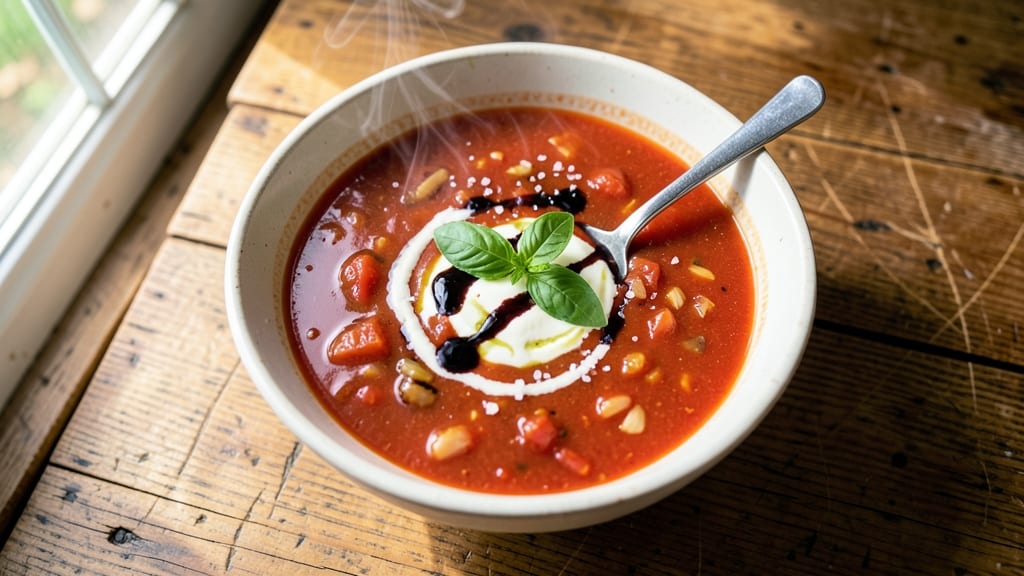
This basic tomato soup recipe with fresh tomatoes captures summer's sun-ripened essence in every spoonful—no canned tomatoes, just vibrant, bright flavor straight from your garden or farmers' market. The secret lies in a slow simmer that develops deep, caramelized notes while preserving the tomatoes' natural sweetness.
I've perfected this version over years of testing, ensuring it's simple enough for weeknight dinners but rich enough to impress guests.
What sets this recipe apart is the balance of acidity and sweetness, achieved through a touch of sugar and a splash of vinegar that brightens the tomatoes' natural flavors.
Aromatics like onion and garlic form the flavor foundation, while a splash of cream (or coconut milk for a vegan version) adds velvety richness. The soup simmers just long enough to meld all the flavors without losing that fresh, garden-picked brightness.
By the time you're done, you'll have a smooth, velvety soup with just the right amount of body—creamy enough to coat a spoon but light enough to sip easily.
The aroma alone will have everyone gathering around the kitchen, and the first taste delivers that perfect harmony of sweet, tangy, and savory. This is comfort food at its finest, with none of the heaviness.
Serve it warm with crusty bread for dipping or a sprinkle of fresh basil for a pop of color. The beauty of this recipe is its versatility—it works as a light lunch, hearty dinner starter, or even a cozy weekend brunch. Let's get cooking!
Ingredients for basic tomato soup recipe with fresh tomatoes
Sun-ripened tomatoes, aromatic onions, and a touch of cream—this is summer in a bowl.
| Ingredient | Amount | Notes |
|---|---|---|
| Fresh Tomatoes 🍅 | 2 lb | Ripe, vine-ripened preferred |
| Yellow Onion 🧅 | 1 whole | Medium size, diced |
| Garlic Cloves 🧄 | 4 cloves | Peeled, minced |
| Extra-Virgin Olive Oil 🫒 | ½ cup | For sautéing aromatics |
| Vegetable Broth 🍲 | 4 cups | Low-sodium preferred |
| Granulated Sugar 🍚 | 1 tbsp | Balances acidity |
| White Vinegar 🍶 | 1 tbsp | Brightens flavors |
| Heavy Cream 🥛 | ½ cup | Full-fat for richness |
| Fresh Basil Leaves 🌿 | ¼ cup | Chopped for garnish |
| Salt 🧂 | 1 ½ tsp | Kosher or sea salt |
| Ground Black Pepper 🌶️ | ½ tsp | Freshly ground preferred |
| Fresh Thyme Leaves 🌿 | 1 tbsp | Optional, for depth |
The tomatoes are everything here. Farmers' market or garden-picked makes all the difference—look for vibrant reds with a few yellows for that perfect balance of sweet and tang. I usually grab a mix of heirloom and Roma tomatoes at Whole Foods or my local Trader Joe's when I can't get fresh from my garden. If you're using heirlooms, remove the seeds and chop them roughly for a chunkier texture. For Romas, just halve them. The onions and garlic are your flavor anchors—yellow onions add sweetness, while garlic brings that deep, savory punch. Toast the garlic in the olive oil until it's just golden, not browned—that's where the magic happens.
No fresh basil? Dried oregano at half the amount works in a pinch, but honestly, fresh basil is worth the trip to the store. The cream can be swapped for coconut milk if you're avoiding dairy, though it'll be slightly lighter. Running low on vinegar? Lemon juice works too—just use the same amount. The sugar balances the acidity, so don't skip it, but if you're using very sweet tomatoes, you can cut it to 1/2 tbsp. And if you're making this ahead, freeze the broth and cream separately to save time later.
This soup tastes even better the next day once all the flavors meld together. Store it in the fridge for up to 5 days, or freeze portions for 3 months. I like to make a big batch and portion it out—perfect for quick lunches or dinner starters. The basil wilts fast, so add it right before serving. If you're serving with crusty bread, make sure it's fully cooled before storing to keep it fresh.
Why You'll Love This Recipe
- No-Chop Night: I swear by this when I’m too tired to dice anything. Toss whole tomatoes (halved if you’re feeling fancy) into the pot with raw onion and garlic—no prep, no mess. The broth does all the work while you sip wine and pretend you’re a chef.
- Sunshine in a Bowl: That first taste of fresh tomatoes simmered with garlic and olive oil? It’s like summer in a spoonful. The acidity cuts through the richness of the broth, and the olive oil ties it all together—simple, but ridiculously good.
- Leftovers That Shine: This soup actually gets better the next day. The flavors meld, and it’s perfect for lunches or quick dinners. I make a double batch on Sundays—freezes like a dream and saves me from takeout nights.
- Pantry Hero: Five ingredients, zero specialty items. If you’ve got tomatoes, onion, garlic, oil, and broth, you’ve got dinner. Honestly, it’s my go-to when I’m broke or lazy—or, let’s be real, both.
Step-by-step instructions for vibrant tomato soup
Here's how to transform garden-fresh tomatoes into velvety, bright tomato soup.
Sauté Aromatics Until Fragrant
Heat the 0.5 cup extra-virgin olive oil in a large pot over medium heat. Add the 1 whole yellow onion and cook for 5-6 minutes until softened and translucent. You'll know it's ready when the onion releases its sweet aroma and the edges begin to turn golden.
Add the 4 cloves minced garlic and the 1 tbsp fresh thyme leaves (if using), stirring constantly for 30 seconds until the garlic becomes fragrant. This step builds the flavor foundation—don't rush it. The garlic should smell pungent but not burn, which happens in seconds if you walk away.
Roast and Blend the Tomatoes
While the aromatics cook, cut the 2 lb fresh tomatoes into quarters, removing the cores. Place them cut-side down on a baking sheet and roast at 400°F for 15-20 minutes until their skins blister and darken slightly. Roasting deepens their natural sweetness and mellows their acidity.
Transfer the roasted tomatoes to a blender along with the onion-garlic mixture. Add 1 tbsp white vinegar and 1 tbsp granulated sugar—this balances the acidity and enhances the tomatoes' natural sweetness. Blend until completely smooth, scraping down the sides as needed. The mixture should be silky, with no visible chunks.
Simmer the Soup Base
Return the blended tomato mixture to the pot and stir in the 4 cups vegetable broth. Bring to a gentle boil, then reduce heat to medium-low and let it simmer uncovered for 15-20 minutes. Stir occasionally to prevent sticking, and taste occasionally to monitor seasoning.
You'll notice the soup thickens slightly as it simmers. If it becomes too thick, add 2-3 tablespoons of water to reach your preferred consistency. The soup should be velvety but still pourable—this is the ideal texture for spooning.
Finish with Cream and Fresh Herbs
Lower the heat to low and stir in the 0.5 cup heavy cream. Let it warm through for 2-3 minutes—just until it's heated but not boiling. The cream adds richness without overpowering the bright tomato flavor. If you prefer a lighter soup, you can reduce the cream to ¼ cup.
Season with 1.5 tsp salt and 0.5 tsp freshly ground black pepper, then stir in the 0.25 cup chopped fresh basil leaves. Taste and adjust seasoning if needed—the basil adds a fresh, bright finish that cuts through the creaminess. Serve immediately while warm, garnished with additional basil if desired.
Pro Tips For Making Basic Tomato Soup Recipe With Fresh Tomatoes
- Char the Onions Properly: Don’t just soften those onions—get them deep golden brown, almost crispy at the edges. I learned this the hard way when my soup tasted bland because I rushed the cooking. Use medium heat and stir often; if they start to burn, pull the pot off for a minute and let it cool slightly before continuing.
- Seed and Chop Tomatoes Fast: Skip the fuss of cutting around seeds—just scoop them out with a spoon after a quick X-slice. For chunky texture, leave some skins on (they add depth), but remove the toughest ones. If you’re short on time, a box grater works in a pinch, but a sharp knife gives you more control.
- Simmer, Don’t Boil: Once the tomatoes hit the pot, keep the heat low enough that you barely see bubbles at the edges. Boiling turns soup watery and dulls the tomato flavor. If it’s too thick, add a splash of broth later—don’t rush it.
- Finish with Cold Butter: Stir in a pat of cold butter (or a drizzle of olive oil) off the heat at the very end. It coats the soup, making it silky and balancing acidity—no waiting for it to melt in. (Yes, even if you’re impatient like me.)
Perfect pairings for this recipe
Bread Pairings
Crusty sourdough or baguette are my go-to choices—their chewy texture contrasts beautifully with the smooth tomato soup. I like to toast slices lightly so they stay sturdy when dipped. For a heartier option, try ciabatta or focaccia, which soak up the creamy broth like a dream. 🥖
Cheese Boards
Create a simple cheese board with mozzarella pearls, pecorino romano, and goat cheese to complement the soup's acidity. The creamy mozzarella pairs perfectly with the tomato's brightness, while the sharp pecorino adds a salty contrast.
Add fig jam or honey for a touch of sweetness that balances the tang.
Protein Additions
Turn your soup into a full meal by adding grilled chicken breast or crispy prosciutto. The protein cuts through the richness of the cream, making it more satisfying. For a vegetarian option, top with white beans or toasted pine nuts for extra texture and plant-based protein.
Wine Pairings
A crisp Pinot Grigio or Sauvignon Blanc enhances the soup's bright acidity. The wine's citrus notes mirror the tomatoes' freshness, while its light body won’t overpower the dish. If you prefer red, a light Chianti works surprisingly well—just let it breathe for 10 minutes before serving. 🍷
Herb Garnishes
Fresh basil, thyme, or parsley add a pop of color and freshness to your bowl. I like to tear basil leaves by hand for a rustic touch, while a sprinkle of toasted breadcrumbs adds crunch.
For a smoky twist, finish with a pinch of smoked paprika or a drizzle of balsamic glaze.
Seasonal Vegetables
In summer, add grilled zucchini or roasted bell peppers for extra freshness. In fall, try caramelized onions or sautéed mushrooms to deepen the soup’s flavor. These additions keep the dish vibrant year-round while complementing the tomato’s natural sweetness. 🌱
Nutrition facts
Frequently asked questions
Can I use canned tomatoes instead of fresh?
Fresh tomatoes give that garden-fresh brightness, but you can use canned tomatoes in a pinch! For best results, choose high-quality crushed tomatoes (not diced) and reduce the broth to 2 cups to maintain balance. Simmer slightly longer (25 minutes) to develop deeper flavors. The texture will be smoother, but the roasting step won't be needed.
Why does my tomato soup taste too acidic?
The sugar and vinegar balance acidity, but if your tomatoes are extra tart, you may need more sweetness. Try adding ½ tsp more sugar or a pinch of brown sugar while simmering. For a tangy kick without overpowering, a splash of orange juice (1 tbsp) can add natural sweetness while brightening flavors.
Can I make this soup without dairy?
Swap the ½ cup heavy cream for ½ cup coconut milk (full-fat for richness) or ¼ cup cashew cream (blend soaked cashews with water). For extra creaminess, stir in 1 tbsp nutritional yeast after simmering. The texture will be lighter but still velvety—just adjust seasoning since plant-based milks vary in saltiness.
How long can I store leftovers?
Store in an airtight container in the fridge for up to 5 days, or freeze for 3 months. The flavors actually improve overnight as ingredients meld! When reheating, warm gently on the stove (don't boil) to preserve texture. Add a splash of water if it thickens too much—just stir until smooth.
What if I don't have a blender?
No problem! Use an immersion blender directly in the pot after simmering. For chunkier texture, mash the roasted tomatoes with a potato masher first, then strain through a fine-mesh sieve if you want smoothness. The soup will have more texture but still be delicious—just stir well to distribute all flavors evenly.