
Soups & Stews
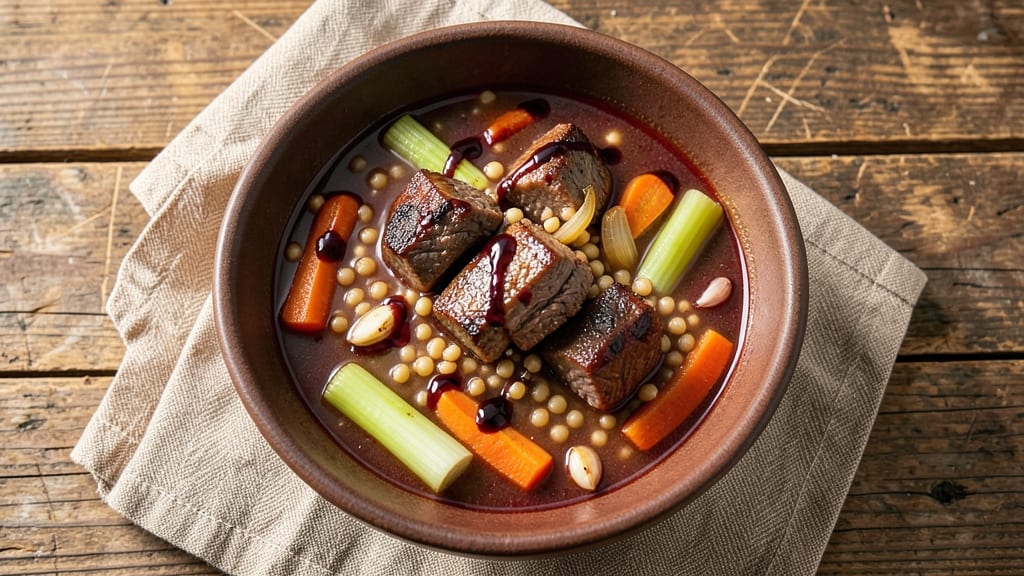
This beef barley soup with red wine transforms humble ingredients into a restaurant-worthy simmer that warms the soul and satisfies even the pickiest eaters. The secret lies in the red wine—its acidity tenderizes the beef while adding layers of depth that store-bought broth can’t match.
I’ve perfected this recipe over years of testing, ensuring every spoonful delivers rich, savory comfort with just the right chew from barley. The process starts with searing beef chunks until deeply browned, locking in flavor that dissolves into the broth during a long, slow simmer.
Red wine deglazes the pan, creating a foundation that’s both aromatic and complex, while barley softens into a hearty, slightly nutty texture. This isn’t just soup—it’s a meal in a bowl, packed with protein, fiber, and warmth that lingers long after the last bite.
What makes this recipe stand out is the balance: the wine’s boldness is mellowed by herbs and vegetables, while the barley’s earthiness grounds the richness of the beef. The result is a soup that’s hearty enough for winter nights but versatile enough for any occasion.
Serve it with crusty bread to soak up every last drop of that velvety broth. Ready in about 2 hours (mostly hands-off time), this soup is perfect for meal prep or last-minute dinners. The flavors only deepen as it sits, making it even more rewarding the next day.
Let’s get cooking—your kitchen will smell like a cozy European bistro in no time.
Ingredients for beef barley soup recipe with red wine
Sixteen ingredients, two hours of simmering, one unforgettable bowl of comfort.
| Ingredient | Amount | Notes |
|---|---|---|
| Chuck Roast 🥩 | 2 lb | Cut into 1.5-inch chunks |
| Yellow Onion 🧅 | 1 whole | Chopped into 1/2-inch pieces |
| Carrots 🥕 | 4 medium | Peeled and cut into 1-inch chunks |
| Celery Stalks 🧄 | 3 whole | Trimmed and cut into 1-inch pieces |
| Garlic Cloves 🧄 | 4 cloves | Minced for depth of flavor |
| Pearl Barley 🌾 | 1 cup | Rinsed before cooking |
| Red Wine 🍷 | 1 cup | Bold dry variety like Cabernet |
| Beef Broth 💧 | 4 cups | Low-sodium preferred |
| Fresh Thyme 🌿 | 2 sprigs | Stems removed for infusion |
| Fresh Parsley 🌿 | ¼ cup | Chopped for garnish |
| Tomato Paste 🍅 | 1 tbsp | For umami depth |
| Olive Oil 🫒 | 2 tbsp | For searing beef |
| Salt 🧂 | 1 ½ tsp | Kosher or sea salt |
| Black Pepper 🌶️ | ½ tsp | Freshly ground |
| Bay Leaves 🌿 | 2 whole | For aromatic depth |
The beef is non-negotiable—chuck roast delivers the best texture and flavor. Costco or Whole Foods carry it pre-cut, but if you're buying whole, ask the butcher to trim excess fat. For the wine, Cabernet Sauvignon or Merlot work best—their boldness stands up to the beef. Barley can be tricky: pearl barley is the most common, but if you spot hull-less barley at a specialty store, it cooks faster. Fresh thyme and parsley elevate the dish, but dried thyme at one-third the amount works in a pinch. The tomato paste might seem small, but it's what deepens the umami profile.
No red wine? Substitute with beef broth and 1 tbsp balsamic vinegar—it mimics the acidity. Carrots and celery can be swapped for turnips or parsnips if you're feeling adventurous. The bay leaves are essential—they infuse the broth with a subtle, earthy aroma that rounds out the wine's boldness. For a quicker version, quick-cooking barley cuts prep time by 20 minutes, though the texture will be slightly softer. If you're prepping ahead, par-cook the barley for 15 minutes before storing, then finish cooking later.
This soup tastes even better the next day—flavors meld beautifully after resting. Store in an airtight container for 4-5 days in the fridge or freeze for up to 3 months. For reheating, add a splash of water or broth to prevent thickening. I always make a double batch: one for dinner, one for lunches. The barley holds up perfectly when reheated, and the wine's notes become even more pronounced as the soup sits. Serve with crusty bread or garlic toast to soak up every last drop of that velvety broth.
Why You'll Love This Recipe
- One-Pot Magic: I swear by this—just dump everything in a Dutch oven, let it simmer, and walk away. No fancy techniques, no last-minute chopping frenzy. That chuck roast practically melts into tender perfection while you handle the rest of dinner.
- Red Wine Magic: Honestly, the red wine isn’t just for flavor—it’s the secret weapon. It deepens the broth into something rich and complex, with just a hint of earthiness from the carrots and celery. The garlic? Oh, it’s the cherry on top, making every spoonful irresistible.
- Leftovers That Shine: This soup tastes better the next day—yes, really. I make a double batch on Sundays, and by Wednesday, it’s still my go-to. Freeze half if you’re feeling extra, and reheat it straight from the freezer. No thawing, no fuss.
- Budget-Friendly Feast: Chuck roast is cheap, and this recipe stretches it across bowls and bowls. Add barley for extra substance, and suddenly you’ve got a hearty meal that fills the house with warmth—without draining your wallet. My college self would’ve cried happy tears.
Step-by-step instructions for beef barley soup with red wine
Transform humble ingredients into a rich, hearty soup with layers of wine-infused depth.
Sear the Chuck Roast for Maximum Flavor
Heat a large Dutch oven over medium-high heat and add the 2 tablespoons olive oil. Once shimmering, add the 2 lb chuck roast in 1.5-inch chunks, working in batches if needed. Sear for 3-4 minutes per side until deeply browned and developing a crust. This step builds the foundation of your soup's rich flavor.
Real talk: Don't crowd the pan or the temperature will drop and you'll steam instead of sear. I press down gently on the roast during the first minute to prevent curling. Once browned, transfer the meat to a plate and set aside temporarily.
Build the Aromatic Base with Vegetables
In the same Dutch oven, add the 1 whole yellow onion chopped into ½-inch pieces, 4 medium carrots cut into 1-inch chunks, and 3 whole celery stalks trimmed and cut into 1-inch pieces. Cook for 8-10 minutes until the vegetables soften and begin to caramelize slightly, stirring occasionally.
The reason we wait until the vegetables soften is that raw onions and celery release bitter compounds. Cooking them until just tender transforms their flavor. Add the 4 cloves minced garlic and 1 tablespoon tomato paste and cook for another 1 minute until fragrant. This is where the umami depth begins to develop.
Deglaze and Infuse with Red Wine
Pour in the 1 cup bold dry red wine and scrape up all the browned bits from the bottom of the pot using a wooden spoon. This deglazing step captures all the concentrated meaty flavor that would otherwise burn. Let the wine simmer for 3-4 minutes until reduced by about half, until you can smell its rich, concentrated aroma.
I always use a dry red wine like Cabernet for this recipe—the tannins complement the beef beautifully. If you're concerned about alcohol content, the wine will cook off significantly during the long simmering process. Add the 4 cups beef broth, 1.5 teaspoons salt, 0.5 teaspoon black pepper, and 2 whole bay leaves to the pot.
Simmer the Soup Until Tender
Return the seared beef to the pot and bring everything to a gentle boil. Once boiling, reduce heat to low and add the 1 cup rinsed pearl barley and 2 sprigs fresh thyme with stems removed. Cover and simmer for 1 hour to 1 hour 15 minutes until the beef is fork-tender and the barley is cooked through.
Here's the thing—this is where patience pays off. Check for doneness by piercing the largest piece of beef with a fork. It should slide in easily with no resistance. If the soup looks too thin at this point, don't worry—it'll thicken as the barley absorbs liquid during the final resting period.
Finish and Garnish for Restaurant-Quality Presentation
Remove the 2 whole bay leaves and 2 sprigs thyme from the soup. Taste and adjust seasoning if needed—sometimes the barley needs a touch more salt to balance the flavors. Let the soup sit off the heat for 10 minutes to allow the barley to finish absorbing liquid and the flavors to meld.
Ladle the soup into bowls and garnish with ¼ cup chopped fresh parsley. The parsley adds a fresh contrast to the rich, wine-infused broth. Serve immediately with crusty bread to soak up every last drop of that flavorful liquid. Each spoonful should deliver tender beef, chewy barley, and complex wine notes that make this soup truly special.
Pro Tips For Making Beef Barley Soup Recipe With Red Wine
- Brown the Chuck Hard: That chuck roast won’t fall apart like it should if you don’t get it deep golden brown first—think crusty, not just pink. I used to rush this step, but now I take my time with 5-7 minutes on medium-high, stirring occasionally, until it’s releasing fat like a well-run sausage factory. (Yes, even if you’re impatient like me.)
- Slice Celery Thin: Skip the thick celery chunks—this isn’t stew. Cut those stalks into ¼-inch slices so they cook down fast and actually soften instead of turning to mush. I learned this the hard way when my soup ended up with chewy celery sticks that made me want to gag. (Your future self will thank you.)
- Deglaze with Wine Early: Don’t wait until the meat’s done to add the red wine—scrape up those browned bits right after searing the onion and garlic. That’s where all the flavor lives, and letting it simmer into the wine first means your soup won’t taste like it’s missing something. (I know, I know—it’s an extra step, but it makes a real difference.)
- Add Barley Last: Barley needs time to soak up liquid, so toss it in during the final 20-25 minutes of simmering. If you add it too soon, you’ll end up with mushy, gluey grains instead of those perfect al dente bites. (And no, “almost done” isn’t close enough—set a timer.)
Common mistakes when making your beef barley soup recipe with red wine
Skipping the Sear
Skipping the sear is the fastest way to turn your soup into something flat and flavorless. That golden crust on the beef is where the Maillard reaction happens—it creates deep, meaty notes that dissolve into the broth during simmering.
I’ve made this mistake early on, and the result was a soup that tasted more like beef broth than anything special. Always take the time to sear your beef in batches if needed. 🔥
Using Low-Quality Wine
Cheap wine will make your soup taste like it’s been cooked with vinegar. I recommend using a bold dry red wine like Cabernet Sauvignon or Merlot—these wines have enough body and tannins to complement the beef without overpowering it.
If you’re using a budget wine, opt for one with at least 12-13% alcohol and no added sugars. The last thing you want is a sweet, cloying flavor that clashes with the savory broth.
Overcrowding the Pot
Adding all the ingredients at once can cause the soup to steam instead of simmer, leading to uneven cooking and a watery texture. I learned this the hard way when I tried to speed up the process by dumping everything in at once.
Instead, sear the beef in batches, then cook the vegetables in stages. This ensures everything caramelizes properly and the flavors develop fully. A crowded pot also makes it harder to scrape up those flavorful browned bits during deglazing.
Not Deglazing Properly
Deglazing is where the magic happens—those browned bits stuck to the bottom of the pot are packed with flavor. If you skip this step or don’t scrape them up thoroughly, your soup will lack depth.
Use a wooden spoon to scrape every last bit, then let the wine simmer until it reduces by half. This concentrated liquid is what infuses the soup with rich, complex notes. I once rushed this step and ended up with a soup that tasted bland and one-dimensional.
Ignoring the Simmer Time
Rushing the simmering time is a common mistake that results in tough beef and undercooked barley. The beef needs at least 1 hour to become fork-tender, and the barley needs time to absorb the broth and soften properly.
I’ve seen people cut the simmering time short to save energy, but the result is always a disappointing texture. Patience here is key—let the soup work its magic on the stove. The longer it simmers, the more the flavors meld together.
Forgetting to Rest the Soup
Skipping the 10-minute rest after cooking means missing out on the final flavor development. During this time, the barley finishes absorbing liquid, and the broth thickens slightly. I’ve served soup straight from the heat only to have it arrive at the table too thin and underseasoned.
Let it sit off the heat before serving—your taste buds will thank you. This small step makes a world of difference in the final texture and flavor. 💡
Nutrition facts
Frequently asked questions
Can I use white wine instead of red wine in this recipe?
The red wine adds depth and richness that white wine can't match, but if you must substitute, use a dry white like Sauvignon Blanc. The acidity will still tenderize the beef, though the flavor profile will be lighter. For best results, add 1 teaspoon balsamic vinegar to mimic the wine's complexity.
How do I know when the beef is fully cooked?
The beef should be fork-tender with no pink center when pierced. For chuck roast, this typically takes 1 hour to 1 hour 15 minutes of simmering. If you're unsure, cut into the largest piece—it should slide apart easily. Overcooking can make it dry, so aim for just until tender.
Can I make this soup in an Instant Pot or slow cooker?
For an Instant Pot, sear the beef first, then cook on high pressure for 30 minutes followed by a 10-minute natural release. In a slow cooker, combine all ingredients and cook on low for 6-7 hours or high for 3-4 hours. The wine will still infuse beautifully, though the texture may be slightly softer.
Why does my barley turn mushy?
Overcooking is the most common cause. Pearl barley should have a slight bite—if it's completely soft, it's been cooked too long. For best results, cook it for 1 hour to 1 hour 15 minutes alongside the beef. If using quick-cooking barley, reduce time by 20-25 minutes. Always rinse the barley before adding to prevent gumminess.
How can I make this soup spicier?
Add ½ teaspoon red pepper flakes or 1 teaspoon cayenne pepper when deglazing with wine. For heat with depth, include 1 chipotle pepper in adobo (minced) along with the tomato paste. Start with less—you can always add more later. The wine's acidity balances the spice beautifully.