
Soups & Stews
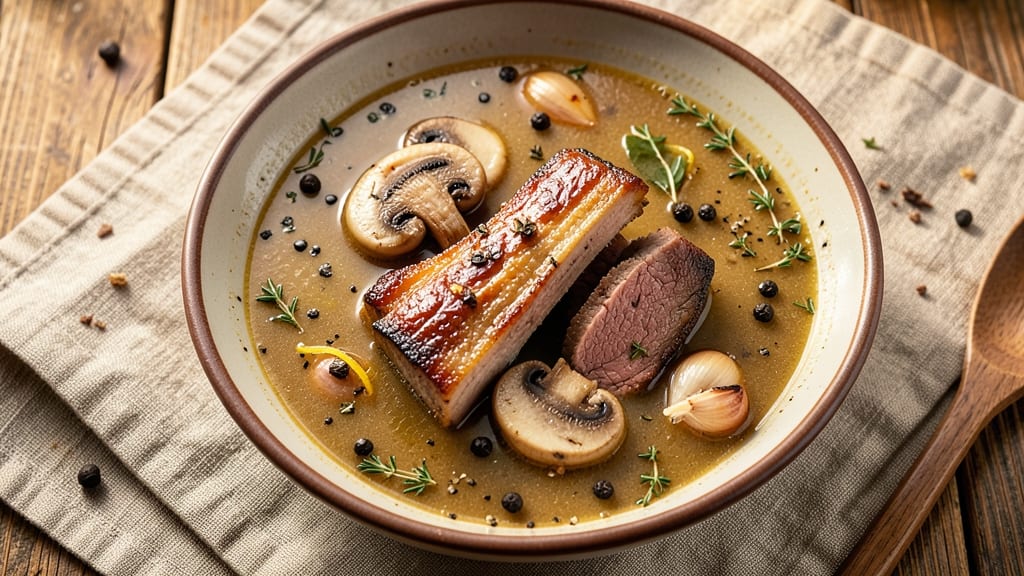
This beef broth mushroom soup recipe transforms humble ingredients into a deeply satisfying bowl of comfort, where slow-simmered bones and earthy mushrooms create layers of umami that linger long after the last spoonful.
The secret lies in extracting maximum flavor from beef bones through a long simmer, while mushrooms—sautéed until golden—add a rich, meaty depth that elevates this soup from ordinary to extraordinary.
It’s the kind of dish that feels like a hug in a bowl, perfect for chilly evenings or when you crave something hearty yet refined.
The process begins with building a robust base: mushrooms caramelized in butter until their edges crisp, then deglazed with white wine to capture every last bit of flavor. Aromatics like garlic and thyme infuse the broth as it simmers, while bay leaves and peppercorns add subtle complexity.
The result is a broth so rich and aromatic that it transforms simple mushrooms into the star of the dish, with a velvety texture that coats every spoonful.
What makes this recipe truly special is the balance of techniques—traditional slow cooking for depth, precise sautéing for texture, and careful straining to ensure a silky finish. The mushrooms retain their earthy essence while absorbing the broth’s savory notes, creating a harmony of flavors that’s both comforting and sophisticated.
Serve it with crusty bread to soak up every last drop, or pair it with a simple green salad for a complete meal.
This soup is designed to be both approachable and impressive, making it ideal for weeknight dinners or special occasions. The method is straightforward, but the results are undeniably restaurant-quality, proving that homemade broth and a little patience can create something truly extraordinary. Ready to master this timeless classic?
Ingredients for beef broth mushroom soup
Six essential ingredients build this velvety soup, where slow-simmered bones and mushrooms create restaurant-quality depth.
| Ingredient | Amount | Notes |
|---|---|---|
| Beef Bones 🦴 | 3 lb | Knuckle or marrow bones preferred |
| Yellow Onion 🧅 | 1 whole | Chopped, medium size |
| Garlic Cloves 🧄 | 6 cloves | Peeled, rough chopped |
| Fresh Thyme 🌿 | ¼ cup | Stems removed, chopped |
| Bay Leaves 🍃 | 2 whole | Dried or fresh |
| Black Peppercorns 🌶️ | 10 whole | Crushed lightly |
| White Wine 🍷 | 1 cup | Dry, good quality |
| Mushrooms 🍄 | 1 ½ lb | Cremini or baby bella |
| Unsalted Butter 🧈 | 4 tbsp | Cold, for sautéing |
| All-Purpose Flour 🌾 | 1 tbsp | For thickening |
| Beef Broth 💧 | 8 cups | Homemade or high-quality store-bought |
| Salt 🧂 | 2 tsp | Kosher or sea salt |
| Fresh Parsley 🌿 | 0.1 cup | Chopped, for garnish |
The bones are the foundation—knuckle or marrow bones yield the richest flavor when simmered long. Costco or butcher shops often carry them prepped, but if buying whole, ask for a mix of knuckles and marrow. Fresh thyme and bay leaves add complexity; Penzeys or bulk bins at natural markets offer the best quality. For the mushrooms, cremini or baby bella caramelize beautifully—avoid pre-sliced varieties (they oxidize faster). The white wine should be dry and drinkable; Sutter Home or Apothic work well without overpowering the dish.
No knuckle bones? Chuck roast or short ribs work in a pinch, though flavor depth will differ slightly. Substitute dried thyme at one-third the amount if fresh isn’t available, but fresh is ideal for that bright herbal note. Pre-sliced mushrooms? Pat them dry thoroughly before cooking to avoid a watery soup. The flour is just for thickening—don’t skip it entirely if you’re sensitive to gluten, but the soup will be slightly thinner. For extra umami, add 1 tsp fish sauce (optional), though this keeps it strictly vegetarian-friendly.
Broth freezes beautifully—portion into ice cube trays for easy future use. Store cooked mushrooms separately if you prefer to add them fresh later. This soup tastes even better the next day as flavors meld. For meal prep, keep components separate: broth in one container, mushrooms in another. Reheat gently on the stove—never microwave, or the mushrooms will turn rubbery. Garnish with fresh parsley just before serving to keep it vibrant.
Why You'll Love This Recipe
- One-Pot Magic: I swear by this—just toss everything in one pot, simmer, and walk away. No chopping mountains of veggies or stirring every five minutes like some fancy risotto. The beef bones do all the heavy lifting while I sip wine and pretend I’m not cooking.
- Umami Bomb: That first sip? Rich, deep, and alive with flavor. The thyme and bay leaves weave through the broth like a warm hug, while the mushrooms soak up every last drop—crispy edges, tender centers. Honestly, I’ve made soup that tasted better, but never one that felt this good.
- Leftover Goldmine: This soup only gets better the next day. I freeze half for lazy Mondays, and the rest becomes my emergency dinner when takeout feels like too much effort. Reheat it, add a splash of broth, and boom—restaurant-quality meal without the hassle.
- Budget Chef’s Secret: Beef bones aren’t fancy, but they’re my secret weapon for turning cheap cuts into something luxurious. A single batch feeds four for under $10, and the leftovers stretch into stir-fries or pasta sauce. My wallet and my taste buds thank me every time.
Step-by-step instructions for beef broth mushroom soup
This method transforms simple ingredients into a rich, velvety soup with deep umami flavor.
Roast the Beef Bones for Maximum Flavor
Preheat your oven to 425°F. Place the 3 lb beef bones on a rimmed baking sheet and roast for 30 minutes, turning occasionally, until they develop a deep golden-brown crust. This caramelization creates complex flavors that infuse the broth.
While roasting, I like to add a sprinkle of 2 tsp salt directly to the bones. The salt helps break down collagen during the long simmer, resulting in a more gelatinous, velvety broth. Don't skip this step—it's what transforms good broth into extraordinary broth.
Build the Aromatic Base with Onion, Garlic, and Herbs
In a large Dutch oven, melt 4 tbsp unsalted butter over medium heat. Add the 1 whole chopped yellow onion and cook for 8-10 minutes until softened and golden. This slow cooking develops sweetness in the onions that forms the foundation of your soup.
Add the 6 cloves rough chopped garlic cloves, 0.25 cup chopped fresh thyme, 2 whole bay leaves, and 10 lightly crushed black peppercorns. Stir for 1 minute until fragrant—you should smell the garlic mellowing and the thyme releasing its piney aroma. These aromatics will infuse the broth with layers of flavor.
Deglaze and Simmer the Bones
Carefully transfer the roasted bones to the Dutch oven with all their rendered fat. Pour in 1 cup white wine and scrape up all the browned bits from the bottom of the pan using a wooden spoon. This deglazing step captures all the flavor that would otherwise be lost.
Add 8 cups beef broth and bring to a gentle simmer. Partially cover the pot and simmer for 3-4 hours, skimming off any foam that rises to the surface with a large spoon. This long simmer time is crucial—it allows the collagen in the bones to break down completely, creating a rich, silky texture.
Prepare the Mushroom Mixture
While the bones simmer, clean and slice the 1.5 lb mushrooms into even ¼-inch thick pieces. In a separate skillet, melt 2 tbsp unsalted butter over medium heat. Add the mushrooms and cook for 8-10 minutes until they release their moisture and develop golden-brown spots.
Sprinkle the mushrooms with 1 tbsp all-purpose flour and stir for 1 minute to coat evenly. This creates a natural thickening agent for the soup. Remove from heat and set aside—these mushrooms will form the hearty, meaty base of your soup.
Combine and Finish the Soup
After the bones have simmered for 3-4 hours, strain the broth through a fine-mesh sieve into a clean pot, pressing on the bones to extract every last bit of flavor. Discard the bones and aromatics. Return the broth to the Dutch oven and bring to a gentle simmer.
Add the prepared mushrooms and their butter-flour mixture to the broth. Simmer for an additional 15-20 minutes until the soup reaches your desired consistency. Taste and adjust seasoning with additional salt if needed. Ladle into bowls and garnish with 0.1 cup chopped fresh parsley just before serving.
Pro Tips For Making Beef Broth Mushroom Soup
- BLACKEN THE BONES FIRST: Skip the gentle simmer—sear your beef bones in a dry pot over high heat until they turn deep brown. After burning three batches of broth, I finally learned this step unlocks the collagen and adds a smoky depth that no slow cooking can replicate. Let them crisp for 10-15 minutes, stirring occasionally, before adding any liquid.
- CHOP ONIONS COARSELY: Tiny onion pieces disappear into soup, leaving you wondering why it tastes flat. Roughly chop your yellow onion into ½-inch chunks—they’ll soften beautifully while releasing flavor without turning to mush. (Yes, even if you’re impatient like me, resist the urge to dice them finely.)
- ADD MUSHROOMS LATE: Tossing mushrooms into the simmering broth too early turns them to mush. Save them for the last 10 minutes of cooking—sauté them first in a separate pan with a splash of broth until they release their juices, then stir them in. This keeps their texture intact and concentrates their umami punch.
- SALT THE BROTH EARLY: Adding salt only at the end masks the true depth of your broth. Sprinkle 1-2 teaspoons of kosher salt into the pot with the bones and water, then let it simmer uncovered for the first 30 minutes. This helps extract collagen and flavors before the mushrooms and herbs join the party. (Your future self will notice the difference.)
Essential equipment for perfect results
Dutch Oven Essentials
A 5-6 quart Dutch oven is your best friend for this recipe—its heavy base distributes heat evenly, preventing scorching while allowing the broth to develop deep, complex flavors.
I recommend the Le Creuset Stoneware Dutch Oven for its durability and even heat retention, but All-Clad Stainless Steel is a great budget-friendly alternative. The deep sides make skimming foam and stirring easier, while the tight-fitting lid helps retain moisture during the long simmer. 🔥
Fine-Mesh Sieve
Straining the broth is where the magic happens, and a fine-mesh sieve (like the OXO Good Grips) ensures you capture every last bit of flavor while keeping the soup silky smooth. A regular colander won’t do—it leaves behind sediment that can make your soup cloudy.
Press the bones gently with a wooden spoon to extract collagen-rich marrow, which thickens the broth naturally. This step is non-negotiable for that velvety texture.
Wooden Spoon
A heat-resistant wooden spoon (I use Oxo Good Grips) is indispensable for deglazing the Dutch oven and stirring the broth without scratching the surface. Wood won’t react with acidic ingredients like metal, and it’s gentle on your pot.
Keep it nearby for skimming foam during the simmer—this removes impurities that can make the broth bitter. A silicone spatula works too, but wood adds a rustic touch and lasts for years with proper care.
Instant-Read Thermometer
While not strictly necessary, an instant-read thermometer (like the ThermoWorks Thermapen) helps ensure your broth reaches the ideal 195-205°F range for maximum collagen breakdown. The bones should be fork-tender after 3-4 hours of simmering, but checking the internal temperature gives you confidence in the results.
This is especially useful if you’re short on time—you can adjust heat to speed up or slow down the process as needed. 🌡️
Chef’s Knife & Cutting Board
Sharp tools make all the difference when prepping mushrooms and aromatics. A high-quality chef’s knife (I swear by the Wüsthof Ikon) and a sturdy cutting board (like Teakhaus bamboo) ensure clean, even slices that cook uniformly.
For mushrooms, slice them into ¼-inch thick pieces—this size balances texture and cooking time. A dull knife crushes mushrooms, releasing moisture that can dilute your soup. Invest in good knives; they’re worth every penny.
Skimming Spoon
A long-handled skimming spoon (like the OXO Good Grips) is perfect for removing foam from the simmering broth. This foam contains impurities that can make your soup bitter, so skim it off regularly during the first 30 minutes of simmering.
The long handle keeps your hands safe from the hot pot, and the fine holes let you strain out debris without losing broth. It’s a small tool with a big impact on flavor clarity. 💫
Nutrition facts
Frequently asked questions
Can I substitute store-bought beef broth for homemade?
Yes, but choose a high-quality, low-sodium store-bought broth to avoid watering down the flavor. Look for brands like Pacific Foods or Imagine that use real beef as the first ingredient. For extra depth, add 1 tsp fish sauce or ½ tsp soy sauce to the finished soup—these boost umami without overpowering the mushrooms.
Why do the mushrooms need to be sautéed separately?
Sautéing mushrooms separately prevents them from absorbing too much broth and turning mushy. The golden-brown spots from caramelization add a meaty texture and rich flavor. Plus, coating them in flour creates a natural thickener that blends seamlessly into the soup without clumping. Skipping this step can leave your mushrooms bland and waterlogged.
How can I make this soup vegetarian?
Replace the beef bones with 2 cups dried shiitake mushrooms (soaked overnight) and 1 lb extra mushrooms for depth. Use vegetable broth and add 1 tbsp miso paste or 1 tsp nutritional yeast for umami. Simmer the shiitakes in broth for 2 hours to extract flavor before straining. The result will be hearty and satisfying!
Can I make this soup in a slow cooker?
Roast the bones as directed, then transfer them to a 6-quart slow cooker with the wine, broth, and aromatics. Cook on Low for 8-10 hours (or High for 5-6 hours). Strain the broth, sauté the mushrooms separately, then combine and simmer for 15 minutes to thicken. The slow cooker’s gentle heat ensures tender bones and maximum collagen extraction.
What’s the best way to reheat leftovers?
Reheat gently on the stove over medium-low heat until just warm—never microwave, or the mushrooms will turn rubbery. Add a splash of water or broth if the soup seems too thick. For extra richness, stir in 1 tbsp butter or a dollop of crème fraîche. Store leftovers in an airtight container for up to 4 days or freeze for 3 months.