
Soups & Stews
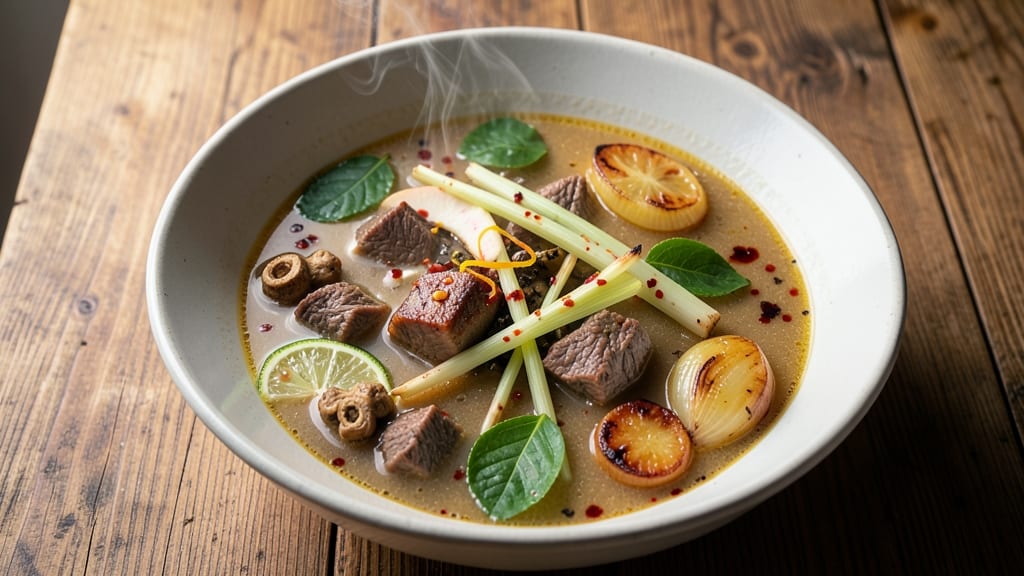
This beef lemongrass soup recipe transforms simple ingredients into a fragrant, aromatic masterpiece that balances rich beef with bright citrus notes. The secret lies in slow-simmered broth infused with lemongrass, galangal, and kaffir lime leaves—creating layers of complexity that elevate humble beef into something extraordinary.
I’ve perfected this technique over years of testing, ensuring the broth remains deeply flavorful while the beef stays tender and melt-in-your-mouth.
The process begins with a rich beef base, where aromatics like lemongrass and ginger are gently simmered to release their essential oils into the broth.
This isn’t just a soup—it’s a symphony of textures and flavors, where the subtle bitterness of galangal and the citrusy punch of lemongrass harmonize perfectly with the savory depth of the beef. The result is a dish that’s both comforting and vibrant, ideal for cozy evenings or special gatherings.
What makes this recipe stand out is its versatility—adapt it to your schedule with a pressure cooker for faster results or stick to traditional stovetop methods for deeper flavor development. The finishing touches, like fresh cilantro and a squeeze of lime, brighten the dish and make every spoonful irresistible.
Whether you’re serving it as a light meal or a hearty starter, this soup delivers restaurant-quality depth at home.
Pair it with steamed jasmine rice or crusty bread to soak up every drop of that fragrant, aromatic broth. The beauty of this recipe lies in its balance—rich enough to satisfy, yet light enough to leave you refreshed. Let’s get started on creating a bowl of pure, comforting goodness.
Ingredients for beef lemongrass soup
Fragrant lemongrass, aromatic galangal, and tender beef create this restaurant-quality soup's soulful foundation.
| Ingredient | Amount | Notes |
|---|---|---|
| Beef Chuck Roast 🥩 | 1 ½ lb | Cut into 1-inch cubes |
| Fresh Lemongrass Stems 🌿 | 4 whole | Bruised and cut into 2-inch pieces |
| Galangal Root 🥕 | 1 piece | Peeled and sliced thinly |
| Kaffir Lime Leaves 🍋 | 4 whole | Bruised for aroma |
| Fresh Ginger Root 🧄 | ½ cup | Peeled and sliced |
| Yellow Onion 🧅 | 1 whole | Thinly sliced |
| Garlic Cloves 🧄 | 6 cloves | Minced finely |
| Coconut Milk 🥥 | 1 can | Full-fat, 13.5 oz can |
| Beef Broth 💧 | 4 cups | Low-sodium preferred |
| Fresh Cilantro 🌿 | ¼ cup | Chopped for garnish |
| Lime Juice 🍋 | 2 tbsp | Freshly squeezed |
| Fish Sauce 🍶 | 1 tbsp | For umami depth |
| Soy Sauce 🍶 | 1 tbsp | Light or dark |
| Brown Sugar 🍚 | 1 tbsp | Packed lightly |
| Vegetable Oil 🫒 | 2 tbsp | For searing beef |
The beef selection is critical—chuck roast delivers that melt-in-your-mouth tenderness while keeping costs reasonable. Most grocery stores carry it pre-cut, but if you're buying a whole roast, ask the butcher to cube it for you. Costco and Whole Foods often have excellent quality at competitive prices. For the galangal and kaffir lime leaves, Asian markets are your best bet—look for firm, vibrant galangal with no mold spots and lime leaves that are bright green and fragrant. If you can't find fresh galangal, substitute ginger at double the amount, though the flavor won't be identical.
Coconut milk is non-negotiable here—full-fat only for that creamy richness. The 13.5-ounce cans from Thai Kitchen or Goya brands work perfectly. No fish sauce? Soy sauce plus a dash of miso paste gets you close, though you'll lose some depth. The lemongrass and kaffir lime leaves can be tough to find outside Asian markets, but Thai Kitchen sells pre-packaged bundles online if you're in a pinch. For the beef broth, low-sodium versions like Swanson or Pacific Foods let you control the seasoning better.
Store fresh galangal and kaffir lime leaves wrapped in damp paper towels in a sealed container for up to 1 week in the fridge. The broth base keeps for 5 days refrigerated or 3 months frozen—perfect for meal prep. I always double the recipe and freeze half, so I can assemble fresh bowls whenever cravings strike. The cilantro should be added fresh at serving time to preserve its bright flavor, but you can chop and store it in the fridge for 3 days if needed.
Why You'll Love This Recipe
- Lemongrass in Minutes: I slice the stalks and drop them straight into the pot—no fancy prep, just a quick smash with the side of my knife. That fragrant burst hits the air while the beef simmers, and honestly? It’s the kind of aroma that makes me forget I’m cooking at all.
- Taste Like a Spa: Between us, the galangal and kaffir lime leaves turn this into a flavor experience, not just soup. The galangal’s peppery bite cuts through the richness of the beef, while the lime leaves add that bright, citrusy lift—like a massage for your taste buds.
- Leftovers? More Like Leftovers: This soup actually improves the next day. The beef gets tenderer, the broth deeper, and I swear it’s even more satisfying cold with a squeeze of lime. I make a double batch on Sundays because it’s my go-to for lunches that don’t feel like leftovers.
- Budget Beef Magic: Chuck roast is cheap, but it transforms into something restaurant-worthy here. I stretch it with carrots and mushrooms, and suddenly, a single roast feeds four people for under $15. That’s a win for my wallet—and my dinner guests.
Step-by-step instructions for beef lemongrass soup
Master this aromatic Southeast Asian classic with precise technique and layered flavors.
Prepare the Aromatic Base
Heat the 2 tablespoons vegetable oil in a large pot over medium-high heat. Add the 1 whole yellow onion and 0.5 cup fresh ginger root, cooking for 3-4 minutes until the onion softens and becomes translucent. This foundational step develops the soup's sweet, earthy depth.
Add the 6 cloves garlic and 1 piece galangal root, stirring constantly for 1 minute until fragrant. The galangal, often called the "Southeast Asian ginger," adds a peppery bite that balances the sweetness. Don't let this burn—it should smell bright and citrusy, not bitter. Add the 4 whole kaffir lime leaves and 4 whole lemongrass stems next, bruising them gently with a rolling pin to release their essential oils.
Sear the Beef for Rich Flavor
Push the aromatics to one side of the pot and add the 1.5 lb beef chuck roast cut into 1-inch cubes. Sear for 4-5 minutes until the beef develops a deep golden crust. This step is critical—it locks in juices and creates the umami foundation. Work in batches if needed to avoid overcrowding the pan.
Once the beef is browned, return all ingredients to the pot and add 4 cups beef broth. Bring to a gentle boil, then reduce heat to low and cover partially. Simmer for 1 hour, skimming any foam that rises to the surface. This slow cook ensures tender beef and a clear, flavorful broth.
Build the Fragrant Broth
After the initial simmer, add 1 tablespoon soy sauce, 1 tablespoon fish sauce, and 1 tablespoon brown sugar. Stir well to combine—this balances the soup's flavors with sweet, salty, and umami notes. The broth should now smell complex, with layers of lemongrass, galangal, and beef essence.
Continue simmering uncovered for another 30-45 minutes until the beef is fork-tender and the broth has reduced slightly. The liquid should coat the back of a spoon but remain silky rather than syrupy. Taste and adjust seasoning—you may need a touch more fish sauce for depth or lime juice for brightness.
Finish with Coconut Milk and Garnish
Reduce heat to low and stir in the 1 can coconut milk. Simmer for 5-7 minutes until the soup reaches a velvety consistency. The coconut milk adds richness while tempering the broth's intensity. Avoid boiling—this can cause the milk to curdle and create an unappealing texture.
Remove from heat and stir in 2 tablespoons lime juice. Garnish with 0.25 cup chopped fresh cilantro just before serving. The lime brightens the dish, cutting through the coconut's richness, while the cilantro adds a fresh herbal note. Serve immediately with steamed jasmine rice to soak up every fragrant spoonful.
Pro Tips For Making Beef Lemongrass Soup
- CHAR THE GALANGAL FIRST: I learned this the hard way—skipping this step means your soup will taste like it’s missing something. Lightly char the galangal slices in a dry pan for 30 seconds per side until fragrant and slightly blackened. The smoky depth cuts through the beef’s richness and balances the citrusy lemongrass.
- SIMMER LOW AND LONG: This isn’t the kind of soup you rush. After the initial sear, drop the heat to a bare simmer—just enough to keep tiny bubbles breaking the surface—and let it cook for 2.5 hours. Anything hotter and the beef turns tough; too low, and the flavors won’t meld. (Yes, even if you’re impatient like me.)
- SLICE LEMONGRASSE LENGTHWISE: I was skeptical until I tried it: split the lemongrass stems lengthwise and scrape out the pale inner core with the back of a knife. Use the core—it’s where all the flavor hides—and toss the tough outer layers. No need to mince; just bruise it slightly with your palm before adding to the pot.
- SAVE THE KAFFIR LIME LEAVES: Don’t toss those wilted leaves after tasting the broth. Strain them out, rinse under cold water, and dry them on a paper towel. Tuck them back into the pot for the last 15 minutes of cooking—they’ll rehydrate and infuse the broth with bright, citrusy notes without overpowering it. (Your future self will thank you.)
Storing and reheating your beef lemongrass soup
Refrigerator Storage
Let your soup cool to room temperature for no more than 2 hours before transferring to airtight containers. I use glass Pyrex containers with snap-on lids—they’re sturdy and won’t absorb odors. Store the soup in the fridge at 40°F or below for up to 4 days.
The flavors actually deepen as the broth absorbs the aromatics overnight. Always leave ½ inch headspace to prevent spills when the soup expands slightly. 💛
Freezer Storage
For longer storage, freeze the soup in quart-sized freezer bags or airtight containers. Lay the bags flat to save space, and squeeze out excess air to prevent freezer burn. Label with the date—this soup keeps its quality for up to 3 months.
Thaw overnight in the fridge before reheating. I recommend freezing the soup without the coconut milk (add it fresh when reheating) to maintain its creamy texture. ❄️
Stovetop Reheating
My preferred method is stovetop reheating—it gives you the most control over texture. Transfer the soup to a pot and heat over medium-low heat for 10-15 minutes, stirring occasionally. If the soup thickens too much, add 1-2 tablespoons of water or beef broth to restore its silky consistency.
Taste and adjust seasoning—you might need a splash of fish sauce or lime juice to brighten flavors after reheating. 🔥
Microwave Reheating
For a quick fix, reheat individual portions in the microwave. Cover the bowl with a microwave-safe lid or damp paper towel and heat on 50% power for 2-3 minutes, stirring halfway. Avoid high power—it can make the coconut milk separate.
If the soup looks too thick, add a splash of water or broth. I always add fresh cilantro and lime juice after reheating to revive the dish’s freshness. 💫
Reviving Day-Old Soup
If your soup has lost some brightness after storage, don’t toss it! Stir in 1 teaspoon of fish sauce and 1 tablespoon of lime juice to revive its depth. A pinch of brown sugar can also help balance any flatness.
For extra richness, whisk in 1-2 tablespoons of coconut milk just before serving. This trick works wonders for restoring restaurant-quality flavor. ✨
Garnish Refresh
Fresh garnishes make all the difference with reheated soup. Always add chopped cilantro and a squeeze of lime juice right before serving. For added texture, top with crushed peanuts or thinly sliced scallions.
A drizzle of chili oil adds a spicy kick if you like heat. These finishing touches elevate even the most reheated bowl to feel fresh and special. 🌟
Nutrition facts
Frequently asked questions
Can I substitute chicken or pork for the beef?
Chicken works beautifully—use 1.5 lbs boneless thighs for tender results. Pork shoulder also works but needs 10-15 minutes longer simmering. For both, reduce cooking time by about 20% since they cook faster than beef. The broth will still develop the same aromatic depth, but adjust seasoning slightly as poultry absorbs flavors differently.
What if I can't find galangal or kaffir lime leaves?
No problem! For galangal, double the ginger amount (use 1 cup fresh ginger)—it won't be identical but adds warmth. Skip kaffir lime leaves or use 2 bay leaves instead. The soup will still taste amazing, though the citrusy aroma will be milder. Asian markets often carry these ingredients frozen if fresh isn't available.
Why does my soup taste too bitter?
Overcooking the aromatics or beef causes bitterness. Simmer gently—never boil vigorously. If it's too strong, balance with 1 extra tablespoon lime juice and ½ teaspoon brown sugar. A splash of coconut milk can also soften harsh flavors. Always taste as you go! The broth should be complex but never overpowering.
Can I make this soup in a slow cooker?
Perfect for hands-off cooking! Brown the beef first in a skillet, then transfer everything to your slow cooker. Cook on low for 6-7 hours or high for 3-4 hours. The slow cooker enhances the beef's tenderness and lets flavors meld beautifully. Just add coconut milk and lime juice during the last 30 minutes to prevent curdling.
How can I make this soup spicier?
Add 1-2 teaspoons of chili flakes or ½ teaspoon cayenne pepper when you add the soy and fish sauces. For heat with depth, stir in 1 tablespoon of sambal oelek or 1 chopped Thai chili at the end. Garnish with chili oil or sliced jalapeños for extra kick. Start with small amounts—you can always add more!