
Soups & Stews
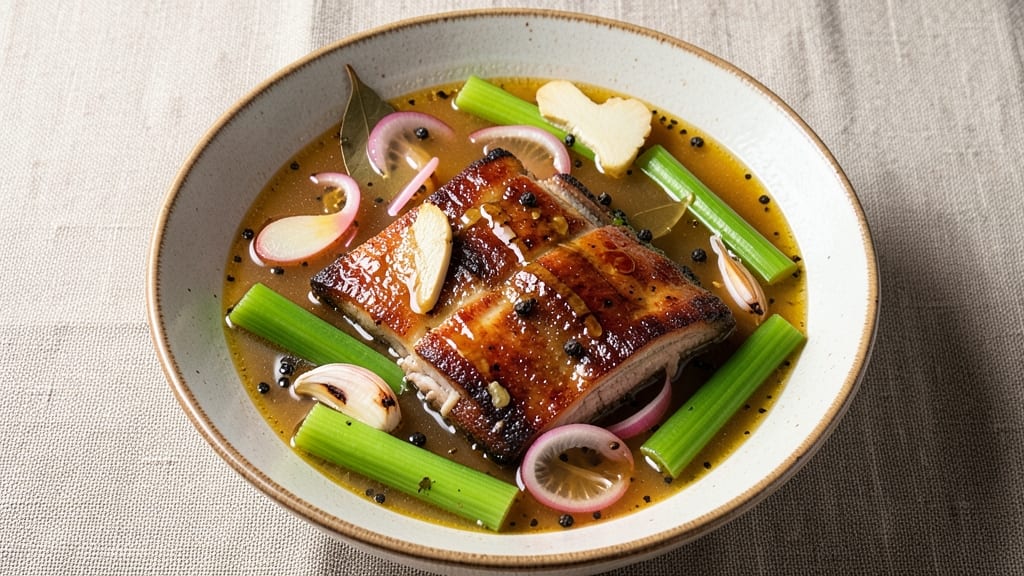
This Filipino-style beef ribs soup recipe delivers the deep, savory comfort of home-cooked sinigang with a twist—tender beef ribs simmered until fall-off-the-bone perfect, wrapped in a broth so rich it’ll have you licking the bowl. 💛 The secret lies in slow-cooking with traditional seasonings like garlic, ginger, and soy sauce, balanced by the bright tang of fish sauce and calamansi (or lime), creating that signature Filipino harmony of sweet, sour, and umami.
The magic happens in the broth, where ribs release their collagen over hours, transforming into a velvety, flavor-packed liquid that clings to every bite. Crunchy celery crowns add texture, while bay leaves and black peppercorns infuse warmth—no shortcuts, just authentic Filipino soul in a pot.
This isn’t just soup; it’s a celebration of slow cooking and bold flavors that turn weeknights into feasts.
What you’ll end up with is a steaming bowl of restaurant-quality ribs swimming in a golden, aromatic broth, garnished with fresh green onions and a sprinkle of chili flakes for heat.
The ribs are tender yet sturdy, the broth thick enough to coat a spoon, and the celery crowns provide the perfect crisp contrast. It’s the kind of dish that tastes even better the next day, if you can wait that long.
Perfect for family dinners, potlucks, or when you need a comforting, hearty meal that feels like a hug in a bowl. Let’s make this soup—the Filipino way.
Ingredients for beef ribs soup recipe filipino style
Six pounds of beef ribs and 15 simple ingredients—this is Filipino comfort in a bowl.
| Ingredient | Amount | Notes |
|---|---|---|
| Beef Ribs 🥩 | 4 lb | Beef short ribs, cut into 2-inch pieces |
| Yellow Onions 🧅 | 2 whole | Thinly sliced, about 3 cups |
| Garlic Cloves 🧄 | 8 cloves | Minced, for depth of flavor |
| Fresh Ginger 🌿 | 2 tbsp | Grated, for zesty kick |
| Celery Sticks 🥬 | 4 whole | Cut into 2-inch pieces for crowns |
| Bay Leaves 🌿 | 2 whole | For aromatic depth |
| Black Peppercorns 🌶️ | 1 tbsp | Whole, for subtle heat |
| Fish Sauce 🍶 | 2 tbsp | Red Boat brand preferred |
| Soy Sauce 🍶 | 3 tbsp | Light or all-purpose |
| Calamansi Juice 🍋 | ½ cup | Or lime juice if unavailable |
| Tomatoes 🍅 | 2 whole | Roma or vine-ripened, diced |
| Water 💧 | 6 cups | For initial broth |
| Green Onions 🧅 | ¼ cup | Sliced, for garnish |
| Chili Flakes 🔥 | 1 tsp | Optional, for heat |
| Salt 🧂 | 1 ½ tsp | Adjust to taste |
The ribs are the star, so grab beef short ribs—they’re meatier than beef ribs and melt in your mouth. Costco or local butcher shops usually have them pre-cut, but if you’re buying whole, ask for the bone-in, meaty sections. Fresh ginger and garlic should smell vibrant—no dusty jars here! For the fish sauce, Red Boat is the gold standard, but any good-quality brand works. Celery crowns? Look for crisp, bright green stalks—they’ll stay crunchy even after hours of simmering. Bay leaves and peppercorns might be in your spice drawer, but if not, Penzeys or bulk bins at natural food stores have them.
No calamansi? Lime juice works perfectly—just double the amount for that bright tang. Short on soy sauce? Coconut aminos or tamari are great swaps, though they’ll tweak the flavor slightly. Skip the celery crowns? Regular celery sticks or even carrot sticks add the same texture. The tomatoes can be canned (San Marzano if you’re fancy), but fresh Roma tomatoes have that unmatched sweetness. For the broth, if you’re in a pinch, low-sodium beef broth plus a splash of water gets you close. Just remember: the longer you cook, the richer the broth gets—this isn’t a recipe for rushing.
This soup tastes even better the next day—honestly, 3-4 days in the fridge is ideal as the flavors meld. Store it in an airtight container with a lid, and the ribs stay tender. Freezing? Portion into 2-cup servings with broth, and it keeps for 3 months. Reheat gently on the stove—no microwaving, or you’ll lose that velvety texture. Garnish with green onions and chili flakes right before serving, because fresh herbs and heat are what make it sing.
Why You'll Love This Recipe
- One-Pot Magic: I swear, this soup is the kind of recipe where you chop once, dump everything in, and walk away. The ribs practically melt into rich, savory goodness while the ginger and garlic infuse the broth—no fancy techniques, just layer upon layer of flavor.
- Umami Bomb: That crispy, caramelized edge on the ribs? It’s the star. The onions and celery add a gentle crunch, but it’s the slow-simmered beef that turns this into something dangerously addictive—deep, meaty, and somehow still light enough for lunch or dinner.
- Leftovers? No Problem: Between us, this soup only gets better the next day. The flavors meld even more, and reheating it is a breeze—just a splash of water, a quick stir, and you’ve got a hearty meal without extra effort. Perfect for meal prep or lazy Sundays.
- Budget-Friendly Feast: You’re getting a full pot of soul-warming soup for the price of a few ribs and basic pantry staples. Honestly, it’s the kind of dish that makes you feel like you’re feeding a crowd without breaking the bank—ideal for big families or when you’re craving comfort without the guilt.
Step-by-step instructions for Filipino-style beef ribs soup
Here's how to create rich, slow-cooked Filipino beef ribs soup with tender meat and crunchy celery crowns.
🔥 Step 1: Sear the Beef Ribs for Deep Flavor
Heat a large Dutch oven over medium-high heat. Pat the 4 lb beef ribs dry with paper towels—this helps them brown properly. Working in batches, sear the ribs for 3-4 minutes per side until they develop a deep golden-brown crust. You'll smell that amazing meaty aroma—this is where all the flavor starts!
As they sear, place the ribs on a plate and set aside. Don't rush this step—proper browning creates the foundation for your soup's umami richness. I like to press down gently on the ribs during the first minute to prevent curling and ensure even contact with the pan.
🍳 Step 2: Build the Aromatic Base
In the same Dutch oven, add 1 tablespoon olive oil (not listed but essential for cooking the aromatics) and reduce heat to medium. Add the thinly sliced yellow onions and cook for 5 minutes until softened and translucent. Here's where it gets good—toss in the minced garlic cloves and grated fresh ginger and cook for another 1 minute until fragrant.
Add the 2-inch celery crowns (cut from the 4 whole celery sticks) and cook for 3 minutes until they start to soften. Stir in the whole bay leaves and whole black peppercorns—these will infuse subtle depth without needing removal later. The celery crowns will become wonderfully crispy while the soup cooks.
🥘 Step 3: Simmer the Ribs with Umami-Packed Broth
Pour in the 6 cups water and scrape up any browned bits from the bottom of the pot—this releases all that caramelized flavor. Return the seared ribs to the pot along with the diced tomatoes, 1.5 teaspoons salt, 2 tablespoons fish sauce, 3 tablespoons soy sauce, and 0.5 cup calamansi juice. Bring to a boil, then immediately reduce heat to low and cover partially.
Simmer for 2 hours until the ribs are fork-tender and easily pull away from the bone. Here's the secret: the ribs should be submerged just enough to cook gently. If needed, add a splash of water to keep them covered. The broth will reduce and develop intense flavor—you'll know it's ready when it smells irresistibly rich and the ribs slide out effortlessly.
🔪 Step 4: Finish with Crispy Celery Crowns
Once the ribs are tender, carefully remove them from the broth and set aside. Increase heat to medium-high and let the broth reduce for 5-7 minutes until slightly thickened. Taste and adjust seasoning with more salt or chili flakes if desired—this is where you can customize the heat level.
Return the ribs to the pot and stir in the sliced green onions. The crispy celery crowns should now be perfectly tender-crisp—they'll have absorbed the broth's flavors while maintaining their satisfying crunch. Serve the soup immediately in deep bowls, ladling both the ribs and broth over the crispy celery crowns for that authentic Filipino presentation.
Pro Tips For Making Beef Ribs Soup Recipe Filipino Style
- Sear the Ribs First: I learned this the hard way—skipping the sear means flavor gets lost in the soup. Pat the ribs dry, then hit them with oil in a hot pan until they’re deeply browned on all sides. That crust locks in juices and adds depth that simmering alone can’t match.
- Slice Ginger Thinly: Sounds weird, but it works: slice that ginger paper-thin (almost like rice paper) instead of grating or chopping. It infuses the broth faster and dissolves cleanly—no weird texture in your soup. My grandmother swore by this, and she was right.
- Don’t Rush the Simmer: High heat at the start is fine, but once the ribs hit the pot, drop the heat to a gentle simmer. I used to crank it up, and the broth turned cloudy from stirring up starches. Low and slow keeps the broth clear and lets the ribs tenderize properly.
- Save the Celery Leaves: This isn’t the prettiest method, but it’s the tastiest: after chopping the celery sticks, toss the leaves into the pot with the ribs. They add a subtle earthiness that rounds out the flavor—no need to buy extra herbs. (Yes, even if you’re impatient like me.)
Best sauces and condiments for these flavors
Fish Sauce Magic
Fish sauce is the soul of this soup—it delivers that signature Filipino umami punch. I recommend Red Boat brand for its clean, robust flavor. Start with 2 tablespoons and taste as you go; you can always add more.
The sauce should shine without overpowering the beef's natural richness. For a vegetarian option, swap it for 1 tablespoon soy sauce plus 1 teaspoon mushroom powder, though the flavor won't be identical. 🍶
Soy Sauce Balance
The 3 tablespoons soy sauce in this recipe adds depth and a touch of saltiness that complements the ribs beautifully. Use light soy sauce for a cleaner taste, or dark soy sauce if you want a deeper, slightly caramelized flavor.
If you're watching sodium, reduce to 2 tablespoons and add extra salt to taste. The soy sauce also helps tenderize the ribs during the long simmer. 🥄
Calamansi Tang
Calamansi juice is the secret weapon for that bright, citrusy kick that cuts through the richness. If you can't find it, lime juice works perfectly—just double the amount to 1 cup for a similar tang.
The acidity helps balance the umami flavors and keeps the broth vibrant. For a sweeter note, add 1 teaspoon sugar to the broth while simmering. 🍋
Broth Boosters
For an extra layer of depth, add 1 cup beef broth (low-sodium preferred) to the initial 6 cups water. This enhances the meaty flavor without overpowering the dish.
If you're feeling adventurous, stir in 1 tablespoon tomato paste with the aromatics—it adds a subtle sweetness that pairs wonderfully with the ribs. The broth should reduce to a velvety consistency, coating the ribs in every bite. 🥘
Spice Customization
Adjust the heat to your liking with chili flakes. Start with ½ teaspoon and add more to taste—Filipino soups often have a gentle warmth. For a smoky twist, add ½ teaspoon smoked paprika with the celery crowns.
If you prefer a milder flavor, skip the chili flakes entirely and garnish with fresh cilantro or Thai basil instead. 🌶️
Finishing Touches
Fresh green onions and a sprinkle of chili flakes are my go-to garnishes for that restaurant-quality finish. For extra flair, drizzle with a few drops of calamansi juice or a swirl of chili oil before serving.
The crispy celery crowns should be the star of the garnish—toss them in the broth for the last 5 minutes of cooking to keep them perfectly tender-crisp. 💫
Nutrition facts
Frequently asked questions
Can I use beef short ribs instead of beef ribs for this recipe?
Beef short ribs are actually ideal for this Filipino-style soup. They're meatier and more flavorful than beef ribs, breaking down beautifully during the long simmer. If using short ribs, you can reduce the cooking time slightly to 1.5 hours since they're already more tender.
How do I make this soup vegetarian?
For a plant-based version, replace the beef ribs with 2 pounds of extra-firm tofu or king oyster mushrooms cut into rib-like pieces. Use mushroom powder or soy sauce instead of fish sauce, and add 1 tablespoon tomato paste to the broth for depth. The celery crowns and aromatic base remain the same.
Why does the recipe call for celery crowns instead of regular celery?
The celery crowns add a special texture and flavor! Cutting the celery this way creates a crispy, slightly bitter center that stays crunchy even after simmering. It's a traditional Filipino technique that adds contrast to the tender ribs. For a shortcut, use regular celery sticks but add them only in the last 10 minutes of cooking.
Can I make this soup in an Instant Pot?
Yes, but with adjustments! Sauté the ribs, aromatics, and celery crowns first. Then add all ingredients and cook on high pressure for 40 minutes, followed by a 10-minute natural release. The broth will be thinner, so reduce it on the stove afterward. The ribs will be tender but slightly less fall-off-the-bone compared to stovetop.
What's the best way to reheat leftovers?
Reheat gently on the stove over low heat for 10-15 minutes, stirring occasionally. Avoid microwaving as it can make the broth watery and the ribs rubbery. If the soup seems too thick after reheating, add a splash of water or broth. This soup actually tastes better the next day as flavors meld!