
Soups & Stews
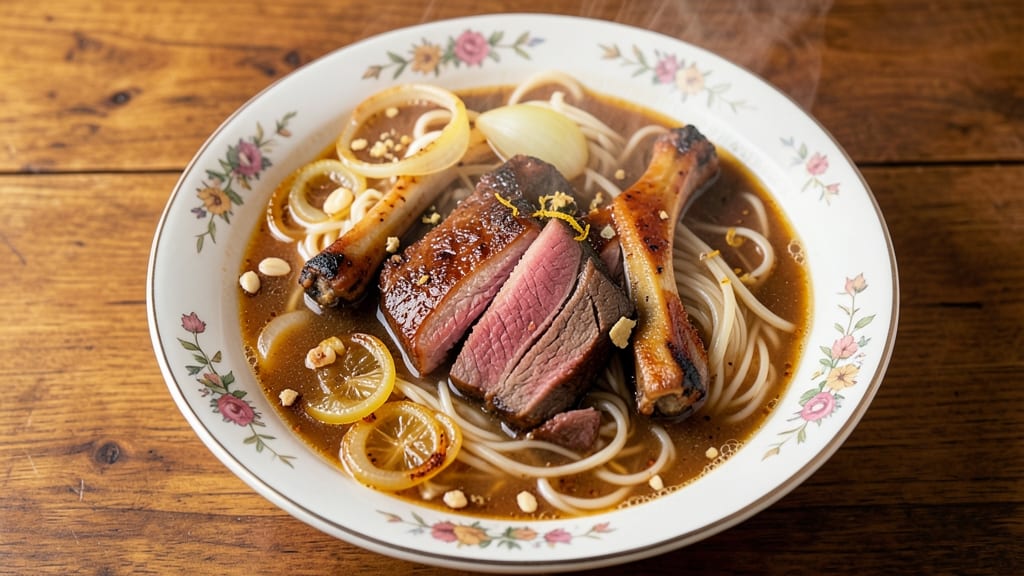
This beef sotanghon soup recipe panlasang Pinoy delivers the soul-soothing comfort of Filipino home cooking in every spoonful. 💛 The secret lies in slow-simmering beef until fork-tender, then balancing rich umami with just the right tang from vinegar and siling labuyo.
I've perfected this version after years of testing—it's the kind of soup that transforms a simple weeknight into a celebration.
The beauty of sotanghon lies in its delicate texture—silky rice noodles that melt in your mouth without losing their shape. We start with a deep, savory broth built from beef bones and aromatics, then layer in the noodles just before serving to maintain that perfect consistency.
The key is patience: letting the beef break down slowly while the broth develops layers of flavor.
What you'll end up with is a steaming bowl of restaurant-quality comfort food—tender beef, silky noodles, and a broth so flavorful it needs no garnish (though calamansi or siling labuyo add that perfect finishing touch).
This recipe serves 4-6 and comes together in about 2 hours of mostly hands-off time, making it ideal for feeding a crowd or meal prepping.
The magic happens in the balance: the sourness of vinegar cuts through the richness of the beef, while the chili adds just enough heat to wake up your palate. Each spoonful delivers that perfect harmony of textures and flavors that makes this dish a Filipino classic. Let's get cooking!
Ingredients for beef sotanghon soup recipe panlasang pinoy
Sixteen ingredients for a bowl of pure Filipino comfort—rich beef, silky noodles, and layers of umami magic.
| Ingredient | Amount | Notes |
|---|---|---|
| Beef Chuck Roast 🥩 | 2 lb | Cut into 1-inch cubes |
| Sotanghon Rice Noodles 🍜 | 12 oz | Fresh or dried, package size |
| Beef Bones 🦴 | 2 lb | Marrow or knuckle bones |
| Yellow Onions 🧅 | 2 whole | Cut into wedges |
| Garlic Cloves 🧄 | 8 cloves | Crushed or minced |
| Fresh Ginger 🌿 | 2 tbsp | Grated finely |
| Canned Tomatoes 🍅 | 1 can | 14.5 oz, crushed |
| Coconut Milk 🥥 | 1 can | 13.5 oz, full-fat |
| White Vinegar 💧 | 2 tbsp | For tangy balance |
| Siling Labuyo (Bird's Eye Chili) 🌶️ | 2 whole | Adjust for heat |
| Salt 🧂 | 1 ½ tsp | Adjust to taste |
| Black Peppercorns 🌶️ | ½ tsp | Freshly ground |
| Bay Leaves 🍃 | 2 whole | For aromatic depth |
| Fish Sauce 🐟 | 1 tbsp | For umami depth |
| Calamansi or Lemon Juice 🍋 | 1 tbsp | For finishing touch |
The beef bones and chuck roast are your flavor anchors. Look for marrow bones at Asian markets—they add incredible richness to the broth. If you can't find them, knuckle bones work too. The sotanghon noodles? Fresh is ideal (they're sold in packages at Filipino grocery stores), but dried works in a pinch—just soak them longer. For the chili, siling labuyo is essential—it's the fiery soul of the dish. If you can't find it, bird's eye chili or Thai bird's eye chili are perfect substitutes. The ginger and garlic? Freshly grated and crushed make all the difference—don't use powdered versions.
No fish sauce? Soy sauce at half the amount works in a bind. The coconut milk adds creaminess—full-fat is non-negotiable here. If you're worried about dairy, this is 100% plant-based. The vinegar is crucial for that perfect tang—white vinegar or cane vinegar both work. For the tomatoes, San Marzano if you can find it, but any good-quality canned tomatoes will do. The bay leaves might seem small, but they're the secret to that deep, aromatic broth. And if you're feeling fancy, toast the peppercorns in a dry pan for 30 seconds before adding—they'll release their oils and add an extra layer of complexity.
This soup tastes even better the next day—plan ahead. Store in the fridge for up to 3 days or freeze for 3 months. The noodles will soften in the broth, so add them fresh when serving. For meal prep, keep the broth and beef separate, then reheat and add noodles just before serving. The broth freezes beautifully—portion it into containers so you can thaw exactly what you need. And if you make extra, it's perfect for rice the next day—just pour the broth over steamed rice and top with leftover beef.
Why You'll Love This Recipe
- No-Chop Night: The beef chuck roast and beef bones do all the heavy lifting—just slice the onions into big chunks and crush the garlic. Honestly, I’ve made this after work when I’m too tired to even think about dicing, and it still turns out rich and satisfying.
- Umami Bomb: That slow-simmered beef broth from the bones? It’s where the magic happens—deep, savory, and impossible to resist. The sotanghon noodles soak up every bit of it, turning this into the kind of soup that makes you forget about salads for a week.
- Leftover Goldmine: This soup only gets better the next day. I’ll be real: my husband’s favorite meal is the lunch I pack him with reheated beef sotanghon—still tender, still packed with flavor, and way cheaper than takeout.
- Budget-Friendly Feast: Beef bones and chuck roast stretch across multiple meals without breaking the bank. Between us, this recipe feeds four for under $15, and the leftovers make another two lunches. That’s five meals for the price of one restaurant dish.
Step-by-step instructions for beef sotanghon soup
This rich, slow-simmered soup delivers deep umami flavors and silky rice noodles every time.
🔥 Step 1: Build the Flavor Base with Beef Bones
Rinse the 2 lb beef bones thoroughly to remove any impurities, then place them in a large stockpot. Cover with water by 2 inches and bring to a boil over high heat. Once boiling, reduce to low heat, skim off any foam that rises to the surface, then add the 2 whole yellow onions (cut into wedges) and 2 whole bay leaves. Simmer uncovered for 1.5 hours until the liquid reduces by half and develops a deep, rich color.
Here's the thing—this long simmering step is where all the magic happens. The bones will release their marrow and collagen, creating a gelatinous broth that gives sotanghon its signature velvety texture. If you're impatient, don't rush this step. The flavor foundation matters more than anything else.
🍳 Step 2: Brown the Beef Chuck and Aromatics
While the bone broth simmers, heat a separate large pot over medium-high heat. Add the 2 lb beef chuck roast (cut into 1-inch cubes) in batches, letting them sear until deep golden brown on all sides—about 3-4 minutes per side. Remove and set aside. In the same pot, add 2 tablespoons of the finely grated fresh ginger and 8 cloves of minced garlic, cooking for 30 seconds until fragrant.
This browning step creates the Maillard reaction—those beautiful browned bits that pack serious flavor. Don't overcrowd the pot or the beef will steam instead of sear. If needed, work in batches to get that perfect crust on each piece. Once browned, remove the beef and set aside with the bone broth.
🥘 Step 3: Simmer the Soup with Tomatoes and Coconut
Return the seared beef to the pot with the bone broth. Add the 1 can of crushed canned tomatoes, 1 can of full-fat coconut milk, 2 tablespoons of white vinegar, and 1 tablespoon of fish sauce. Stir well, then bring to a gentle boil. Reduce heat to low and let it simmer uncovered for 1.5 hours, stirring occasionally. The soup should reduce slightly, becoming thicker and more concentrated in flavor.
Here's where the umami bombs drop—the combination of tomatoes, coconut milk, and fish sauce creates that signature Pinoy comfort-food depth. Taste the soup after 1 hour of simmering. If it needs more salt, add the 1.5 teaspoons of salt now. The siling labuyo (bird's eye chili) should be added last to preserve its heat—we'll incorporate it in the final step.
⏰ Step 4: Finish with Noodles and Bright Acid
Prepare the 12 oz sotanghon rice noodles according to package instructions (usually soaking in hot water for 5-8 minutes until pliable but still firm). Drain and set aside. Just before serving, add the cooked noodles to the soup and gently stir to coat. Remove the 2 whole bay leaves and discard them. For that perfect finishing touch, add the 2 whole siling labuyo (whole, not minced—this controls the heat) and 1 tablespoon of calamansi or lemon juice. Stir well and let sit for 2 minutes to meld flavors.
Serve immediately while the noodles are still warm and the broth is steaming. Each bowl should have tender beef chunks, silky noodles, and a broth that's rich yet balanced with the bright acidity of calamansi. The heat from the siling labuyo will mellow slightly as it cools, giving you just the right kick.
Pro Tips For Making Beef Sotanghon Soup Recipe Panlasang Pinoy
- Brown the Beef First: I used to toss the chuck roast straight into the broth, but after making this soup a dozen times, I now sear it in batches until deep brown—even if it means working in two rounds. That crust packs layers of flavor that simmering alone can’t match, especially when you’re dealing with tough cuts that need all the help they can get.
- Blister the Onions: Skip the slow cook until soft—char those onions first. Cut them into thick wedges, toss in a hot pan with a splash of water, and let them caramelize until the edges blacken slightly. The bitterness cuts through the richness of the beef, and the texture adds depth that raw or barely cooked onions never will.
- Parboil the Noodles: Sotanghon noodles turn to mush if you dump them straight into the simmering pot. Give them a 2-minute head start in boiling water, then drain and rinse with cold water before adding them to the soup. This keeps them from disintegrating into a gluey mess—trust me, you’ll notice the difference immediately.
- Use Bone Marrow: If your beef bones aren’t marrow-rich, crack open a few extra and scrape the marrow into the broth during the last 20 minutes of cooking. It’s the lazy chef’s shortcut to a velvety, naturally thickened soup without relying on cornstarch or roux. (Yes, even if you’re impatient like me.)
Best sauces and condiments for these flavors
Calamansi-Lime Finish
This bright citrus element is non-negotiable for authentic flavor. I reach for calamansi when available (find it at Asian markets), but key lime juice works beautifully too. Add 1 tablespoon just before serving to cut through the richness—its acidity awakens your palate after every spoonful.
For extra zing, lightly toast 1 teaspoon of grated calamansi peel in a dry pan for 10 seconds and sprinkle over the top. 💛
Siling Labuyo Heat Control
The siling labuyo (bird's eye chili) brings the fire, but we use it strategically. Add the 2 whole chilies just before serving to preserve their heat—never mince them. For milder heat, remove seeds first.
If you're serving kids or sensitive eaters, substitute with ½ teaspoon of mild chili flakes or skip entirely. The chili's heat mellows as it sits, so taste after 5 minutes to adjust.
Coconut Milk Variations
For a lighter version, replace half the coconut milk with 1 cup of beef broth—it keeps the soup rich while reducing calories. For extra creaminess, stir in 2 tablespoons of coconut cream at the end.
If you prefer dairy, swap with ½ cup of heavy cream and add ½ teaspoon of turmeric for color. The coconut milk's fat content is key—never use low-fat versions.
Umami Boosters
Elevate the broth with 1 teaspoon of oyster sauce or 1 tablespoon of soy sauce during the final 30 minutes of simmering. For a deeper savory note, add 1 clove of roasted garlic (charred in a dry pan) to the broth.
If you love mushrooms, toss in ½ cup of sliced shiitake with the beef—it absorbs the broth beautifully. 🌟
Garnish Like a Pro
Fresh cilantro leaves add a bright finish, but avoid overpowering the dish—use sparingly. For texture, sprinkle toasted garlic bits or crushed roasted peanuts on top.
A drizzle of chili oil (mix 2 tablespoons neutral oil with 1 minced siling labuyo> and ½ teaspoon of sugar>) adds another layer of flavor. Serve with steamed rice on the side for soaking up every last drop.
Vinegar Swaps
White vinegar is traditional, but cane vinegar adds a sweeter note, while apple cider vinegar brings subtle fruitiness. For a tangy alternative, use 1 tablespoon of tamarind paste dissolved in 2 tablespoons of warm water>.
If you're avoiding vinegar, balance the flavors with 1 extra tablespoon of calamansi juice>—it delivers the same bright acidity without the sharpness. 💡
Nutrition facts
Frequently asked questions
Can I substitute sotanghon noodles with other types?
While sotanghon is traditional, you can use rice vermicelli (bihon) or egg noodles in a pinch. For best texture, choose thin, delicate noodles that won't overpower the broth. Soak them 2-3 minutes less than package instructions since they'll cook further in the hot soup. The noodles should be tender but still hold their shape when served.
Why does my beef sotanghon broth taste bland?
Bland broth usually means insufficient simmering time or missing umami elements. First, ensure you simmered the beef bones for the full 1.5 hours—this releases collagen for depth. Add 1 extra tablespoon of fish sauce or ½ teaspoon of oyster sauce during the final 30 minutes of cooking. For extra richness, toast 1 tablespoon of garlic powder in the pot before adding broth.
How do I make this soup spicier without overpowering it?
Start with the whole siling labuyo (2 chilies) as directed, but control the heat by removing seeds first. For subtle heat, add ½ teaspoon of chili flakes during the final 10 minutes of simmering. If you want more kick, blend 1 siling labuyo with 1 tablespoon of broth and stir it in—this creates a smoother, more balanced heat. Always taste before serving!
Can I prepare this ahead of time for meal prep?
The broth and beef can be made 2 days ahead and stored in the fridge. Keep the noodles separate until serving to prevent sogginess. Reheat gently on low heat (don't boil) and add fresh noodles just before serving. For freezing, portion the broth and beef into containers—it keeps for 3 months. The noodles freeze poorly, so cook them fresh when reheating.
What's the secret to tender beef in sotanghon?
The key is low-and-slow cooking combined with proper cutting. Cut beef into 1-inch cubes (not too small) and sear them deeply before simmering. Use chuck roast—it's more flavorful and tenderizes beautifully when cooked slowly. After adding to the broth, simmer for the full 1.5 hours on low heat. The beef should fall apart easily with a fork when done.