
Soups & Stews
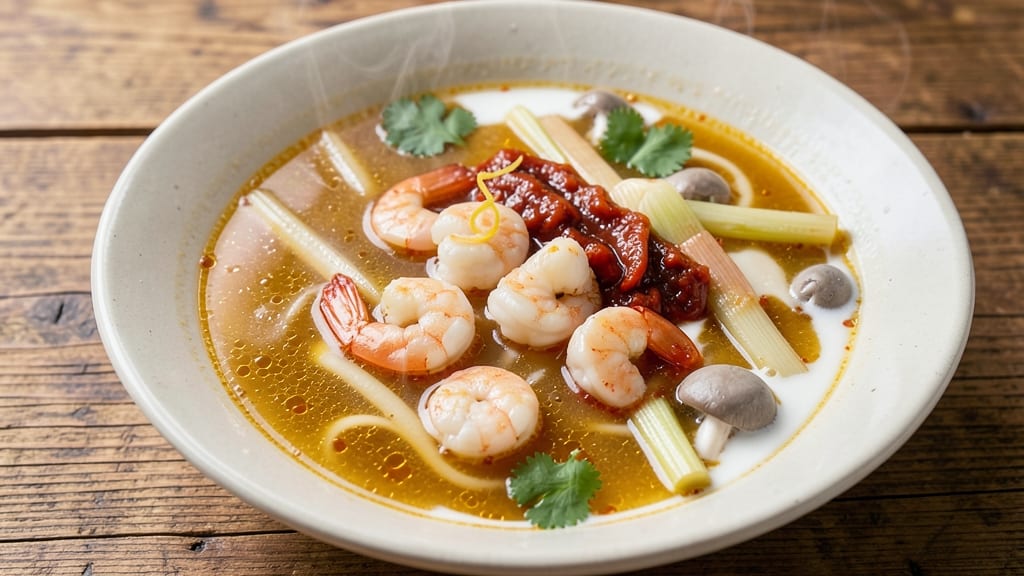
This best ever tom yum soup recipe delivers the perfect storm of spicy, sour, and umami flavors that wake up your palate and clear your sinuses. 🔥 The secret lies in balancing lemongrass, galangal, and chili paste—each playing its part to create a broth that's aromatic, vibrant, and impossible to resist.
I've refined this version over countless batches, ensuring the heat is sharp without overpowering the bright citrus notes that define authentic tom yum.
The magic happens in the broth, where high heat and fresh herbs transform simple ingredients into something extraordinary. Shrimp (or tofu for a vegetarian twist) cooks just enough to stay tender, while mushrooms and straw mushrooms add depth.
The real game-changer? A splash of lime at the end—it brightens every spoonful and cuts through the richness, leaving you craving another bowl.
What sets this recipe apart is the harmony of flavors—spicy but not overwhelming, tangy but balanced, with a lingering umami richness from the coconut milk.
The aroma alone will have your kitchen smelling like a bustling Bangkok street market, and the first sip delivers that signature tingling heat followed by a refreshing citrus finish. This isn't just soup; it's an experience that turns an ordinary meal into something unforgettable.
Serve it piping hot with steamed jasmine rice to soak up every last drop of that cleansing, aromatic broth, and garnish with fresh Thai basil and lime wedges for an extra burst of freshness.
The instructions are straightforward, but the result is anything but basic—this is the tom yum soup you'll make again and again.
Ingredients for best ever tom yum soup
These vibrant ingredients transform into a soup that's spicy, tangy, and utterly addictive—just like Bangkok street markets promised.
| Ingredient | Amount | Notes |
|---|---|---|
| Shrimp (medium, peeled, deveined) 🦐 | 1 lb | Fresh or frozen, thawed |
| Straw Mushrooms 🍄 | 8 oz | Fresh or canned, drained |
| Galangal (fresh, sliced) 🌿 | 2 inches | Substitute ginger if unavailable |
| Lemongrass (lower part only, sliced) 🌿 | 3 stems | Bruise stems for maximum flavor |
| Red Chili Paste (Thai) 🌶️ | 2 tbsp | Adjust for desired heat level |
| Coconut Milk (full-fat, canned) 🥥 | 1 can | 13.5 oz can, full-fat preferred |
| Fish Sauce 🍶 | 2 tbsp | Red Boat brand recommended |
| Lime Juice (freshly squeezed) 🍋 | ½ cup | About 4-5 limes |
| Thai Basil Leaves 🌿 | ¼ cup | Fresh, stems removed |
| Garlic Cloves 🧄 | 6 cloves | Minced for aromatic depth |
| Green Onions 🧅 | 3 whole | Sliced for garnish |
| Palm Sugar (or brown sugar) 🍯 | 2 tbsp | Dissolved in broth |
| Vegetable or Chicken Stock 💧 | 4 cups | Homemade preferred |
| Sea Salt 🧂 | 1 tsp | Adjust to taste |
| Black Peppercorns 🌶️ | ½ tsp | Crushed for extra depth |
The galangal and lemongrass are the aromatic stars—fresh is non-negotiable. Look for galangal at Asian markets (it's the knobby, ginger-like root), and bruise the lemongrass stems with the side of your knife to release those citrusy oils. Red Boat fish sauce is worth the splurge for authentic umami, but any quality brand works. Shrimp should be medium-sized—too small and they disappear into the broth. For a vegetarian version, swap shrimp for extra-firm tofu pressed and cubed—it soaks up the flavors beautifully. Straw mushrooms add that signature texture, but shiitake mushrooms work in a pinch.
No galangal? Ginger plus a splash of lime zest gets you close, though it won't be identical. Chili paste too spicy? Dilute with a teaspoon of coconut milk before adding to the broth. The palm sugar is essential for that signature balance—brown sugar works if you can't find it, but the caramel notes differ slightly. Fresh Thai basil is a game-changer, but regular basil at half the amount keeps the dish from falling apart. Pro tip: Toast the black peppercorns in a dry pan for 30 seconds before crushing—they add a smoky depth that elevates everything.
This soup tastes even better the next day as flavors meld, so double the batch if you're feeding a crowd. Store in the fridge for up to 3 days, or freeze portions for 3 months—the broth thickens slightly when reheated, so add a splash of water or stock to loosen it. Garnish with lime wedges and Thai basil right before serving; the aroma alone will have everyone gathering around the table. For extra richness, stir in a spoonful of coconut cream at the end—trust me, it's worth it.
Why You'll Love This Recipe
- Here’s the magic: this soup actually improves the next day. The flavors meld deeper, the mushrooms soften just right, and reheating it stirs up that same bright, zesty aroma. I make a double batch on Sundays—no one ever complains when I serve it cold with rice the next lunch.
- No Galangal? No Problem: I’ll be real—finding fresh galangal can feel like hunting for a unicorn. But this recipe works just as well with ginger (a pinch of extra zest helps), so you’re never stuck. The lemongrass and chili paste still deliver that signature tangy punch without the fuss.
- Shrimp Ready in Minutes: Peel and devein shrimp in under five minutes—seriously, I time it. No messy shells, no overcooking; just plump, juicy shrimp that cook faster than you can say “tom yum.” That first bite of warm, buttery shrimp in spicy broth? Instant win.
- Leftovers That Taste Better: Here’s the magic: this soup actually improves the next day. The flavors meld deeper, the mushrooms soften just right, and reheating it stirs up that same bright, zesty aroma. I make a double batch on Sundays—no one ever complains when I serve it cold with rice the next lunch.
Step-by-step instructions for tom yum soup that clears sinuses
This is where the magic happens—where simple ingredients transform into a symphony of spicy, tangy, and aromatic perfection.
🔥 Step 1: Build the Aromatic Base with Galangal and Lemongrass
Heat a large pot over medium-high heat and add the 2 inches sliced galangal and 3 stems lemongrass. Let them sizzle for 2-3 minutes until fragrant—you should smell that earthy, citrusy aroma that's pure Thai comfort. This is the foundation of your soup's soul.
Here's the thing—galangal is like ginger's more sophisticated cousin. If you can't find it, ginger works, but it won't be exactly the same. Bruise the lemongrass stems first with the side of your knife to release their oils. Don't skip this step—it makes all the difference in flavor extraction.
🍳 Step 2: Add Chili Paste and Cook Until Fragrant
Stir in the 2 tablespoons red chili paste and cook for another 30 seconds until it darkens slightly and the oil begins to separate. You'll see the paste transform from raw to aromatic—this is when the heat starts building. The paste should coat the galangal and lemongrass completely.
This is where the heat profile begins. If you like it spicier, add an extra teaspoon here. But be warned—this soup builds heat in layers, and we're just getting started. The chili paste carries the authentic Thai flavor that makes this soup so special. Don't let it burn—watch it carefully.
🥘 Step 3: Add Stock and Sugar for Perfect Balance
Pour in the 4 cups stock and add the 2 tablespoons palm sugar (dissolved in a splash of hot water if it's not granulated). Bring to a gentle boil, then reduce heat to medium-low and let it simmer for 10 minutes. You want the stock to reduce slightly and the flavors to meld together.
The sugar might seem odd in a spicy soup, but it's crucial for balancing the heat and acidity. You'll see the broth turn a beautiful golden color as the sugar caramelizes just slightly. This is the moment that matters—the base is coming together. Taste the broth now—it should be aromatic, slightly sweet, and building in heat.
🍳 Step 4: Add Mushrooms and Garlic for Depth
Add the 8 ounces sliced straw mushrooms and 6 minced garlic cloves. Simmer for another 5 minutes until the mushrooms are tender but still hold their shape. The mushrooms should absorb the broth's flavors while adding their own earthy sweetness.
Here's where the texture begins to develop. The mushrooms should be just tender enough to eat but still have a slight bite. If they're too soft, they'll turn to mush and make the soup too thick. The garlic should be cooked through but still recognizable—it should perfume the entire soup with its aromatic punch.
🔪 Step 5: Incorporate Coconut Milk and Acid
Reduce heat to low and stir in the 1 can coconut milk and 2 tablespoons fish sauce. Simmer gently for 3 minutes—just enough to warm through. Then add the ½ cup lime juice. The soup should now be vibrant, creamy, and tangy all at once.
This is the balancing act that makes tom yum soup so special. The coconut milk rounds out the acidity while the lime juice brightens everything up. The fish sauce adds that unmistakable umami depth. Taste as you go—you might need to adjust the balance. Some people like more coconut, others prefer it lighter. This is where you make it your own.
🍽️ Step 6: Finish with Shrimp and Fresh Herbs
Gently add the 1 pound shrimp and simmer for just 2-3 minutes until they turn opaque and curl slightly. Remove from heat and stir in the ¼ cup Thai basil leaves. The shrimp should be cooked through but still tender—overcooking will make them rubbery.
Real talk: don't overcook the shrimp. They should be just done when you remove them from heat—they'll continue cooking slightly from the residual heat. The Thai basil leaves should be added at the very end to maintain their bright, fresh flavor. The soup should now be a perfect balance of spicy, sour, and umami with a beautiful creamy texture.
🍴 Step 7: Season and Serve Immediately
Season with the 1 teaspoon sea salt and ½ teaspoon crushed black peppercorns. Taste and adjust—you might need a bit more fish sauce for saltiness or lime juice for acidity. Garnish with sliced green onions and serve immediately with steamed jasmine rice.
This soup is meant to be enjoyed fresh while the aromatics are still vibrant. The flavors will continue to develop as it sits, but it's best enjoyed within the first 30 minutes. Each bowl should deliver that perfect balance of heat, tang, and umami that clears sinuses and warms the soul. Trust me, this is the kind of soup that makes people ask for seconds.
Pro Tips For Making Best Ever Tom Yum Soup
- CHAR THE GALANGAL FIRST: I learned this the hard way—when I added galangal with the lemongrass, the soup tasted bitter and underdeveloped. Char the slices in a dry pan for 30 seconds per side until fragrant and slightly blackened. This unlocks the earthy depth without overpowering.
- STOP WHEN SHRIMP CURLS: Your shrimp will keep cooking in the hot broth, so pull them out the second their edges just start to curl. Overcook them, and they’ll turn rubbery before you can say "tom yum." A quick sear in a separate pan first also gives them a head start on flavor.
- BLEND THE CHILI PASTE: Store-bought Thai red curry paste often has uneven heat and texture. Pulse it in a food processor with 1 tablespoon of water before adding to the pot. This ensures a smooth, consistent spice base—no clumps or surprise ghost pepper surprises.
- USE COLD BROTH TO FINISH: After adding all ingredients and letting the soup simmer, turn off the heat and stir in ½ cup of cold water or ice cubes. The broth will tighten up, the aromatics will brighten, and the acidity from lime (if you add it) will hit harder. It’s the trick street vendors use to keep their soup vibrant.
Serving suggestions for leftovers
Garnish Game-Changers
Fresh Thai basil leaves are non-negotiable for that signature aromatic punch—toss in ¼ cup at the very end while the soup simmers. The leaves should wilt slightly but remain vibrant, releasing their anise-like flavor.
For extra brightness, add 3 sliced green onions right before serving—their sharpness cuts through the richness beautifully. 🌿
Rice Pairing Secrets
Steamed jasmine rice is the classic companion, but don't underestimate rice noodles for a lighter option. For an authentic Thai experience, use sen lek (Thai rice noodles) and serve the soup in individual bowls.
The noodles soak up the broth perfectly, creating a satisfying, comforting meal. I like to lightly toast the rice in the pot with a pat of butter before steaming for added depth.
Dipping Sauce Ideas
Create a simple dipping sauce by mixing 1 tbsp hoisin sauce with 1 tsp chili oil and a splash of rice vinegar. This adds another layer of flavor for those who want to customize their experience.
For a creamy option, blend ¼ cup sour cream with 1 tsp lime zest and a pinch of salt—it cools the heat while adding tangy richness. 🍶
Vegetarian Adaptations
For a meat-free version, swap shrimp for extra-firm tofu pressed and cubed, or add 1 cup bean sprouts for crunch. Toss in ½ cup bell peppers (red or green) for natural sweetness that balances the spice.
The mushrooms already provide umami depth, so you won't miss the seafood. This version is just as vibrant and satisfying—promise!
Presentation Tips
Serve in deep bowls with a small side plate for garnishes—this makes the soup feel like a special occasion. Add lime wedges on the side so guests can adjust the tang to their preference.
For a restaurant-worthy touch, drizzle a little coconut cream around the bowl before ladling in the soup. The visual contrast of the creamy white against the golden broth is stunning. ✨
Leftovers Strategy
Tom yum soup tastes even better the next day as flavors meld! Store in an airtight container and reheat gently on the stove with a splash of water or stock. For extra richness, stir in 1 tbsp coconut cream when reheating.
Garnish with fresh Thai basil and lime before serving—it's like having a second bowl of restaurant-quality soup. The broth thickens slightly, so adjust with a little water if needed.
Nutrition facts
Frequently asked questions
Can I make this tom yum soup without galangal?
Yes! While galangal gives authentic depth, substitute 1.5 inches ginger plus 1 tsp lime zest for a close match. The ginger won't replicate the exact earthy flavor, but it'll still deliver that signature aromatic punch. For extra brightness, add a splash of rice vinegar to compensate for the missing citrus notes.
How do I adjust the spice level?
Start with the 2 tbsp chili paste as written for medium heat. For milder soup, reduce to 1 tbsp and add ½ tsp sugar to balance. For extra spice, increase chili paste to 3 tbsp and add ½ tsp chili flakes at the end. Always taste as you go—you can't overdo the heat, but you can't fix it once the broth is made!
What's the best way to store and reheat leftovers?
Store in an airtight container in the fridge for up to 3 days or freeze for 3 months. Reheat gently on the stove with 2 tbsp water or stock per bowl—never microwave, as it dulls the aromatics. Stir in 1 tbsp coconut cream and fresh Thai basil at the end to restore richness. The flavors actually improve overnight!
Can I use chicken or tofu instead of shrimp?
For chicken, use 1 lb boneless thighs cut into chunks and simmer for 8-10 minutes until fully cooked. For tofu, press 1 block extra-firm tofu for 30 minutes, cube, and pan-fry until golden before adding to the broth. Both work beautifully—chicken adds heartiness while tofu keeps it light and plant-based.
Why does my tom yum soup taste flat?
Flat flavor usually means one of three things: undercooked aromatics (simmer galangal/lemongrass longer), insufficient fish sauce (add ½ tsp more), or missing acidity (squeeze in 1 extra lime wedge). Pro tip: Toast your black peppercorns in a dry pan for 30 seconds before crushing—they add smoky depth that transforms the soup!