
Soups & Stews
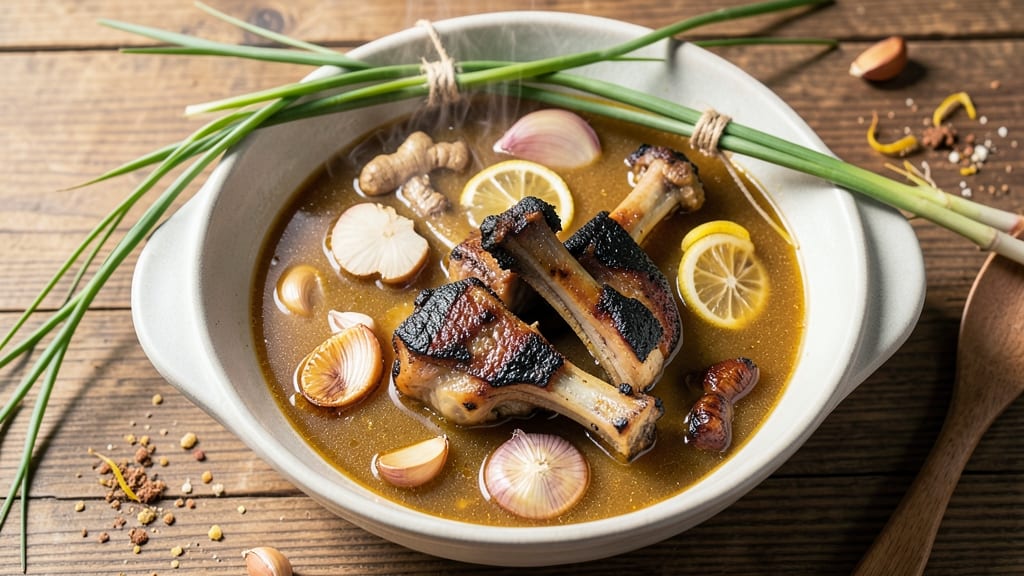
This Asian soup stock recipe transforms simple ingredients into a fragrant, aromatic base that elevates every bowl of pho, ramen, or miso soup. 🌟 The secret lies in simmering bones and aromatics like ginger, galangal, and lemongrass—creating layers of complex flavor that store-bought stocks can’t match.
With just a few hours of hands-off time, you’ll have a rich, golden broth packed with umami depth.
The process is straightforward but rewarding: brown the bones for deep flavor, simmer with aromatic vegetables, then strain for a smooth, clear liquid. Optional seasonings like soy sauce, fish sauce, and a touch of sugar balance the broth’s natural richness, ensuring it works for any Asian-inspired dish.
This stock keeps for weeks in the fridge, making it a pantry staple for quick, flavorful meals.
What sets this recipe apart is its versatility—use it as a base for soups, stir-fries, or even braised dishes. The ginger-galangal blend adds a subtle warmth, while the slow simmer extracts maximum flavor from every ingredient.
Whether you’re cooking for a crowd or meal prepping, this stock will become your go-to for restaurant-quality broths at home.
Ready in just 4 hours (with minimal effort), this recipe delivers restaurant-quality results that outshine pre-made options. The key is patience—letting the flavors meld over time creates a broth so rich, it’ll make you question why you ever bought store-bought. Let’s get started!
Ingredients for asian soup stock
Pantry staples plus a few specialty finds for restaurant-quality broth in your kitchen.
| Ingredient | Amount | Notes |
|---|---|---|
| Beef Bones 🦴 | 2 lb | Chuck or marrow bones preferred |
| Fresh Ginger 🧅 | ½ cup | Peeled, roughly chopped |
| Galangal 🌿 | ½ cup | Peeled, roughly chopped |
| Lemongrass 🌿 | 2 whole | Bruised stems only, cut into 2-inch pieces |
| Onion 🧅 | 1 whole | Yellow or white, halved |
| Garlic Cloves 🧄 | 6 cloves | Smashed, not minced |
| Carrots 🥕 | 2 whole | Scrubbed, cut into chunks |
| Celery Stalks 🌿 | 3 whole | Cut into 2-inch pieces |
| Water 💧 | 8 cups | Filtered preferred |
| Soy Sauce 🍶 | 2 tbsp | Dark or light, optional |
| Fish Sauce 🍶 | 1 tbsp | Red Boat preferred, optional |
| White Sugar 🍚 | 1 tbsp | Or brown sugar |
| Salt 🧂 | 1 tsp | Kosher or sea salt |
The bones are non-negotiable—marrow bones add richness, but chuck works too if that's what you've got. Asian markets usually carry galangal and lemongrass fresh, but frozen works in a pinch (thaw first). Fresh ginger? Buy the big knobs—they're cheaper per ounce and last longer. If you can't find galangal, extra ginger plus a dash of cinnamon gets you close. The soy sauce and fish sauce are optional but add that signature umami punch—Red Boat fish sauce is my go-to, but any quality brand works.
No fish sauce? Mushroom sauce or Worcestershire (check for fish-free versions) works in a bind. Short on lemongrass? Double the garlic and ginger—it won't be identical, but you'll still get depth. The carrots and celery are just for color and sweetness, so any root veggies (parsnips, turnips) will do. If you're making a big batch, double the water and bones—this stock freezes beautifully. And yes, you can skip the sugar if you're watching carbs, but it helps balance the acidity from the aromatics.
This stock tastes even better the next day once all the flavors meld. Store in glass jars in the fridge for up to 5 days, or freeze in 1-cup portions for 3 months. I always make a double batch—one for immediate use, one to freeze. The fat will solidify on top when chilled, so just skim that off before reheating. Perfect for pho, ramen, or braised dishes—your kitchen will smell amazing while it simmers.
Why You'll Love This Recipe
- No-Fuss Simmer: I swear by the slow cooker for this—just dump everything in, press start, and walk away. The beef bones release their marrow while the ginger and galangal infuse the broth with layers of warmth, no chopping marathon required.
- Umami Bomb: Between the deep, savory beef bones and the bright citrusy kick of lemongrass, this stock tastes like a hug in a bowl. Honestly, the galangal’s peppery bite makes it taste fresh, even after days in the fridge.
- Soup Pantry MVP: Freeze it in ice cube trays for quick pho, ramen, or even braising liquid later. I keep a stash in the freezer—because nothing beats pulling out pre-made flavor when you’re scrambling for dinner.
- Budget Magic: Cheap as chips but richer than store-bought. Beef bones are the star here, turning a simple onion and herb base into something restaurant-worthy without breaking the bank. (Yes, even on a Tuesday night.)
Step-by-step instructions for Asian soup stock
Here's how to build a fragrant ginger-galangal base that'll make your broths sing.
🔥 Step 1: Prep and Char the Aromatics
Start by peeling the 0.5 cup fresh ginger and 0.5 cup galangal - don't worry about perfect uniformity, just rough chunks. Cut the 2 whole lemongrass into 2-inch pieces and bruise the stems by gently pounding them with your knife handle or rolling a heavy pan over them. This releases their essential oils.
Halve the 1 whole onion and cut the 2 whole carrots and 3 whole celery stalks into 2-inch chunks. Smash the 6 cloves garlic with the flat side of your knife - you want them flattened but not minced. The goal is to maximize surface area while keeping everything in large pieces for easy straining later.
🍳 Step 2: Sear the Beef Bones
Heat a large stockpot over medium-high heat with no oil. Add the 2 lb beef bones and sear them for 8-10 minutes, turning occasionally, until they develop deep brown spots. This caramelization creates incredible depth of flavor in your stock. Don't rush this step - you're building flavor foundation here.
Once well-browned, remove the bones with tongs and set aside. You'll add them back later after the aromatics have cooked down. The pot should have a nice layer of fond (browned bits) on the bottom - this is pure flavor waiting to happen.
🥘 Step 3: Build the Flavor Base
In the same pot, add the prepared ginger, galangal, lemongrass, onion, carrots, celery, and garlic. Stir everything together and cook over medium heat for 5-7 minutes until the vegetables begin to soften and the galangal starts to release its citrusy aroma. You'll smell that signature Asian fragrance building - this is what makes your stock special.
Add the 8 cups water and bring to a boil. Once boiling, reduce heat to low and skim off any foam that rises to the surface using a fine-mesh skimmer or ladle. This removes impurities and gives you a cleaner stock. The water should gently simmer, not roll vigorously.
⏰ Step 4: Simmer and Infuse
Return the seared beef bones to the pot. Add the 2 tbsp soy sauce, 1 tbsp fish sauce, 1 tbsp white sugar, and 1 tsp salt. Stir gently to combine. The sugar helps balance the acidity from the fish sauce while the salt enhances all the flavors.
Partially cover the pot (leave a small gap for steam to escape) and simmer gently for 3-4 hours. You're looking for a slow, steady simmer - not a rapid boil. This long cooking time extracts maximum flavor from the bones and aromatics. Check occasionally and add water if needed to maintain the 8 cups level.
🔪 Step 5: Strain and Finish
After simmering, remove the pot from heat and let the stock sit for 10 minutes to allow any settled particles to sink. Line a fine-mesh strainer with cheesecloth or a coffee filter for extra clarity if desired. Strain the stock through the lined strainer into a large bowl or clean pot.
Discard the solids. Taste the stock and adjust seasoning if needed - you might want to add a touch more salt or fish sauce to taste. The stock should be rich, aromatic, and slightly sweet with that signature ginger-galangal complexity. Store in the refrigerator for up to 5 days or freeze for longer storage.
Pro Tips For Making Asian Soup Stock
- BLISTER BONES FIRST: I learned this the hard way—skipping the char step means flavorless stock. Sear beef bones in a dry pot until deep brown in spots (about 10 minutes), then add water. The Maillard reaction unlocks meaty depth that cold-soaking alone can’t match.
- SLICE GALANGAL THIN: Galangal’s knobby exterior hides tough fibers. Shave it into paper-thin slices with a sharp knife—no need to peel. (Yes, even the ugly parts work when sliced this way.) It infuses faster and dissolves cleanly, leaving no bitter chunks.
- DON’T BOIL THE GINGER: Toss whole ginger chunks in when water hits a simmer, then remove after 20 minutes. Boiling it turns the stock bitter and muddy. The brief infusion gives aromatic punch without overpowering—trust me, your nose will thank you.
- USE ONION SKINS: Save those papery onion skins from peeling and toss them in the pot with the whole onion. They add a subtle golden hue and earthy sweetness that store-bought stock can’t replicate. (Yes, they’re free and magical.)
Serving suggestions for this asian soup stock
Pho Bowl Pairing
This aromatic stock is the soul of a perfect bowl of pho. Use it as your base and top with thinly sliced raw beef or chicken, rice noodles, and fresh herbs like Thai basil, cilantro, and mint.
I like to add bean sprouts and sliced jalapeños for crunch and heat. Serve with hoisin sauce and sriracha on the side for customization. 🌟
Ramen Upgrade
Transform your ramen by using this stock instead of water or chicken broth. Add egg marbles, chashu pork, menma (fermented bamboo shoots), and nori strips for an authentic Japanese-Asian fusion.
The ginger-galangal notes add a subtle warmth that pairs beautifully with the richness of the pork. I often finish with a drizzle of chili oil for extra depth.
Miso Soup Base
Use this stock as a foundation for miso soup by adding 3 tbsp white or red miso paste per 2 cups stock. Stir in tofu cubes, seaweed, and scallions for a quick, flavorful meal.
The ginger-galangal adds complexity that store-bought miso soups lack. For extra richness, top with a soft-boiled egg and a sprinkle of furikake seasoning.
Braised Dishes
Deglaze your pan with this stock after searing proteins like duck breast or pork belly for braising. The aromatic flavors meld beautifully with the meat, creating a sauce that's perfect for serving over steamed jasmine rice.
I love using it for Chinese-style braised pork with daikon radish and shitake mushrooms.
Garnish Ideas
Elevate any dish made with this stock by garnishing with fresh ingredients. Try lime wedges, crushed peanuts, fried shallots, or pickled vegetables. A sprinkle of toasted sesame seeds adds texture, while cilantro leaves bring freshness. These finishing touches make every bowl feel special and restaurant-quality.
Drink Pairings
Pair your soup with a crisp Asian lager like Sapporo or Asahi to complement the broth's richness. For a non-alcoholic option, try jasmine green tea or lychee iced tea.
The tea's floral notes balance the stock's bold aromatics beautifully. A chilled sake with citrus also works wonderfully for a more sophisticated pairing. 🍶
Nutrition facts
Frequently asked questions
Can I use chicken or fish instead of beef bones?
For a lighter broth, use 2 lb chicken bones or 1 lb fish heads and frames (like salmon or cod). Chicken bones work well for pho or ramen, while fish bones create a delicate, briny stock perfect for noodle soups. Adjust simmering time to 2-3 hours for chicken and 1-2 hours for fish to avoid overcooking.
What if I can't find galangal or lemongrass?
No problem! Double the fresh ginger and add 1 cinnamon stick or ½ tsp ground coriander for warmth. For lemongrass, substitute with extra garlic (8 cloves) plus ½ cup chopped cilantro stems. The flavor won't be identical, but you'll still get that aromatic depth—just more citrusy than herbal.
How do I make this stock faster?
For a 2-hour version, use a pressure cooker: Brown bones normally, then add all ingredients, pressure cook for 1.5 hours, and strain. For stovetop, simmer for 2 hours instead of 3-4. Just know the longer simmer extracts more flavor—rushing may make it less rich. The pressure method works best for weeknight meals!
Can I make this stock vegetarian?
Yes! Replace bones with mushrooms (8 oz king oyster or shiitake) and add 1 tbsp soy sauce + 1 tbsp miso paste for umami. Use seaweed (2 sheets kombu) instead of fish sauce. Simmer for 1.5 hours with the same aromatics. The result will be heartier than water but still packed with flavor—perfect for veggie ramen or miso.
Why does my stock smell amazing but taste weak?
This usually means the simmer wasn't long enough or the bones weren't browned properly. Next time, ensure bones develop deep color (10+ minutes searing) and simmer at least 3 hours. For extra flavor, add 1 tbsp fish sauce or mushroom powder during the last 30 minutes of cooking. The aroma comes from volatile oils—taste is built through extraction time!