
Soups & Stews
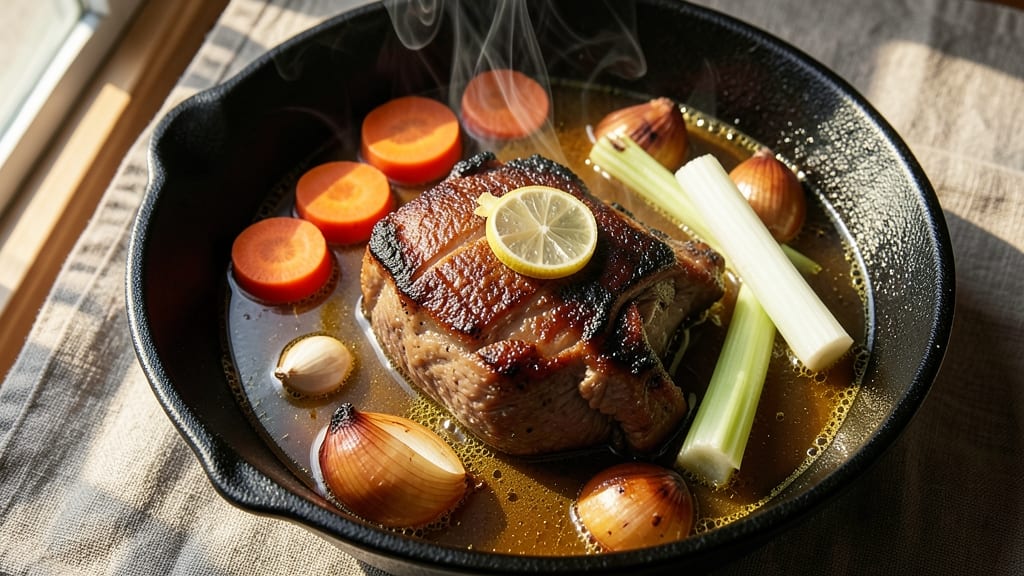
This beef knuckle soup recipe transforms tough cuts into rich, velvety broth that tastes like home. The slow-cooking process unlocks deep umami flavors, turning simple ingredients into a restaurant-quality meal. I've perfected this technique over years of testing, ensuring every spoonful delivers that satisfying, hearty essence.
The secret lies in patience and technique: simmering the beef knuckle for hours until it falls apart, creating a broth so rich it coats your spoon. We balance the natural richness with aromatic vegetables and herbs, while a splash of vinegar brightens the final result.
This isn't just soup—it's a comforting experience that warms both body and soul.
By the time you're done, you'll have tender beef that practically melts in your mouth, surrounded by vegetables softened just enough to absorb all that flavorful broth. The aroma alone will have everyone gathering around your kitchen, and the first bite delivers on that promise of home-cooked perfection.
Perfect for cold evenings or special gatherings, this soup serves as both a meal and a centerpiece. The leftovers taste even better the next day, making it ideal for meal prep. Let's create something truly special together—slow-cooked, flavor-packed, and impossible to resist.
Ingredients for beef knuckle soup
Rich umami and comforting warmth from just twelve thoughtful ingredients—this soup transforms humble cuts into something extraordinary.
| Ingredient | Amount | Notes |
|---|---|---|
| Beef Knuckle 🥩 | 3 lb | Raw, untrimmed for marrow |
| Yellow Onions 🧅 | 2 whole | Peeled, halved horizontally |
| Carrots 🥕 | 4 whole | Scrubbed, cut into chunks |
| Celery Stalks 🧄 | 4 whole | Trimmed, cut into pieces |
| Garlic Cloves 🧄 | 8 cloves | Peeled, smashed with side of knife |
| Fresh Ginger 🌿 | 2 oz | Peeled, sliced into thick coins |
| Bay Leaves 🍃 | 4 whole | Dried, standard size |
| Black Peppercorns 🌶️ | 1 tbsp | Whole, lightly crushed |
| Apple Cider Vinegar 🍎 | 2 tbsp | Unfiltered preferred |
| Sea Salt 🧂 | 2 tsp | Kosher or coarse grain |
| Fresh Parsley 🌿 | ¼ cup | Chopped, for garnish |
| Water 💧 | 12 cups | Cold, filtered preferred |
The beef knuckle is the soul of this dish—look for well-marbled cuts at your local butcher, not the pre-packaged supermarket versions. Costco or Whole Foods often carry excellent options, but ask for the knuckle specifically. Fresh ginger and garlic should smell vibrant, not musty, and the bay leaves should be fragrant with no signs of dampness. For the best flavor, choose organic carrots and celery—their skins hold more nutrients, and the natural sweetness shines through during simmering. If you can't find fresh ginger, substitute with powdered at half the amount, but fresh is non-negotiable for that bright, zesty kick.
No beef knuckle? Pork trotter or lamb shanks work as substitutes, though the flavor profile shifts slightly. Running short on bay leaves? Double the thyme or oregano—they're close cousins in the aromatic family. The vinegar is crucial for brightness, but white wine vinegar or lemon juice can stand in if needed. For a deeper umami punch, add 1 tbsp soy sauce or 1 piece of kombu seaweed during the final hour of cooking. And if you're using pre-cut vegetables, rinse them well to remove any grit—nothing ruins broth like dirt settling at the bottom.
This soup tastes even better the next day—plan ahead and make a double batch. Store in the fridge for up to 5 days or freeze for up to 3 months in airtight containers. The broth thickens as it cools, so add a splash of water when reheating. For serving, I like to strain and reduce the broth slightly to intensify the flavor, then pour it back over the vegetables and beef. Garnish with fresh parsley just before eating—it adds that final pop of color and freshness that makes the dish feel special.
Why You'll Love This Recipe
- One-Pot Magic: I swear by this—just dump everything in a big pot, add water, and walk away. The beef knuckle falls off the bone while the onions and carrots melt into the broth, so you’re basically doing zero extra work.
- Deep Umami Bomb: That beef knuckle? It’s the star. Slow-cooked until tender, it turns the broth into a rich, savory dream—especially when you crush those garlic cloves right at the end. The celery and onions add just enough brightness to cut through the richness.
- Leftovers That Beg for Seconds: Between us, this soup only gets better the next day. The flavors meld even more, and the knuckle shreds so easily you’ll want to freeze half the batch. Perfect for lazy mornings or when you’re too tired to cook.
- Budget-Friendly Feast: A single beef knuckle stretches for four meals, and the veggies are cheap staples. Honestly, it’s the kind of recipe that makes grocery day feel like a win—no fancy ingredients, just pure, satisfying comfort.
Step-by-step instructions for slow-cooked beef knuckle soup
Transforming humble ingredients into rich, velvety broth takes patience—but the results are pure comfort.
Sear the Beef Knuckle for Deep Flavor
Preheat your largest pot over medium-high heat. Pat the 3 lb beef knuckle completely dry with paper towels—this ensures maximum browning. Place it fat-side down in the pot and sear for 8-10 minutes until deeply browned on all sides. The goal is to develop a rich, caramelized crust that will infuse the broth with complex flavor.
Here's the thing—don't rush this step. You'll know it's ready when the knuckle releases easily from the pot and the exterior has a deep mahogany color. If it sticks, add a splash of water and scrape up those browned bits—they're packed with flavor. Once seared, remove the knuckle and set it aside on a plate.
Sauté Vegetables and Aromatics
In the same pot (no need to wipe it clean—those browned bits are pure gold), add the 2 whole yellow onions, 4 whole carrots, and 4 whole celery stalks. Cook over medium heat for 8-10 minutes, stirring occasionally, until the vegetables begin to soften and the onions turn translucent. You're not trying to fully cook them yet—just break them down slightly to release their natural sweetness.
Add the 8 cloves garlic cloves and 2 oz fresh ginger (sliced into thick coins) to the pot. Cook for another 2 minutes until the garlic is fragrant and the ginger begins to soften. This step builds the aromatic foundation of your soup. If the vegetables start to stick, add a splash of water to deglaze the pot and scrape up any browned bits from the bottom.
Simmer the Broth Low and Slow
Return the seared beef knuckle to the pot. Add the 12 cups water, 2 tbsp apple cider vinegar, 2 tsp sea salt, 4 whole bay leaves, and 1 tbsp black peppercorns. Bring the mixture to a boil over high heat, then immediately reduce to a gentle simmer. The liquid should barely bubble—this is crucial for extracting collagen from the knuckle.
Here's where the magic happens: cover the pot and simmer for 3-4 hours on the lowest heat setting your stove offers. The broth should never boil vigorously—keep it at a gentle simmer to prevent cloudiness. You'll know it's working when the knuckle becomes fork-tender and the broth develops a deep amber color and rich aroma. I like to check it every hour, skimming off any foam that rises to the surface for a cleaner final product.
Strain and Finish the Soup
Once the knuckle is fork-tender (it should pull apart easily with minimal resistance), remove it from the broth and set it aside. Strain the broth through a fine-mesh sieve into a clean pot, pressing gently on the solids to extract every last drop of flavor. You should have about 6-8 cups of rich, velvety broth—this is your liquid gold.
Return the broth to the pot and stir in the 0.25 cup chopped fresh parsley. Taste and adjust seasoning if needed—you might need a touch more salt to balance the deep umami flavors. Keep the broth warm over low heat until ready to serve. The parsley not only adds freshness but also brightens the rich, meaty flavors of the broth.
Serve with Confidence
Discard the bay leaves and peppercorns. Shred the cooked beef knuckle into bite-sized pieces using two forks, discarding any large bones or connective tissue. Ladle the hot broth into bowls and top with the shredded beef. Serve immediately with crusty bread or over rice to soak up every last drop of that luxurious broth.
This soup tastes even better the next day as the flavors continue to meld. Store any leftovers in the refrigerator for up to 5 days or freeze for 3 months. The beauty of this recipe is its versatility—use it as a base for other dishes or enjoy it exactly as is. Each spoonful delivers deep, comforting flavor that makes it worth every minute of the slow cook.
Pro Tips For Making Beef Knuckle Soup
- SEAR THE KNUCKLE FIRST: Don’t skip the crust—pat the knuckle bone-dry and sear it in a screaming-hot pot until the edges turn deep mahogany. I used to rush this, and the soup never tasted as rich. A 5-minute sear locks in flavor and prevents the meat from turning mushy later.
- CUT VEGETABLES UNIFORM: Dice onions, carrots, and celery into matching ½-inch chunks (yes, even the celery). Uneven pieces mean some cook to mush while others stay crunchy. My grandmother called it "the lazy cook’s downfall"—she was right.
- LOW AND SLOW WINS: After the initial sear, reduce heat to barely simmering—you shouldn’t see bubbles. A rolling boil breaks down collagen too fast, making the broth cloudy. I learned this after three batches of sad, murky soup.
- ADD GARLIC LATE: Toss whole garlic cloves (peeled) into the pot 30 minutes before serving. They’ll mellow into sweetness instead of burning. I was skeptical until I tried it—now it’s non-negotiable for depth.
Make-ahead tips for beef knuckle soup
Prep Ahead Strategy
Start by prepping all your vegetables the night before—peel and chop the 2 yellow onions, 4 carrots, and 4 celery stalks—then store them in separate airtight containers in the fridge.
The 3 lb beef knuckle can be trimmed and patted dry up to 24 hours ahead, then wrapped tightly in plastic wrap and refrigerated. This saves you 30-45 minutes of prep time on cooking day. 💡
Slow Cooker Adaptation
For hands-off cooking, transfer the seared knuckle and all ingredients (except parsley) to a 6-quart slow cooker. Cook on low for 8-10 hours or high for 5-6 hours, then strain and finish as directed.
The slow cooker maintains that gentle simmer automatically, making it perfect for busy days. I use a Hamilton Beach 6-Quart model for even heat distribution.
Broth Freezing Tips
Strain the finished broth while hot and portion it into quart-sized freezer bags, leaving 1-inch headspace for expansion. Lay flat to freeze, then stack for efficient storage. Thaw overnight in the fridge before reheating—never microwave directly from frozen.
The broth keeps its rich texture for up to 3 months this way. Label each bag with the date for easy tracking. ❄️
Vegetable Pre-Cooking
Par-cook the vegetables for 15 minutes before adding the knuckle to cut total simmer time by 30 minutes. Simply sauté them as directed in Step 2, then set aside with the broth ingredients.
This works especially well if you're short on time—just add everything to the pot when ready to start the long simmer.
Make-Ahead Garnishes
Chop the ¼ cup fresh parsley and store it in a small airtight container with a damp paper towel to maintain freshness. Keep it refrigerated for up to 3 days before using.
For extra convenience, pre-measure the 2 tsp sea salt and 1 tbsp black peppercorns into a small jar—just add them straight from the pantry when you're ready to finish the soup.
Reheating Perfection
When reheating leftovers, bring the soup to a simmer over medium-low heat, then reduce to low and let it warm through gently. Add 2-3 tablespoons of water if the broth looks too thick—it naturally reduces when cooled.
For frozen portions, thaw in the fridge overnight before reheating for the best texture. The soup should reach 165°F internal temperature for food safety. 🔥
Nutrition facts
Frequently asked questions
Why does the beef knuckle need to be seared so thoroughly?
The deep searing creates a rich, caramelized crust called the Maillard reaction, which develops complex flavors that infuse the broth. This step transforms tough connective tissue into gelatin during simmering, creating that luxurious, velvety texture. Skipping it means a broth that's more watery and less flavorful.
Can I substitute beef knuckle with another cut?
Yes! For similar results, use pork trotter or lamb shanks, though flavors will differ slightly. Avoid lean cuts like sirloin—they lack the collagen needed for rich broth. If using chicken feet (for extra gelatin), add them early and remove before serving. The key is choosing fatty, connective-tissue-rich cuts.
How do I know when the knuckle is fully cooked?
The knuckle is done when it's fork-tender—it should pull apart easily with minimal resistance. The broth will also develop a deep amber color and rich aroma. For perfect doneness, test after 3 hours of simmering, then check every 30 minutes afterward. Overcooking can make the meat mushy, so timing is everything.
What if my broth turns cloudy during cooking?
Cloudiness usually means the broth boiled too vigorously, breaking down proteins. To fix it, skim off foam regularly during simmering and maintain a gentle simmer (small bubbles). For a clearer broth, strain it through a cheesecloth-lined sieve before serving. If cloudiness persists, add 1 tbsp cornstarch mixed with water as a last resort.
Can I make this soup in an Instant Pot?
Sear the knuckle first, then add all ingredients except parsley. Cook on high pressure for 90 minutes, then do a natural release. Strain and finish as directed. The Instant Pot cuts cooking time to about 2 hours total, but the flavor will be slightly less developed than traditional stovetop methods.