
Soups & Stews
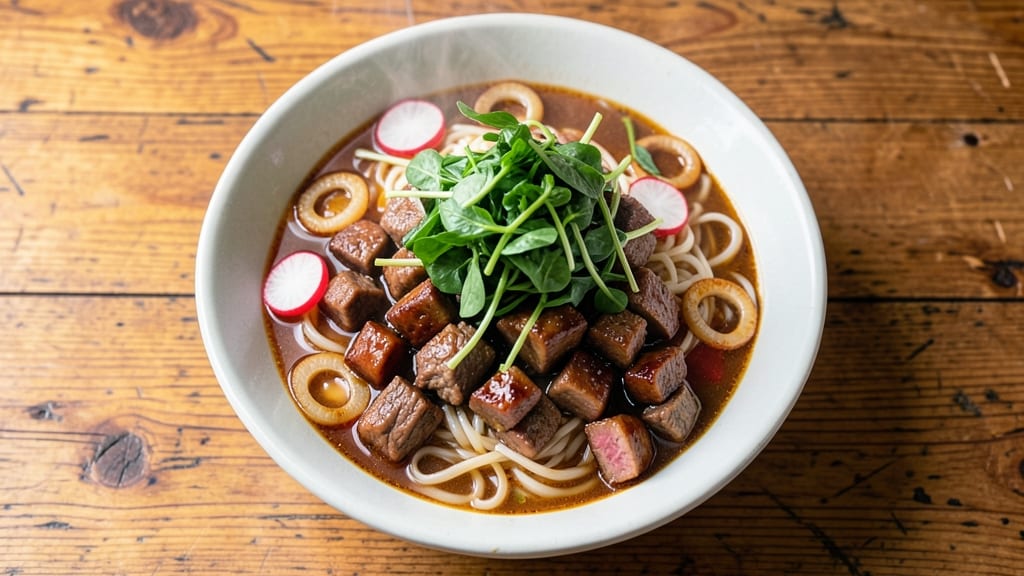
Filipino-style beef soup delivers the kind of deep umami richness that transforms a simple meal into a comforting centerpiece. This recipe captures the essence of traditional sinigang—where tender beef, tangy broth, and silky rice noodles come together in perfect harmony.
The secret lies in balancing souring agents like vinegar or tamarind with slow-simmered beef, creating a broth that's both vibrant and deeply flavorful.
What sets this soup apart is its layered texture: fork-tender beef brisket or short ribs, chewy rice noodles, and a broth that clings to every spoonful.
The souring element—whether vinegar, daing na bangus (fermented fish), or tamarind—adds brightness that cuts through the richness, while aromatic vegetables like radish and kangkong (water spinach) round out the dish. It’s the kind of soup that feels like a hug in a bowl.
By the time you finish, you’ll have a restaurant-quality dish that’s easy to customize—add modern umami boosters like mushrooms or soy sauce, or keep it classic with traditional ingredients.
The broth reduces to perfect depth, the noodles absorb the flavors, and every bite delivers that satisfying balance of tangy, savory, and silky textures.
Perfect for weeknight dinners or special occasions, this soup serves as both a hearty main and a comforting side. Serve it with steamed rice or crusty bread to soak up every last drop of that irresistible broth. Let’s get cooking!
Ingredients for beef soup recipe filipino style
Tender beef, tangy broth, and silky noodles—this Filipino feast delivers restaurant-quality comfort in every spoonful.
| Ingredient | Amount | Notes |
|---|---|---|
| Beef Brisket 🥩 | 1 ½ lb | Cut into 1-inch cubes, trimmed of fat |
| Rice Noodles 🍜 | 8 oz | Thin or medium width, uncooked |
| Daing Na Bangus (Fermented Fish Sauce) 🐟 | ½ cup | Traditional souring agent, or sub vinegar |
| Radishes 🥕 | 2 whole | Daikon or white radish, cut into thick slices |
| Kangkong (Water Spinach) 🌿 | 1 bunch | Or sub baby spinach or bok choy |
| Onions 🧅 | 1 whole | Yellow or red, thinly sliced |
| Garlic Cloves 🧄 | 6 cloves | Minced for aromatic base |
| Tomatoes 🍅 | 2 whole | Medium, quartered (San Marzano preferred) |
| Green Chili Peppers 🌶️ | 2 whole | Thai or serrano, sliced (optional for heat) |
| Fish Sauce 🐟 | 2 tbsp | Red Boat preferred for authentic umami |
| Soy Sauce 🍶 | 2 tbsp | Dark soy for deeper color |
| Coconut Milk 🥥 | ½ cup | Full-fat for richness (optional) |
| Bay Leaves 🌿 | 2 whole | Dried, for aromatic depth |
| Salt 🧂 | 1 ½ tsp | Diamond Crystal preferred for balance |
| Black Peppercorns 🌶️ | ½ tsp | Crushed for subtle heat |
The beef is the heart of this soup, so brisket or short ribs are non-negotiable—they melt into tender perfection. Look for well-marbled cuts at Asian markets or your local butcher; the fat renders beautifully for a rich broth. Daing na bangus (fermented fish sauce) is the secret weapon for that signature tang—find it in the Filipino aisle or substitute with equal parts vinegar and a pinch of sugar. Radishes and kangkong (water spinach) are essential for texture and freshness; if you can't find kangkong, baby spinach or bok choy work in a pinch, but the dish loses its authentic soul without it. The San Marzano tomatoes add natural sweetness that balances the sour notes perfectly.
No daing na bangus? White vinegar or tamarind paste does the trick—just adjust to taste, as vinegar can be sharper. Running low on fish sauce? Soy sauce or mushroom sauce adds umami depth, though it won’t replicate the funky complexity. The coconut milk is optional but transforms the broth into a luxurious, creamy finish; if using, stir it in only at the end to avoid curdling. For heat lovers, Thai chilies pack more punch than jalapeños, but any fresh chili works. The bay leaves infuse the broth with earthy aroma—don’t skip them, even if you plan to remove them later. And if you’re feeling adventurous, swap half the beef for mushrooms or tofu for a vegetarian twist that still delivers umami richness.
This soup tastes even better the next day as the flavors meld—double the batch if you can, because leftovers disappear fast. Store in the fridge for 4-5 days, covered with a splash of broth to keep the noodles from drying. For freezing, portion the broth separately from the noodles (they soften when reheated) and freeze for up to 3 months. When reheating, add a splash of water or broth to restore the silky consistency. Serve with steamed jasmine rice or crusty bread to soak up every last drop of that irresistible, umami-packed broth—trust me, you’ll want seconds.
Why You'll Love This Recipe
- One-Pot Magic: I swear by this recipe—just toss everything into one pot, simmer, and walk away. No chopping radishes into perfect slices (they’ll look rustic anyway), no measuring tiny amounts of fish sauce (just eyeball it). The brisket practically falls apart on its own, and the noodles soak up that umami bomb of daing na bangus like a dream.
- Umami Bomb: That fermented fish sauce? It’s the secret weapon. A splash transforms bland beef into something deeply savory—think rich, funky, slightly briny depth that lingers. Pair it with the tender brisket and the peppery bite of kangkong, and suddenly, you’ve got a bowl that tastes like home, no matter where you are.
- Lazy Meal Prep: Make a big batch on Sunday, and you’ve got lunch or dinner covered for days. The noodles hold up surprisingly well when reheated, and the radishes add a crisp contrast even after sitting overnight. Honestly, I’ve served this cold the next day with lime wedges, and it’s still been devoured.
- Budget-Friendly Feast: Brisket stretches across multiple servings, and rice noodles are cheaper than pasta. Radishes and kangkong grow like weeds (or cost pennies at the market), so you’re not breaking the bank. Between us, this is the kind of soup that makes grocery bills feel less painful—especially when it disappears faster than you can say “second helping.”
Step-by-step instructions for slow-simmered Filipino beef soup
This rich, umami-packed Filipino beef soup delivers deep flavors through slow simmering and balanced seasoning.
Sear the Beef Brisket for Deep Flavor
Heat a large Dutch oven over medium-high heat until hot. Add the 1.5 lb beef brisket cut into 1-inch cubes and sear undisturbed for 3-4 minutes until deeply browned on all sides. This caramelization builds the foundation for your soup's rich flavor profile.
Work in batches if needed to avoid overcrowding the pan. Once browned, remove the beef and set aside. The remaining browned bits (fond) will dissolve into the broth, adding layers of complexity. If your pan isn't hot enough, you'll get steamed beef instead of seared.
Build the Aromatic Base
In the same Dutch oven, add 1 tablespoon olive oil and cook the 1 whole onion, thinly sliced, for 3-4 minutes until softened and translucent. Add the 6 cloves minced garlic and cook for 30 seconds until fragrant—this prevents bitter garlic flavors.
Stir in the 2 whole tomatoes, quartered, 2 whole green chili peppers, sliced, 2 whole bay leaves, and the 1.5 tsp salt. Cook for 2-3 minutes until the tomatoes begin to break down. This step develops the soup's aromatic foundation before adding liquids.
Simmer the Broth with Umami Depth
Pour in 8 cups water and bring to a boil. Return the seared beef to the pot, reduce heat to low, and add the 2 tbsp fish sauce, 2 tbsp soy sauce, and 0.5 cup daing na bangus (fermented fish sauce). The daing na bangus adds that signature Filipino tang—don't substitute with regular vinegar.
Simmer uncovered for 1.5 hours until the beef is fork-tender and the broth has reduced slightly. Skim off any foam that rises to the surface during the first 30 minutes of cooking. This simmering time ensures the beef becomes melt-in-your-mouth tender while developing deep, complex flavors.
Finish with Creamy Richness
Stir in the 0.5 cup coconut milk and 0.5 tsp crushed black peppercorns, then simmer for an additional 10 minutes. The coconut milk adds a velvety texture that balances the soup's savory depth. Taste and adjust seasoning—you might need a touch more fish sauce or salt to achieve perfect balance.
Remove the 2 whole bay leaves before serving. The broth should coat the back of a spoon with a silky consistency, and the beef should pull apart easily with minimal resistance. This is where all your patience pays off in rich, restaurant-quality flavor.
Prepare and Serve with Silky Noodles
While the soup simmers, prepare the 8 oz rice noodles according to package instructions—typically boiling for 3-5 minutes until al dente, then draining. The noodles should be tender but still hold their shape when served.
Divide the noodles among bowls, ladle the hot beef broth and tender beef over the top, and garnish with 2 whole radishes cut into thick slices and 1 bunch kangkong (water spinach). The contrast of textures—silky noodles, tender beef, and crisp radishes—makes each bite exciting. Serve immediately while the broth is steaming hot.
Pro Tips For Making Beef Soup Recipe Filipino Style
- SEAR THE BRISKET FIRST: Hit the beef with a hot pan—no oil needed, just the natural fats—and let it brown for 5 minutes per side. I learned this the hard way: skipping the sear means your soup will taste more like stewed beef than rich, caramelized flavor. The crust locks in juices and builds depth when you add the daing na bangus later.
- SOAK THE RADISHES: Toss the radishes in cold water for 10 minutes before slicing—scrub off that bitter film under the skin. My first batches tasted sharp and harsh until I realized the raw flavor wasn’t just from the radish itself. Drain well so they don’t dilute your broth.
- SIMMER LOW AND LONG: After adding the daing na bangus, drop the heat to a bare simmer—just enough to see tiny bubbles at the edges. I used to rush it, and the fish sauce would turn the broth cloudy and metallic. Let it mellow for 20 minutes; patience here makes all the difference.
- ADD KANGKONG LAST: Toss the water spinach in just before serving—no more than 2 minutes of cooking. Overcook it, and it turns slimy (yes, I’ve done it). The leaves should wilt just enough to soften but still hold their bright green color. Trust me, your soup will look (and taste) fresher.
Creative variations of this dish
Classic Sinigang Style
This is the most traditional approach, where the broth gets its signature tang from daing na bangus (fermented fish sauce). For a more refined version, use 1 cup daing na bangus instead of the ½ cup in the base recipe.
Add 1 cup water and 1 tbsp vinegar to the simmering broth for extra brightness. The key is balancing the sourness with 1 extra bay leaf and ½ cup coconut milk at the end to round out the flavors. 🌶️
Mechado-Inspired Twist
Swap the rice noodles for egg noodles and add 1 cup sliced potatoes and 1 cup carrots to the broth early in cooking. Use ½ cup tomato sauce instead of fresh tomatoes, and reduce the daing na bangus to ¼ cup while adding 1 tbsp soy sauce for extra umami.
This version mimics the hearty, tomato-based mechado while keeping the signature Filipino tang.
Vegetarian Adaptation
Replace the beef with 1 lb extra-firm tofu or mushrooms (shiitake or oyster). Use 1 tbsp soy sauce and 1 tsp miso paste for umami depth, and increase the daing na bangus to ⅔ cup to compensate for the lack of meaty richness.
Add ½ cup corn kernels and ½ cup green beans for texture. The broth will still be vibrant and satisfying, just plant-based. 🌱
Spicy Calamansi Kick
For a zesty twist, add 2 tbsp calamansi juice (or substitute with lime juice) and 1 tbsp chopped calamansi zest at the end. Use 1 Thai chili pepper instead of the green chilies, and add ½ tsp ground black pepper for extra heat.
Garnish with cilantro and a squeeze of fresh calamansi over each bowl. This version is perfect for those who love a tangy, spicy kick. 🌶️
Creamy Coconut Variation
Double the coconut milk to 1 cup and add ½ cup shredded coconut to the broth during the final 10 minutes of simmering. Reduce the daing na bangus to ¼ cup and add 1 tsp sugar to balance the flavors.
This version is richer and more decadent, like a cross between a soup and a curry. Serve with steamed rice to soak up the creamy broth. 🥥
Modern Umami Boost
Add 2 tbsp fish sauce (total) and 1 tbsp oyster sauce to the broth for deeper umami. Stir in ½ cup mushrooms (shiitake or enoki) during the final 15 minutes of simmering.
Top with crispy fried shallots and a drizzle of chili oil for a restaurant-worthy finish. This version keeps the traditional flavors but elevates them with modern techniques. ✨
Nutrition facts
Frequently asked questions
What's the secret to making the broth extra flavorful?
Slow simmering is key! Brown the beef deeply first to create a rich fond, then simmer uncovered for 1.5 hours to develop deep umami. Skim off foam during the first 30 minutes—this removes impurities that dull the flavor. For extra depth, add 1 extra bay leaf and a splash of fish sauce at the end.
Can I substitute daing na bangus if I can't find it?
Yes! Mix ½ cup white vinegar with 1 tsp sugar for a similar tang. For a more complex flavor, blend ½ cup tamarind paste with ¼ cup water—this mimics the funky depth of daing na bangus. Adjust to taste, as vinegar can be sharper.
How do I know when the beef is tender enough?
The beef should easily pull apart with a fork after 1.5 hours of simmering. For extra assurance, check at 1 hour—if it's still tough, add ½ cup water and simmer 30 more minutes. Overcooking can make it mushy, so aim for fork-tender, not falling-apart.
Can I make this soup without coconut milk?
The coconut milk adds richness but isn't essential. For a lighter broth, omit it or replace with ½ cup water or ½ cup tomato sauce. The tangy-savory balance will still shine—just adjust seasoning slightly (add ½ tsp salt if needed).
What's the best way to reheat leftovers?
Reheat broth and beef separately to avoid soggy noodles. Warm the broth on the stove over medium-low heat for 5-10 minutes, then add noodles and heat through for 2 minutes. For extra flavor, stir in 1 tsp fish sauce or a splash of coconut milk. Never microwave noodles directly—they turn mushy!