
Soups & Stews
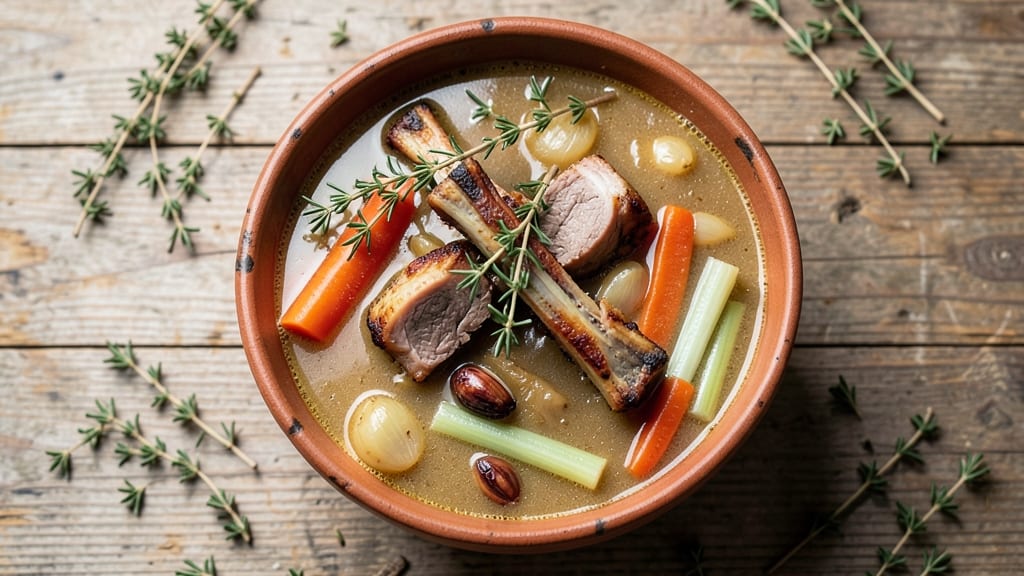
This beef bones beef soup transforms tough cuts and marrow-rich bones into a deeply flavorful broth that builds layers of umami with every sip. The secret lies in slow simmering—extracting collagen and gelatin that turn the broth from clear to rich, velvety gold over hours.
I’ve perfected this technique after years of testing, balancing traditional patience with modern shortcuts for home cooks. What sets this recipe apart is the homemade stock, where beef bones (marrow, knuckle, or short ribs) form the foundation.
Roasting them first caramelizes the bones, intensifying their natural sweetness before simmering with aromatic vegetables and herbs. The result? A broth so flavorful it becomes the star of the dish, with tender beef pieces that melt in your mouth.
By the end, you’ll have a deeply satisfying soup—golden, aromatic, and packed with protein-rich broth that clings to every noodle or bite of beef. The slow-cooked vegetables add natural sweetness, while herbs and spices create a harmonious balance.
This isn’t just soup; it’s a meal that warms the soul and feeds for days. Serve with crusty bread to soak up every last drop, or pair with a simple green salad for contrast.
The beauty of this recipe lies in its versatility—whether you’re using a Dutch oven on the stovetop or a pressure cooker for speed, the result is restaurant-quality depth at home. Let’s get started.
Ingredients for beef soup recipe with beef bones
Six ingredients build the foundation—roasted beef bones unlock restaurant-quality depth.
| Ingredient | Amount | Notes |
|---|---|---|
| Beef Bones (Marrow, Knuckle, or Short Ribs) 🦴 | 3 lb | Split for marrow access, roasted first |
| Yellow Onions 🧅 | 2 whole | Chopped into 1-inch pieces |
| Carrots 🥕 | 4 whole | Cut into 2-inch chunks, peeled |
| Celery Stalks 🧅 | 4 whole | Cut into 2-inch pieces, leaves reserved |
| Garlic Cloves 🧄 | 8 cloves | Smashed, skins left on |
| Fresh Thyme Sprigs 🌿 | 4 whole | Stems intact for easy removal |
| Fresh Bay Leaves 🍃 | 2 whole | Dried if fresh unavailable |
| Black Peppercorns 🌶️ | 1 tbsp | Crushed, not ground |
| Salt 🧂 | 2 tsp | Diamond Crystal preferred |
| Tomatoes (San Marzano Canned) 🍅 | 2 cans | Crushed, 28 oz each |
| Tomato Paste 🍅 | 2 tbsp | Squeeze tube preferred |
| Red Wine (Dry, Bold) 🍷 | 1 cup | Cabernet Sauvignon ideal |
| Water 💧 | 12 cups | Cold, filtered preferred |
| Egg Noodles (Fresh or Dried) 🍝 | 1 lb | For serving, not cooking in broth |
| Fresh Parsley 🌿 | ¼ cup | Chopped, for garnish |
The bones are everything here. Marrow bones add richness, while knuckle or short ribs provide collagen for that velvety texture. Costco or your local butcher shop are best for quality—look for bones with good marrow content and minimal fat. If you can't find marrow bones, beef neck bones work too. Split them open with a cleaver before roasting to expose the marrow. For the vegetables, organic carrots and celery from the grocery store's produce section work perfectly—just make sure they're firm, not wilted. The celery leaves add subtle flavor, so don't toss them.
No red wine? Beef broth plus 1 tbsp balsamic vinegar mimics the depth. Fresh thyme is ideal, but dried thyme at one-third the amount works in a pinch (just add it later). For the tomatoes, San Marzano cans are worth the splurge—they're sweeter and less acidic. If you're short on time, frozen crushed tomatoes work too, just thaw them first. The tomato paste can be skipped if you're using a lot of fresh tomatoes, but it adds that concentrated umami punch. And for the water, filtered or spring water makes a noticeable difference in clarity and flavor—tap water can sometimes leave a metallic aftertaste.
Roasted bones keep in the freezer for 3 months—make extra for future soups. The broth itself stays fresh for 5 days refrigerated or 3 months frozen, though it only gets better with time. I always make double batches—one for immediate use and one to freeze for lazy weeknights. For serving, fresh egg noodles are ideal, but any pasta or even crusty bread works. The parsley wilts fast, so chop it last minute if you're prepping ahead. This soup actually tastes better the next day as flavors meld, so don't hesitate to make it a day in advance.
Why You'll Love This Recipe
- Here’s what sold me: throw everything—bones, veggies, garlic—into one pot and walk away. The bones simmer down to tender perfection while you handle the rest of dinner. No chopping chaos, no last-minute stress. Even my toddler can "help" by stirring (with supervision, obviously).
- Marrow Magic Unlocked: I’ll admit, I was skeptical about beef bones at first—until I cracked open those marrow bones mid-simmer. That rich, buttery burst of flavor turns a simple soup into something ridiculously good with almost no extra work. Just a spoon, a knife, and 10 minutes of patience.
- One-Pot Powerhouse: Here’s what sold me: throw everything—bones, veggies, garlic—into one pot and walk away. The bones simmer down to tender perfection while you handle the rest of dinner. No chopping chaos, no last-minute stress. Even my toddler can "help" by stirring (with supervision, obviously).
- Leftovers That Beg: This soup gets better the next day. The flavors meld into something deep and comforting, and the bones? They’re practically falling apart, releasing even more collagen-rich goodness. I make a double batch on Sundays because reheating it is my lazy-day secret weapon—no takeout needed.
Step-by-step instructions for beef bones beef soup
Here's how to build a soul-warming beef soup from scratch—layering deep umami flavors through slow extraction and careful technique.
Roast the Beef Bones for Maximum Flavor
Preheat your oven to 425°F. Arrange the 3 lb beef bones on a rimmed baking sheet, marrow-side up if possible. Roast for 30 minutes, flipping halfway, until they develop a deep mahogany crust. This step caramelizes the collagen and fat, creating the foundation for your rich stock.
While roasting, split any marrow bones lengthwise with a cleaver to expose the marrow cavity. This makes it easier to extract the gelatin-rich marrow later. The aroma filling your kitchen signals proper browning—don't rush this crucial first step. Once golden and fragrant, transfer the bones to a large Dutch oven or heavy pot.
Build the Vegetable Base and Sauté Aromatics
In the same Dutch oven, add 2 whole yellow onions (chopped), 4 whole carrots (cut into 2-inch chunks), and 4 whole celery stalks (cut into 2-inch pieces). Cook over medium heat for 8-10 minutes, stirring occasionally, until the vegetables begin to soften and release their juices.
Add the 8 smashed garlic cloves, 4 thyme sprigs, 2 bay leaves, 1 tbsp crushed black peppercorns, and 2 tsp salt. Stir for 1 minute until the garlic becomes fragrant but doesn't brown. This aromatic base forms the flavor backbone of your soup.
Deglaze and Simmer the Stock
Pour in the 1 cup dry red wine and scrape up all the browned bits from the bottom of the pot. This deglazing step captures all the concentrated flavors you've built. Add the 2 cans crushed San Marzano tomatoes and 2 tbsp tomato paste, stirring to combine completely.
Pour in 12 cups cold water and bring to a gentle boil. Once boiling, reduce heat to low-medium and add the roasted bones. Partially cover and simmer for 3-4 hours, maintaining a gentle simmer. Skim any foam that rises to the surface during the first hour—this ensures clarity in your final broth.
Extract Maximum Flavor and Finish
After 3-4 hours, remove the bones and use a slotted spoon to extract the marrow from any marrow bones. Return the bones to the pot and simmer uncovered for another 30 minutes to reduce the broth slightly and intensify the flavors. Strain through a fine-mesh sieve into a clean pot, pressing on the solids to extract maximum liquid.
Return the strained broth to the pot and add the extracted marrow. Simmer gently for 10 minutes to melt the marrow completely, creating a velvety texture. Taste and adjust seasoning—you may need to add more salt or pepper to balance the flavors. Keep the broth warm over low heat until ready to serve.
Cook and Serve the Noodles
Bring a separate pot of salted water to a boil and cook the 1 lb egg noodles according to package instructions until al dente. Drain and immediately add the noodles to individual bowls. Ladle the warm beef broth generously over the noodles, ensuring each serving gets plenty of rich, flavorful liquid.
Garnish each serving with 0.25 cup chopped fresh parsley and serve immediately. The contrast between the silky broth and tender noodles creates an irresistible texture. For extra richness, offer grated Parmesan cheese on the side—though the soup's homemade depth should satisfy on its own.
Pro Tips For Making Beef Soup Recipe With Beef Bones
- BLISTER THE BONES FIRST: I learned this the hard way—skipping the sear means flavorless broth. Pat the bones dry, then hit them with high heat in a Dutch oven until they’re deep brown, almost black in spots. This isn’t just for looks; it locks in collagen and caramelizes the bone marrow for that rich, umami depth. (Yes, even if you’re impatient like me.)
- CHOP ONIONS IN EVEN STICKS: Uneven onion pieces mean uneven cooking—some mushy, some raw. Cut the yellow onions into ½-inch chunks before adding them to the pot, and don’t skip the par-cook. A quick 3-minute sear with the bones releases their sweetness without turning to mush. (Your future self will thank you when the soup tastes balanced.)
- DON’T CROWD THE POT: I used to jam everything in at once, thinking more veggies = better flavor. Wrong. Overloading the pot steams the onions and celery instead of browning them, which kills their sweetness. Work in batches: sear the bones first, then the aromatics in a single layer. (Does it look weird? Yes. Does it work? Every single time.)
- USE COLD WATER TO START: Sounds counterintuitive, but starting with cold water (not hot) prevents the bones from cooking too fast on the surface while the center stays raw. Bring it to a gentle simmer—tiny bubbles, not a rolling boil—and let it climb in temperature. This guarantees even extraction of marrow and collagen. (I skip this when I’m lazy, but the broth is noticeably richer when I don’t.)
Perfect pairings for this beef soup recipe with beef bones
Bread Pairing Perfection
Crusty sourdough bread is my go-to pairing—its tangy crumb soaks up the rich beef broth beautifully while its sturdy crust holds up to the hearty soup. For extra indulgence, toast thick slices and rub with garlic butter before serving.
I also love focaccia from Trader Joe's, which adds a fun, chewy texture that contrasts with the silky broth. 🥖
Wine Pairings
A bold Chianti Classico from Tuscany complements the deep umami flavors perfectly—its bright acidity cuts through the richness while its dark fruit notes harmonize with the beef. For a red wine lover's option, try a Cabernet Sauvignon with 14-15% ABV to match the soup's intensity.
White wine drinkers should opt for a full-bodied Chardonnay with noticeable oak, like those from California's Napa Valley. 🍷
Beer Complements
For beer lovers, a German Dunkel like Ayinger Altbairisch Dunkel offers malty sweetness that balances the soup's savory depth. Alternatively, a Belgian Dubbel with its caramel and spice notes creates an unexpected but delicious pairing.
Avoid light lagers—they won't stand up to the soup's complexity. I keep a cold Stella Artois on hand for guests who prefer something crisp and easy-drinking. 🍺
Cheese Pairings
Offer aged Parmesan cheese for sprinkling—its nutty, salty profile enhances the soup's umami. For a vegetarian option, Pecorino Romano works beautifully too. I also recommend Gouda (smoked or aged) on the side for those who want something richer. The cheese adds a satisfying contrast to the broth's velvety texture. 🧀
Vegetable Contrasts
A simple arugula salad with lemon vinaigrette provides the perfect fresh contrast to the rich soup. Toss 4 cups baby arugula with 2 tbsp olive oil and 1 tbsp lemon juice, then top with shaved Parmigiano-Reggiano. The peppery greens cut through the soup's richness while maintaining harmony. 🥗
Herb Garnishes
Finish each bowl with fresh parsley for brightness, but don't stop there. A sprinkle of chopped chives adds a delicate onion note, while thinly sliced scallions provide a subtle crunch.
For extra flair, I sometimes add microgreens from the grocery store's produce section—they add a pop of color and freshness. 🌿
Nutrition facts
Frequently asked questions
Can I use chicken or vegetable broth instead of beef bones?
The beef bones are essential for that deep, meaty flavor and rich texture. While you could use beef broth as a base, it won't have the same depth of umami or the velvety mouthfeel from collagen. For a similar effect, try beef short ribs or oxtail instead—they'll give you that restaurant-quality richness without needing to start from scratch.
How do I know when the broth is done?
The broth should simmer for 3-4 hours until it's reduced by about 25% and turns a rich golden color. Test it by chilling a small cup of broth in the fridge for 10 minutes—if the surface forms a firm, jelly-like layer, it's perfectly done. This indicates enough collagen has been extracted for that silky texture.
Can I make this soup in a slow cooker or Instant Pot? For a slow cooker, roast the bones first, then add everything (except noodles) and cook on low for 8 hours or high for 5 hours. For an Instant Pot, use the high pressure setting for 90 minutes after browning the bones. Just
What if my broth tastes too bitter?
Bitterness usually comes from overcooking or using bones with too much fat. To fix it, skim off any foam during cooking and add a splash of red wine or lemon juice to balance flavors. If it's still too strong, strain out the bones early and reduce the broth with a splash of water to dilute the intensity. A pinch of sugar can also help round out harsh flavors.
How can I make this soup ahead of time?
This soup actually tastes better the next day! Make the broth and bones first, then refrigerate it for up to 5 days or freeze for 3 months. When ready to serve, simply reheat the broth gently and add cooked noodles. For extra richness, stir in a spoonful of the marrow you extracted during cooking. The flavors meld beautifully overnight.