
Soups & Stews
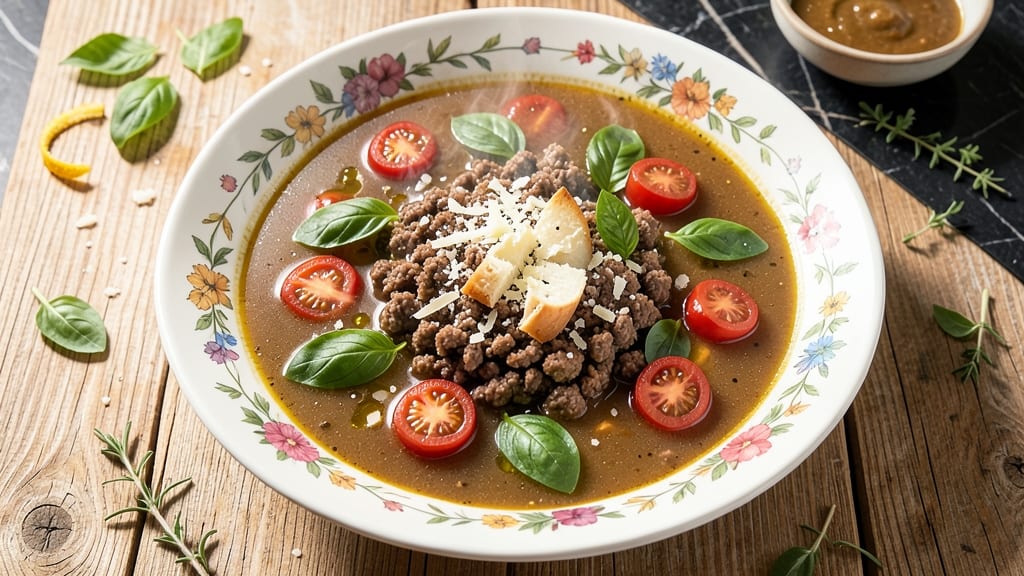
This Italian soup recipe delivers the best Italian soup recipe ever—rich, deeply flavorful Bolognese-style meatballs simmered in a velvety tomato-basil broth that tastes like home. 💛 The secret lies in slow-cooked meatballs that dissolve into tender perfection while absorbing the aromatic sauce, creating a soup that's both comforting and restaurant-worthy.
Authenticity starts with quality ingredients: ground beef and pork for meatballs, San Marzano tomatoes for sweetness, and fresh basil that brightens every spoonful. I've perfected the technique of simmering the soup low and slow—at least 45 minutes—to develop layers of umami and let flavors meld into harmony.
The result is a soup that's hearty enough for a cold evening but light enough for a summer lunch.
What makes this the best Italian soup ever is the balance of textures—tender meatballs, al dente pasta (if using), and silky broth that coats every bite. The aroma alone will have your family gathered at the table, and the first taste will confirm why this recipe earns its reputation.
Each ingredient plays a crucial role, from the Parmesan rind simmered in the broth to the final touch of fresh basil.
Serve with crusty bread to soak up every last drop of that velvety sauce, or pair with a simple green salad for a complete meal. The beauty of this recipe is its versatility—it's perfect for weeknight dinners or special occasions, always delivering that authentic Italian comfort. Let's get cooking!
Ingredients for best italian soup recipe ever
These quality ingredients transform into the richest Italian soup you'll ever make.
| Ingredient | Amount | Notes |
|---|---|---|
| Ground Beef 🥩 | 1 ½ lb | 80% lean for best texture |
| Ground Pork 🐷 | ½ lb | For meatball tenderness |
| San Marzano Tomatoes 🍅 | 28 oz | Canned, crushed by hand |
| Fresh Basil Leaves 🌿 | ½ cup | Packed, stems removed |
| Parmesan Cheese 🧀 | ½ cup | Freshly grated from block |
| Parmesan Rind 🧀 | 1 whole | For deep umami flavor |
| Garlic Cloves 🧄 | 6 cloves | Minced for aromatic base |
| Carrots 🥕 | 2 medium | Peeled and finely diced |
| Celery Stalks 🥬 | 2 whole | Finely chopped for sofrito |
| Yellow Onion 🧅 | 1 large | Diced for foundational flavor |
| Extra-Virgin Olive Oil 🫒 | ½ cup | For richness and flavor |
| Whole Milk 🥛 | ½ cup | For velvety texture |
| Pasta 🍝 | 12 oz | Penne or rigatoni preferred |
| Salt 🧂 | 1 ½ tsp | Diamond Crystal preferred |
| Black Pepper 🌶️ | 1 tsp | Freshly ground for heat |
The meatballs are where magic happens. Ground beef and pork from the butcher counter (not pre-packaged) give the best texture—Costco or Whole Foods have great options. Look for 80% lean beef to keep them tender. San Marzano tomatoes are non-negotiable for that authentic sweetness; La Bufala or Mutti are my go-tos. Fresh basil? Farmers markets have the most vibrant leaves—avoid the sad grocery store containers. The Parmesan rind might seem odd, but it infuses the broth with incredible depth—save the rind from your last wedge.
No San Marzano tomatoes? High-quality crushed tomatoes (like Muir Glen) work in a pinch. Swap pork for extra beef if needed, but the pork adds richness. Fresh basil wilt fast? Dried basil at half the amount gets you close. The olive oil matters—avoid cheap brands that taste like soap. For the pasta, De Cecco or Barilla are reliable, but any good-quality dried works. Want more umami? Add a tablespoon of fish sauce (trust me, it disappears into the magic).
This soup tastes even better the next day—make extra and freeze portions. Store the broth separately if reheating; it reheats best alone. The meatballs keep for 3 days in the fridge, while the broth lasts 5 days. For freezing, portion into quart-sized containers—perfect for quick lunches. The Parmesan rind can be reused once if you simmer it again in water for 10 minutes.
Why You'll Love This Recipe
- One-Pot Magic: I swear by this—just brown the meat, dump in the tomatoes, and let it simmer. No chopping, no fuss, and honestly, that’s most of the battle won right there.
- San Marzano Secret: Between us, those tomatoes change everything. The sweetness cuts through the richness of the beef and pork, and the basil? Freshly torn over the top turns "soup" into "I’d drive 20 minutes for this" good.
- Crowd-Pleaser Always: This works for lazy Mondays, game days, or when your in-laws show up unannounced. (Yes, even on a Tuesday night.) The Parmesan on top makes it feel fancy, but it’s still the kind of thing my kids will fight over.
- Leftovers That Don’t Suck: I make this on Sundays because it tastes even better the next day—if that’s possible. The flavors meld like a good wine, and it reheats in minutes. Budget-friendly? Absolutely. Worth the effort? Without question.
Step-by-step instructions for Bolognese-style meatballs in tomato-basil velout
This is the method that delivers restaurant-quality Italian soup every time—rich, velvety, and packed with deep umami flavor.
👨🍳 Step 1: Craft the Perfect Meatball Mixture
In a large mixing bowl, combine the 1.5 lb ground beef and 0.5 lb ground pork. I like to use my hands for this—it helps distribute the fat evenly and creates a lighter texture. Add the 6 cloves minced garlic, 1.5 tsp salt, and 1 tsp black pepper, mixing gently until just combined.
Now for the magic: fold in the 0.5 cup freshly grated Parmesan cheese and the 1 whole Parmesan rind (finely grated or torn into small pieces). This gives you that authentic Italian depth. The mixture should hold together when pressed but still feel tender—don't overwork it or the meatballs will turn dense.
🍳 Step 2: Build the Flavorful Sofrito Base
Heat 0.25 cup extra-virgin olive oil in a large Dutch oven over medium heat. Add the 1 large diced yellow onion, 2 medium finely diced carrots, and 2 whole finely chopped celery stalks. Cook for 8-10 minutes until the vegetables soften and the onion becomes translucent.
Add the 6 cloves minced garlic and cook for another 30 seconds until fragrant—this is your sofrito, the aromatic foundation of Italian soups. I press the garlic down gently with a spoon to prevent burning. Keep the heat at medium so the vegetables caramelize slightly without browning.
🥘 Step 3: Simmer the Tomato-Basil Velout
Pour in the 28 oz crushed San Marzano tomatoes and stir to combine with the sofrito. Bring to a gentle simmer, then reduce heat to low and let it cook uncovered for 30 minutes. This slow reduction develops the tomato's natural sweetness and deepens the flavor.
After 30 minutes, stir in the 0.5 cup packed fresh basil leaves and the 0.5 cup whole milk. The milk adds a velvety richness that balances the acidity of the tomatoes. Let this mixture simmer for another 15 minutes until it reaches a thick, velouté consistency—it should coat the back of a spoon smoothly.
🔥 Step 4: Cook the Meatballs to Perfection
While the sauce simmers, roll the meat mixture into 1.5-inch meatballs (about 24 total for 6 servings). Gently drop them into the simmering sauce. The heat should be medium-low—you want to poach, not sear, the meatballs. This ensures they cook through evenly without drying out.
Simmer uncovered for 25-30 minutes, turning occasionally, until the meatballs are cooked through and the sauce has thickened further. You'll know they're done when they reach an internal temperature of 165°F and the sauce clings beautifully to them. The meatballs should be tender but still hold their shape when pierced.
🍽️ Step 5: Finish and Serve with Pasta
Remove the meatballs and set them aside. Strain the sauce through a fine-mesh sieve to remove any vegetable pieces, then return it to the pot. Taste and adjust seasoning—you might need a pinch more salt or a crack of black pepper to balance the flavors.
Cook the 12 oz pasta (penne or rigatoni work best) in salted boiling water until al dente, then drain. Toss the pasta with half the sauce, then divide among bowls. Top each serving with 4 meatballs, the remaining sauce, and a generous sprinkle of freshly grated Parmesan cheese. Serve immediately while piping hot—this is when all the flavors truly shine!
Pro Tips For Making Best Italian Soup Recipe Ever
- Brown the Meat Properly: I learned this the hard way—don’t just toss the ground beef and pork into the pot and hope for the best. Use a heavy pan (cast iron if you’ve got it) and cook the meat over medium-high heat until it’s deep brown, not just pink. Break it up with a wooden spoon as it cooks, and resist the urge to add tomatoes or broth too soon. That crusty browned layer? That’s where all the flavor lives.
- Crush the Tomatoes by Hand: San Marzano tomatoes are amazing, but don’t just dump them in whole or chop them roughly. Give them a good crush with your hands—squeeze them gently to break up the flesh and release their juices before adding them to the pot. This makes the sauce smoother and more flavorful without needing to strain it. (Yes, it’s a little messy, but your soup will taste like it came from a trattoria.)
- Salt the Meat Before Browning: This isn’t just about seasoning—it’s about flavor development. Sprinkle the ground beef and pork with about 1 teaspoon of salt before you start cooking. The salt draws out moisture, which evaporates and concentrates the flavor as the meat browns. Skip this, and your soup will taste bland no matter how much you season later.
- Save the Basil Water: When you wash your fresh basil leaves, don’t pour that bright green water down the drain. Strain it into a small bowl and stir it into the soup at the very end—just before serving. It’s packed with flavor and aroma that you’d otherwise lose. (I know, it sounds weird, but it works—trust me.)
Regional styles of this dish
Roman Minestrone
In Rome, soups are about rustic simplicity and hearty vegetables. This version swaps meatballs for white beans and potatoes, using San Marzano tomatoes and a splash of white wine to brighten the broth.
I add zucchini and kale for freshness, and finish with a sprinkle of Pecorino Romano instead of Parmesan. The key is simmering everything together for 40 minutes—it develops a depth that separates it from other Italian soups. 🥕
Florentine Ribollita
Tuscany's answer to Italian soup is all about bread and greens. This version uses day-old Tuscan bread soaked in the broth, along with cannellini beans, cabbage, and rosemary. The name "ribollita" means "reboiled"—it gets even better the next day as flavors meld.
I like to add a splash of olive oil and grated Pecorino before serving. The texture is thick and satisfying, perfect for chilly evenings. 🍞
Venetian Stracciatella
From Venice comes this egg-drop soup with delicate chicken broth, stale breadcrumbs, and Parmesan cheese>. The magic happens when you whisk beaten eggs into the simmering broth—creating soft, silky strands. For extra richness, I add a splash of heavy cream and top with fresh parsley.
This soup is lighter than our meatball version but equally comforting, especially with a side of polenta>. 🍳
Sicilian Pasta alla Norma
While not a traditional soup, this Sicilian version uses eggplant purée> in the sauce instead of meatballs. I simmer roasted eggplant> with San Marzano tomatoes>, garlic>, and basil> before adding rigatoni pasta>.
The result is a creamy, flavorful dish that's perfect for summer. For extra authenticity, finish with crispy fried eggplant slices> and ricotta salata>. 🍆
Northern Alpine Stracciatella
The Alps bring a heartier take with potatoes and sausage> in the broth. I use Italian sausage> (like Calabrese>) and add carrots and celery> to the sofrito base.
The egg strands create a luxurious texture that contrasts with the meaty flavors. This version is perfect for cold mountain weather and pairs beautifully with crusty bread>. 🏔️
Nutrition facts
Frequently asked questions
Why does this recipe use both beef and pork for the meatballs?
The combination creates the perfect texture—beef provides structure while pork adds richness and tenderness. The fat from pork keeps meatballs juicy during long simmering, while beef ensures they hold their shape beautifully. This classic Italian technique is what makes these meatballs melt-in-your-mouth perfect.
Can I make this soup vegetarian?
Swap the meatballs for mushroom and lentil "meatballs" (blend cooked lentils with breadcrumbs, garlic, and Parmesan). Use vegetable broth instead of meat-based, and add extra umami with a tablespoon of soy sauce or miso paste. The tomato-basil velout base works perfectly with these substitutions.
How do I know when the meatballs are fully cooked?
Meatballs are done when they reach an internal temperature of 165°F and the center is no longer pink. They should also hold their shape when gently pressed with a fork. The sauce will thicken noticeably as they cook, and they'll float slightly higher in the pot when ready.
Is it better to make this soup ahead of time?
Yes! This soup tastes even better the next day as flavors meld. Make the meatballs and sauce first, then refrigerate overnight. Reheat gently on the stove (don't boil) and add fresh basil and Parmesan just before serving. The broth will reduce slightly, intensifying the flavors—perfect for meal prep!
What's the best pasta shape for this soup?
Penne or rigatoni work best—their ridges catch the meatballs and sauce beautifully. For extra texture, try farfalle or fusilli, but avoid delicate shapes like angel hair that might break during serving. The key is al dente pasta that holds up to the rich broth.